Machado's Push to Return to Venezuela After Earthquakes Frustrates Trump Administration Officials
The incident comes amid one of the worst natural disasters in Venezuela’s recent history. Two earthquakes, measuring 7.2 and 7.5 on the Richter scale, struck the north-central part of the country on Wednesday, leaving more than 1,400 dead so far, with La Guaira being the hardest-hit area.
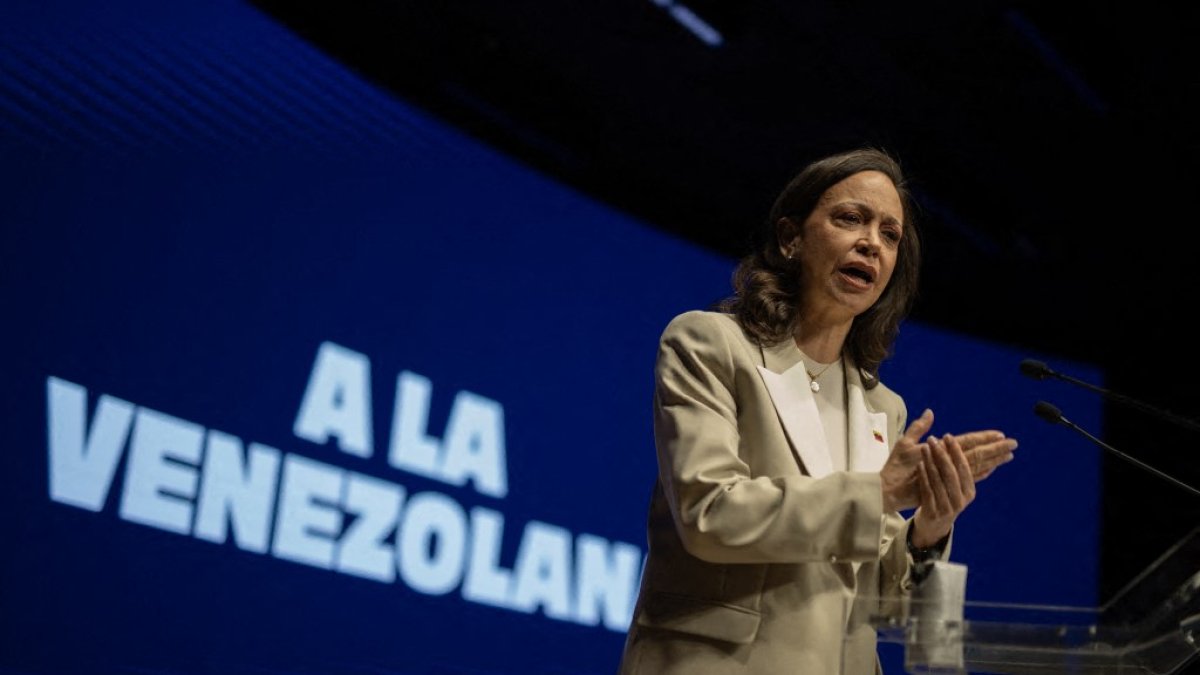
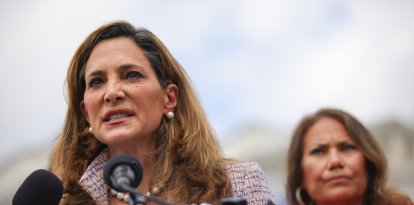
Venezuelan opposition leader María Corina Machado in a file photo

Venezuelan opposition leader María Corina Machado attempted to return to Venezuela this Saturday, nearly 72 hours after two earthquakes and numerous aftershocks devastated several cities across the country—a move that has caused unease among senior officials in the U.S. government. The Nobel laureate sought support to facilitate her return just as rescue operations and the humanitarian emergency are entering their most critical hours.
According to a report by the Reuters news agency, which cites an official from theWhite House speaking on condition of anonymity, Machado has reached out in recent days to several officials in the Trump administration—including those at the Department of State and Congress—to request assistance with her return. Although Washington generally supports the leader’s return to her country, officials believe that the current timing could interfere with urgent humanitarian efforts and are frustrated by her insistence on traveling. “We support her returning to Venezuela, but does it have to be 24 hours after a massive humanitarian catastrophe where the death toll continues to climb?" the source said. A spokesperson for Machado did not immediately respond to the agency’s request for comment. After the news broke, various journalists, opinion leaders, political figures from around the world, and Venezuelan citizens voiced their support for Machado’s intention to return.
In fact, VOZ learned that the attempt to return was carried out via an air operation from Curaçao but was ultimately thwarted: the plane that was supposed to transport Machado had to turn back, and the leader was unable to take off for Venezuelan territory.
The move, however, has not generated a unanimous stance in Washington. According to the Spanish newspaper ABC, which cites sources in the Administration and Congress, there is neither a common position nor an official directive from the Oval Office that closes the door on her return. A faction focused on supporting the interim regime of Delcy Rodríguez during this transitional phase prefers that the opposition leader remain in the United States for now, while other voices within the Administration and on Capitol Hill argue that her presence would be crucial in supporting those affected by an emergency that has laid bare the limitations of the Venezuelan state apparatus, which has been heavily criticized for its initial response to the humanitarian crisis the country is facing.
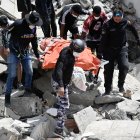
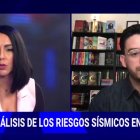
The incident comes amid one of the worst natural disasters in Venezuela’s recent history. Two earthquakes, measuring 7.2 and 7.5 on the Richter scale, struck the north-central part of the country on Wednesday, leaving, so far, more than 1,400 dead, with La Guaira being the hardest-hit area. In the early hours, the government’s response was criticized as delayed, insufficient, ineffective, and slow. In entire neighborhoods, emergency crews arrived without heavy machinery, and residents themselves cleared debris with picks, shovels, and, in many cases, their bare hands. This initial lack of government support fueled frustration among a large part of the population, who organized on their own to rescue those trapped and assist the injured.
In this citizen-led effort, Machado’s movement has played a central role. Its volunteer network, coordinated by Comando Con Venezuela and Vente Venezuela, launched the “People Support People” initiative, which has established 241 collection centers, 104 in 17 Venezuelan states and another 137 in 18 countries, including one set up at the Central University of Venezuela, one of the largest in the country.
Likewise, while international rescue teams were still on their way, Venezuelans both within the country and in the diaspora organized on a massive scale to assist the victims and the injured. Through private donations—both large and small—helmets, gloves, protective goggles, ropes, beds, water, and food were purchased to support the rescue efforts, in which firefighters and some government officials also participated. VOZ learned of at least four groups of Venezuelans who, in an impromptu joint effort, purchased hundreds of items of rescue equipment. There were also reports on social media of numerous donations across all the affected cities.
Machado, 58, fled Venezuela clandestinely in December 2025, after spending more than a year in hiding following the fraudulent 2024 elections, to receive the Nobel Peace Prize in Oslo. Since then, she has been based primarily in the United States. Before the earthquakes, she had indicated that she hoped to return to her country before the end of the year and has insisted on the holding of free elections.
Meanwhile, Washington is maintaining a large-scale relief operation. A State Department spokesperson stated that the United States has mobilized search-and-rescue teams, is coordinating shipments of medical supplies, and has released $150 million in humanitarian aid. In addition, various reports indicated that the U.S. government is also preparing a new nine-figure aid package for Venezuela.
LATEST