ANALYSIS
Syria: Bashar al Assad sentenced to death in absentia for crimes against humanity
The judge found Assad guilty of premeditated murder, intentional homicide of more than one person, murder of minors under the age of 15, torture, torture resulting in death and repeated deprivation of liberty. These acts were classified as crimes against humanity and war crimes.
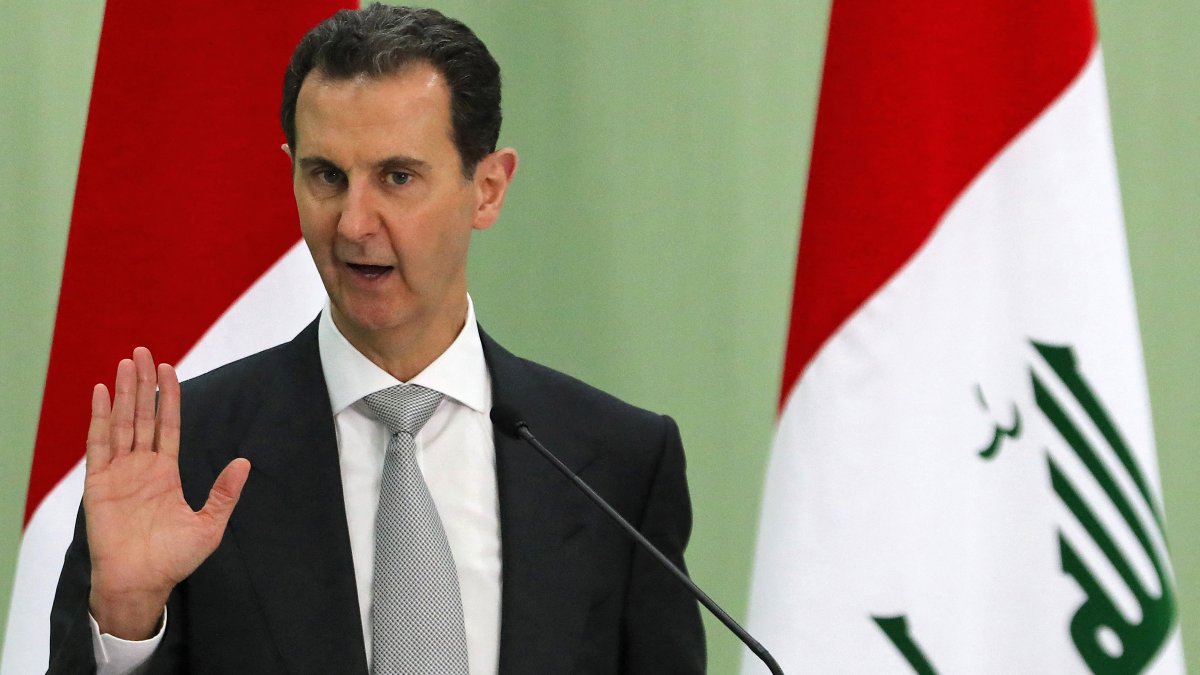
Former Syrian President Bashar al Assad

A court in Damascus sentenced former President Bashar al Assad to death on Tuesday in a trial in absentia, for atrocities committed during the civil war that ravaged Syria for nearly 14 years. This is the first sentence of its kind handed down by the transitional authorities that ousted him in December 2024.
Assad fled to Moscow when Islamist-led opposition forces, spearheaded by Hay'at Tahrir al-Sham (HTS), a group previously linked to Al-Qaeda and led by Ahmed al Sharaa, entered Damascus in early December 2024 following a lightning offensive lasting just 11 days that brought about the regime's collapse.
Judge Fakhr al Din al Aryan found Assad guilty of premeditated murder, the intentional killing of more than one person, the murder of minors under the age of 15, torture, torture resulting in death and repeated deprivation of liberty. These acts were classified as crimes against humanity and war crimes. "Therefore, he is sentenced to death," the judge stated.
Who is Ahmed al-Sharaa, Syria's new president?
Born in 1982 in Saudi Arabia and raised in Damascus, he joined Al Qaeda in Iraq in the early 2000s to fight the U.S. occupation. He was arrested and spent several years in Iraqi and U.S. prisons. After his release, he returned to Syria in 2011 and founded the al-Nusra Front, al-Qaeda's local affiliate.
As a jihadist commander, al-Jolani recruited foreign fighters, ordered suicide attacks against the regime's military posts, and sought to establish an Islamic state.
His group was designated a terrorist organization by the United States, the UN and several Western countries. In 2016, he formally broke with Al Qaeda and reorganized his forces under the name HTS, under which he controlled the province of Idlib for years, where his administration was accused of authoritarianism and of repressing dissidents.
In November 2024, he launched an 11-day lightning offensive that culminated in the fall of Damascus on Dec. 8. Assad fled to Moscow, and al-Sharaa became the de facto leader. On Jan. 29, 2025, he was appointed president for the transitional period. His jihadist past continues to fuel international mistrust.
Assad's brother and other senior officials sentenced to death
Along with Bashar al Assad, the court also sentenced six former military and security officials to death in absentia, including his brother Maher al Assad, who commanded the elite Fourth Army Division, former Defense Minister Fahd al Freij and Louay al Ali, former head of military intelligence in the province of Daraa.
The only defendant present in the courtroom was Atif Najib, Assad's cousin and former head of political security in Daraa, the cradle of the 2011 uprising. Najib, who was arrested in January 2025, was also sentenced to death for crimes against humanity, including murder and torture resulting in death. The judge noted that the defendant denied the charges and showed no remorse.
The Syrian civil war: A multi-actor conflict
The Assad regime, with military support from Russia, Iran, and Hezbollah, responded with extreme violence, including bombings of civilian areas, systematic torture and enforced disappearances. According to the Syrian Network for Human Rights, regime forces and their allies were responsible for approximately 91% of the civilian deaths documented by that organization
However, the conflict was not limited to this dynamic. Jihadist groups such as the Al-Nusra Front, which later gave way to the Fatah al-Sham Front and, subsequently, to Hay'at Tahrir al-Sham (HTS), and the Islamic State (IS) also committed serious atrocities, including executions, sexual slavery and sectarian attacks. Various factions of the armed opposition received support, at different times, from Turkey, some Gulf countries and the United States.
The intervention of foreign powers prolonged and complicated the war: Russia and Iran supported the regime; Turkey supported rebel groups and fought Kurdish forces; and the United States backed the Syrian Democratic Forces (SDF) in the fight against the Islamic State.
The conflict left a devastated country, more than 600,000 dead, according to estimates by the Syrian Observatory for Human Rights, millions of displaced people, and a deeply fragmented society. On Dec. 8, 2024, the Assad regime fell, although the violence and clashes did not completely end with the change in power.
LATEST