US intelligence tells lawmakers that Iran still has significant military capability
The new information comes amid a fragile two-week cease-fire that took effect in early April following negotiations brokered by Pakistan.


Despite weeks of intense U.S. and Israeli bombardment of its territory, Iran retains thousands of missiles and kamikaze drones, according to a new Pentagon intelligence assessment revealed before lawmakers in Washington.
The U.S. intelligence report, revealed by Business Insider, contrasts with the official narrative the Trump administration has held in recent weeks about decimated Iranian forces and a relatively straightforward path to victory.
Marine Lt. Gen. James Adams, director of the Defense Intelligence Agency (DIA), testified before the House Armed Services Committee that the Iranian regime "retains thousands" of missiles and one-way attack drones, and that these pose a real threat to U.S. forces and their allies in the Middle East. Adams clarified that the Tehran regime managed to preserve those munitions despite accumulated attrition from attacks and self-consumption during the conflict.

World
Iran regime accuses Trump of violating ceasefire, threatens possible military escalation
Luis Francisco Orozco
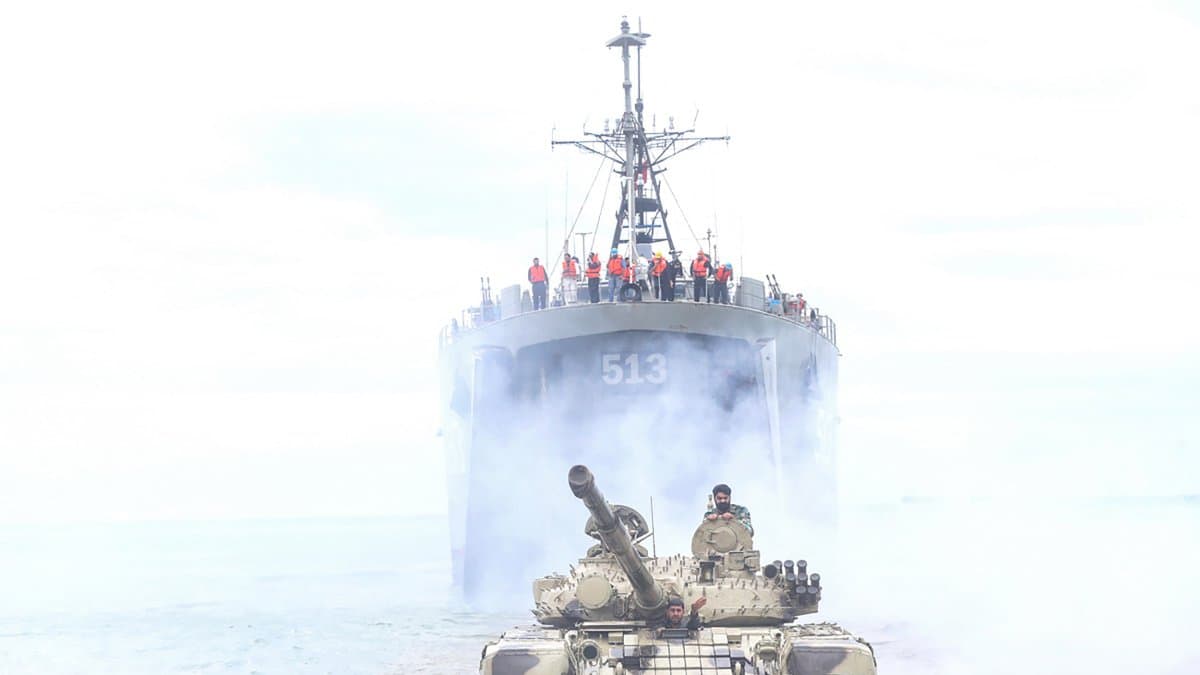
NBC News also published a report along the same lines, noting that the Pentagon's internal assessment clashes head-on with public statements from President Donald Trump and Defense Secretary Pete Hegseth, who have claimed that the Iranian Air Force was "wiped out" and that its Navy is "at the bottom of the sea."
Despite the statements by the head of the Pentagon, DIA analysts believe that the Iranian arsenal remains largely intact or at least partially intact. Much of that weaponry, officials say, is hidden underground, in tunnels and caves that Iran has built over decades in anticipation of a scenario like the current one.
In contrast, Air Force Gen. Dan Caine, the chairman of the Joint Chiefs of Staff, offered figures that point in a different direction. On April 8, he claimed that the U.S. military struck more than 450 Iranian ballistic missile storage facilities and 800 kamikaze drone depots. "All of these systems are gone," he said at the time. Caine also reported that the U.S. and its Gulf partners managed to intercept about 1,700 missiles and drones launched by Iran during the fighting.
Hegseth acknowledged last Thursday that Iran is digging up its remaining missiles and launchers. Satellite images have recorded excavation work at bases that were bombed at the start of the war.
The new information comes amid a fragile two-week cease-fire that took effect in early April, following negotiations brokered by Pakistan. However, the Pentagon maintains active operations in the region, including a maritime blockade of Iranian ports involving more than a dozen U.S. warships, and mine-clearing efforts in the Strait of Hormuz. Several merchant ships have already turned back to avoid interdiction during the first days of the operation.
If negotiations fail and the conflict flares up again, the missiles and drones Iran still retains could affect precisely the U.S. forces involved in those two missions.
🛠 Do you think there is an error in this article?
Recommendations








LATEST