The dark geopolitics of Chinese mining
From Zimbabwe to the Lithium Triangle, China is applying a foreboding strategy to dominate the global energy transition.
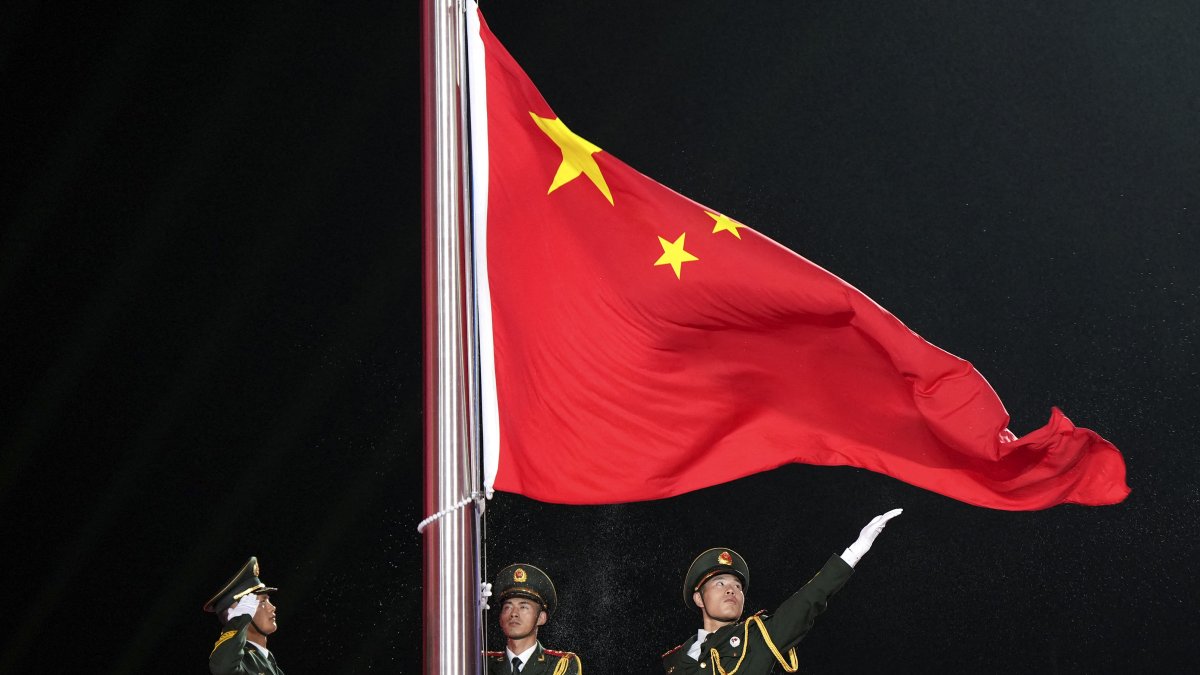
Reference image of China's flag
In May 2026, the staff of a U.S. congressional committee traveled to Zimbabwe to investigate the lithium sector. Not only were they denied the meetings they had requested with officials, but, paradoxically, those who went to observe ended up being intensely watched throughout their visit by state intelligence services. The scene is ironic.
The mission is part of an investigation entitled "China's Minerals Mafia," published by the House Select Committee on the Chinese Communist Party. Its conclusion on Zimbabwe is blunt: Chinese companies control nearly 90% of the country's mining operations, including lithium deposits critical to the world's energy supply chains. And that dominance, according to the report, rests on a combination of corruption and weak governance that has produced what its authors call "rampant extractivism."
Through dozens of public reports and testimonies collected on the ground, the report supports suspicions that journalists, academics and human rights organizations have had regarding the geopolitics of minerals. Rare earth minerals, lithium, cobalt, gallium, graphite: these are the inputs for batteries, electric cars, solar panels, semiconductors and advanced weaponry. "What oil was to the 20th century, rare earth minerals are to the 21st," summarized academic Sean McFate.
China understood this before anyone else and built, over three decades, a bottleneck. The trick is not so much to get the rock out of the ground, which happens in Australia, in the Congo, in South America, but to process it. According to the International Energy Agency, China is the leading refiner in 19 of the 20 strategic minerals it analyzes, with an average share of close to 70%. In rare earths it processes around 90%. Chinese plants are, in fact, the gatekeepers of the global chain.
And Beijing has shown that it knows how to exercise control. Between 2023 and 2025, it was tightening the rules for the export of gallium, germanium, antimony and, eventually, whole rare earths and lithium battery technology. When it restricted antimony in 2024, its exports fell by about 97%, and the global price tripled. It's not about scarcity: it's about power. China does not have control because there is a lack of supply, rather it controls the supply to the point where there are no alternatives. That is the difference between being a supplier and being an owner.
The Zimbabwe report describes a repeating mechanic. Despite local government export bans, authorities intercepted shipments of undeclared lithium ore; workers and community observers reported under-declaration and concealment of higher quality material. The situation escalated so much that Zimbabwe ended up halting its exports of lithium concentrate earlier than planned, in 2026.

The most serious consequences are human and environmental. The document gathers credible testimonies of physical abuse and fatal accidents in poorly maintained facilities. In environmental matters: depleted water tables, communities covered with dangerous dust and, in one episode, the dumping of toxic waste in a dam that locals depended on, causing them to be left for years without drinking water. And, closing the circle, there were allegations of bribery of local officials and police rendering any grievance mechanism useless.
If Zimbabwe were an isolated case, it would be a local tragedy. It is not. An investigation by journalist Rebecca Tan for The Washington Post documented how Chinese mining syndicates expanded illegal gold mining from Indonesia to Ghana and French Guiana with capital, machinery and contacts. On the Indonesian island of Lombok, one clandestine mine took up the equivalent of 184 football fields and generated some $5.5 million a month. The mode of operations is always the same: displacing small miners with bulldozers and crushers, and employing cyanidation to an extent that multiplies the damage.
The numbers are dizzying. The U.N. Office on Drugs and Crime warned that organized crime infiltrated gold supply chains to become a "serious global threat." At least 15 gold-rich countries opened legal proceedings against Chinese citizens and companies for illegal mining since the beginning of 2024. Conservative estimates put the illicit sector at over $30 billion annually. Behind it is a state logic: to reduce dependence on the dollar by accumulating gold, part of which enters through opaque channels. A former president of the China Gold Association went so far as to describe the Belt and Road Initiative as "also a golden path."
The official Chinese response is always the same: denial. The ambassador to Ghana called it a "significant injustice" to hold Beijing responsible; the Ministry of Foreign Affairs and the Chamber of Commerce of Metals did not respond to the Washington Post report; Beijing insists it requires its citizens to comply with local laws. But, as officials in the affected countries point out, that demand rarely translates into cooperation when those responsible need to be identified and punished.
Much of China's presence in Latin America is legal investment. China went from trading $12 billion with Latin America in 2000 to $315 billion in 2020, with projections exceeding $700 billion by 2035. There are 37 Latin American ports linked to Chinese companies, according to CSIS. In Peru, Chinese capital controls 100% of Lima's electricity distribution; in Chile, nearly two-thirds of the national electricity system. That is not a crime: it is a strategy.
The problem, experts warn, is what is happening in the shadows of this strategy. In the eyes of researcher Leland Lazarus, Chinese organized crime has grown worldwide, but especially in Latin America and the Caribbean, on four fronts: fentanyl precursor chemicals, money laundering, wildlife trafficking and human trafficking. He calls it "criminal convergence": not isolated crimes, but networks that do several things at once.
R. Evan Ellis of CSIS testified before the U.S. Congress recently: illegal fishing costs South American economies some $2.3 billion annually; fentanyl made from Chinese precursors kills about 48,000 Americans a year; and a laundering scheme known as "flying money" closes nearly untraceable loops between Mexican cartels and businesspeople in China and Latin America. Ellis identified some 35 Chinese networks operating in the region. The disturbing piece of his analysis is not the existence of crime, but how it is intertwined with investment: where capital arrives and the economic enclave is installed, illicit activity finds fertile ground.
If you want to see the full pattern in the Americas, you have to look at the Nicaraguan Caribbean. Research by the River Foundation (reported on by Mongabay, El País and several other media outlets) estimates that some 15 companies linked to Chinese capital control close to 1 million hectares, 8.5% of the national territory, in concessions for gold, silver, copper and critical minerals. The Ortega and Murillo regime modified laws to facilitate this.
A large part of the concessioned lots are located on indigenous territories without the free, prior and informed consultation required by Nicaraguan law. Some communities did not even know that their land had been handed over. Defenders claim there has been mercury and cyanide contamination of rivers such as the Coco, the Huanquí and the Prinzapolka, while international trade databases point to an under-billing of more than $32 million in exports to China.
Here we see something that the Zimbabwe case already hinted at: China does not invent corruption or institutional weakness. It finds and exploits them. The first one responsible for handing over the territory of its own people is the government that signs the concessions behind the back of its communities. In the Southern Cone, the risk is not yet the mafia with cyanide: it is strategic dependence disguised as investment.
The Lithium Triangle, composed of Argentina, Chile and Bolivia, concentrates more than half of the world's known reserves. China's investment in South American lithium quadrupled since 2020 and exceeded $16 billion between 2018 and 2024. The names are already familiar in Catamarca, Jujuy and Salta: Ganfeng Lithium, which owns more than 120,000 hectares of salt flats and operates Cauchari-Olaroz; Zangge Mining, with 65% of Laguna Verde; Tsingshan, partner in Centenario-Ratones; Zijin Mining, which develops Tres Quebradas with direct extraction and in 2024 bought 25% of the Rincón project. By 2023, Ganfeng and Tianqi already controlled close to 40% of the world's lithium production through their operations and alliances in South America, and consulting firms such as Wood Mackenzie project that China could manage 39% of global production by 2030.
The scheme repeats an old mistake: minerals are extracted and exported in the region, as in the 19th century, while the added value (cells, batteries, cars) is manufactured in Asia. Argentine royalties are around 3%, compared to 5% to 14% in Chile, and only a minor part of the production is integrated into local chains. Add to this the environmental doubts about water in the high altitude salt flats and about "green" methods that end up being powered by diesel generators, and the picture is complete: a global energy transition that decarbonizes the developed world at the expense of the water footprint of Northern Argentina.
The difference in strategies is real, but the common thread is the same: a long term state strategy to capture the mineral of the future, which thrives where the rules are soft, royalties low and the long term view scarce. The recommendations of the U.S. committee (sanctions, alternative supply chains, "transparent" partnerships) respond to American interests but are valid for the region; because the geopolitics of minerals is not just a Chinese problem, but the symptom of a world thrown into a long and fierce race that will sweep away countries that are too weak or too complicit to defend themselves.
LATEST