Elections Peru: Quick counts give Sanchez the lead, but a technical tie postpones the final results
The difference between the two candidates is so tight that we will have to wait until the count of the National Office of Electoral Processes (ONPE), a process that could take weeks.
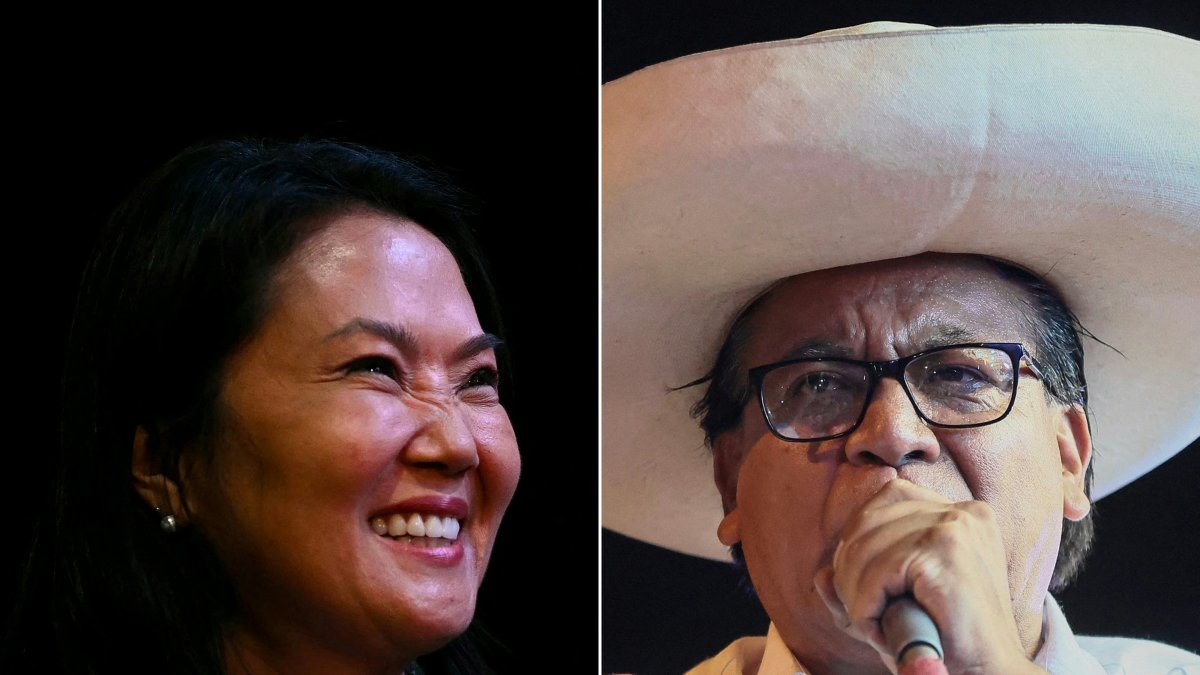
Keiko Fujimori and Roberto Sánchez/ Ernesto Benavides and Connie France.

Keiko Fujimori and Roberto Sánchez are in a technical tie in the second round of the presidential election in Peru. In the absence of official results, the leftist candidate is ahead in the quick counts, but the difference is so tight that it will have to wait until the count by the National Office of Electoral Processes (ONPE), a process that could take even weeks.
The election pits a leftist candidate against one of the best-known figures of the Peruvian right. Sanchez has campaigned on proposals for greater state intervention and the expansion of social spending, while Fujimori advocates free-market policies and presents herself as an alternative for economic order and stability.
Two of the country's leading opinion research firms, Ipsos and Datum, conducted independent quick counts. Unlike an exit poll, a quick count is based on the actual results from a representative sample of polling stations distributed throughout the country. Based on this data, the consulting firms produce a statistical projection of the result before the official count, in this case conducted by the ONPE, is concluded.

Both show a minimal advantage of Sanchez over Fujimori, but the difference is smaller than their respective margins of error. For that reason, neither projection allows a winner to be declared, and the result will have to be determined by the official count.
The Ipsos quick count, considered one of the most widely followed in Peru, projects Sanchez winning with 50.3% of the votes, against Fujimori's 49.7%. The difference of 0.6 percentage points is within the 1.9-point margin of error.
For its part, Datum's quick count came to a similar conclusion. Sanchez leads with 50.14%, followed by Fujimori at 49.86%, within a margin of error of one percentage point.
As the quick counts are within the margins of error, we will have to wait for the official count conducted by the ONPE to be completed, which could take days or even weeks. In the first round, the count reached 100% of the precincts only on May 17, more than a month after the April 12 election.
If the quick count trend is confirmed, it would be the fourth consecutive election Fujimori has lost, always by narrow margins. The candidate obtained 48.55% of the votes in 2011, 49.88% in 2016 and 49.87% in 2021.
LATEST