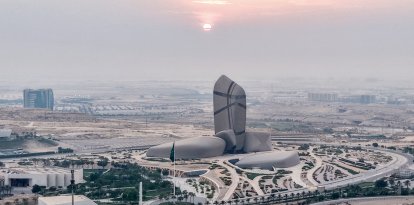
Middle East war exposes strategic fragility of data centers
According to a statement released Monday by AWS, two data centers in the United Arab Emirates were "directly hit" by drones, while a facility in Bahrain was damaged after an attack nearby.
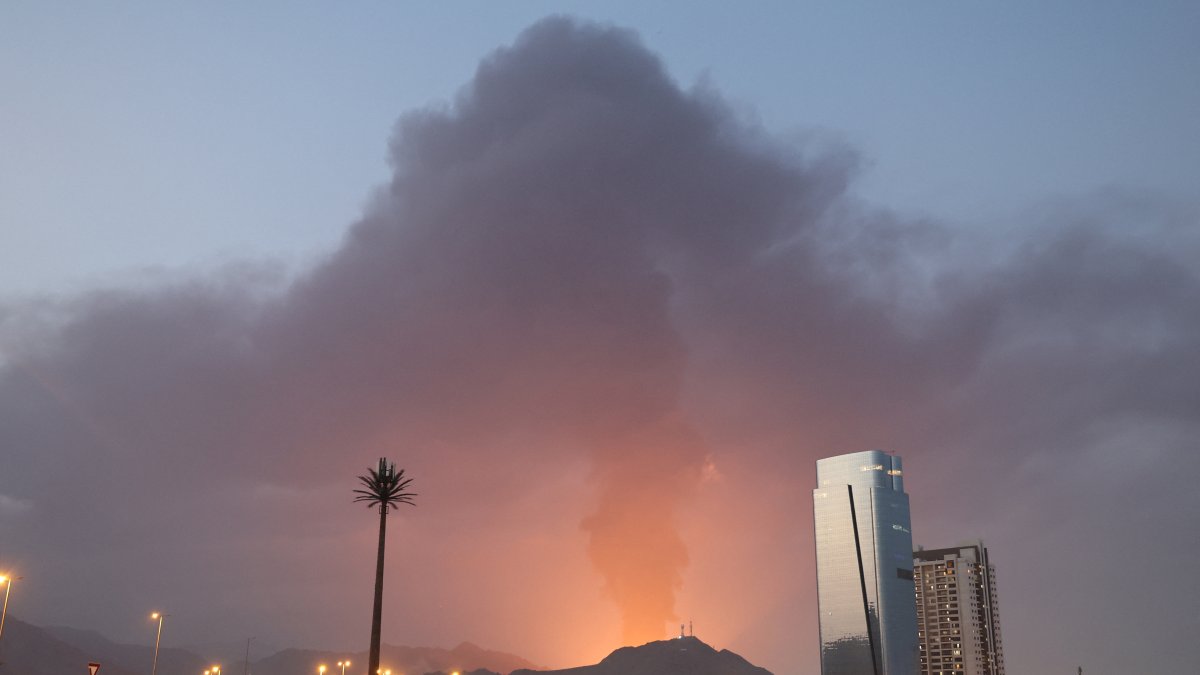
Tall plume of black smoke rises after explosion in UAE industrial zone

Recent damage reported by Amazon Web Services (AWS) at facilities located in the Persian Gulf, in the context of the conflict between Israel, the United States and Iran, have highlighted a critical vulnerability: the exposure of data centers - essential infrastructures for the global digital economy - in war scenarios.
Facilities hit by drones
According to a statement released Monday by AWS, two data centers in the United Arab Emirates were "directly hit" by drones, while a facility in Bahrain suffered damage after an attack nearby.
So far it has not been determined whether these infrastructures were deliberately targeted. However, the episode rekindled the debate among analysts about the security of these technology complexes, which concentrate high-value equipment and store critical information for governments, companies and citizens.
Critical and scarce infrastructures
"They are absolutely critical assets, because that's where our applications and our data are stored," explained Jonathan Hjembo, of the firm Telegeography, in statements picked up by AFP.
Data centers not only support digital platforms and financial services; they also support government systems, telecommunications and artificial intelligence. Moreover, experts warn that their numbers are limited in the face of growing global demand for storage and processing.
Researcher Cinzia Bianco of the European Council on Foreign Relations stresses that these infrastructures are "very scarce" and that supply falls short of current and future needs.
Tempting targets in times of war
"When it comes to missile danger, there are things that companies can't manage," Hjembo notes.
Analyst René Buest, of consulting firm Gartner, considers it unlikely that Amazon's centers were deliberately targeted, given their discrete nature. However, he warns that they could become strategic targets if their destruction were to affect intelligence operations or advanced AI systems of the adversary.

Emirates' technological gamble
The case is particularly sensitive in the United Arab Emirates, which in recent years has positioned itself as a regional hub for technology and data processing.
The country is currently building an artificial intelligence campus with a projected capacity of five gigawatts, backed by tech giants such as OpenAI, Oracle, Cisco and Nvidia.
Since 2024, Emirates has invested more than $147 billion in artificial intelligence and obtained authorization from Washington to import advanced Nvidia chips, against a backdrop of tightened technology controls.
Increasing vulnerability and political calculation
However, the concentration of computing power also means greater exposure. Swapna Subramani, research director for India, the Middle East and Africa at Structure Research, warns that this technological buildup can increase vulnerability to regional conflicts.
For Emirates, the strategy is also geopolitical: hosting critical infrastructure of U.S. and global companies could incentivize its international protection.
However, the recent incident threatens that equation. According to Bianco, the episode is "extremely problematic" because it jeopardizes the diplomatic efforts made by the country to consolidate itself as a key player in the global AI ecosystem.

A new front in modern warfare
In an economy increasingly dependent on the cloud and artificial intelligence, data centers are no longer just buildings full of servers: they are essential nodes of global technological power and potential targets in 21st century warfare.
LATEST