A mesmerizing eclipse: All about the spectacle of the 'blood moon'
Millions of people in different parts of the Americas were able to observe a striking astronomical phenomenon, the result of a total lunar eclipse.
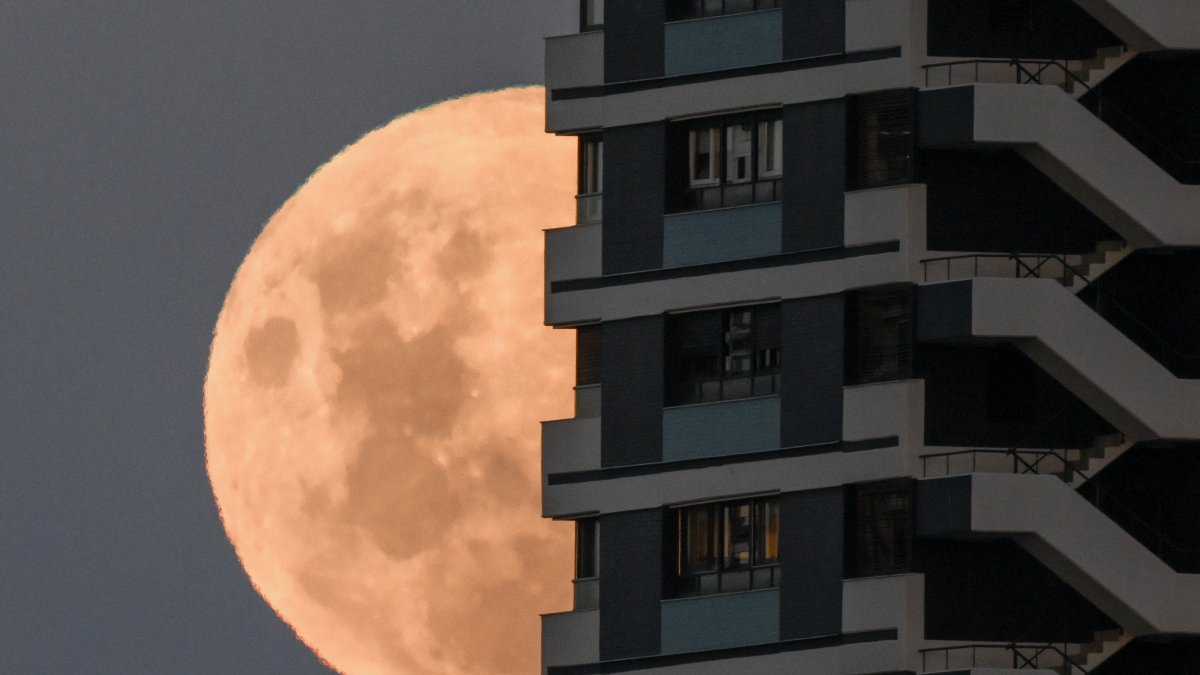
The moon rises in its crescent gibbous phase behind a building in Buenos Aires on March 2, 2026.

In the early hours of Tuesday morning, millions of people in different parts of the continent were able to observe a striking astronomical phenomenon: the so-called "red moon" or "blood moon," a product of a total lunar eclipse. Here are the highlights to understand what happened and why it was so special.
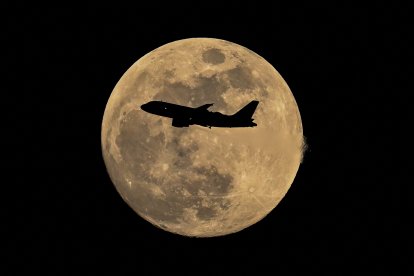
An Airbus A319-112 from German airline Lufthansa flies in front of the moon over Frankfurt am Main, Germany.
What exactly is a "blood moon"?
Instead of disappearing completely, the moon takes on a intense reddish hue due to an optical phenomenon known as Rayleigh scattering, the same phenomenon that makes sunsets look red.
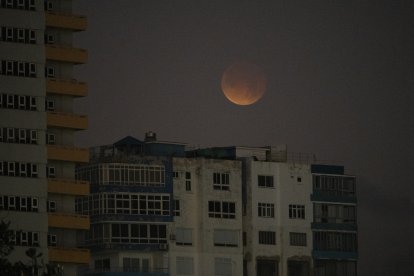
A full moon, also known as a "blood moon," is seen over buildings in Havana, Cuba.
Why does the moon look red and not black?
The atmosphere filters out blue light and lets through red and orange wavelengths, which are projected onto the lunar surface.
In other words: all the sunrises and sunsets on the planet are "reflected" at the same time on the moon.
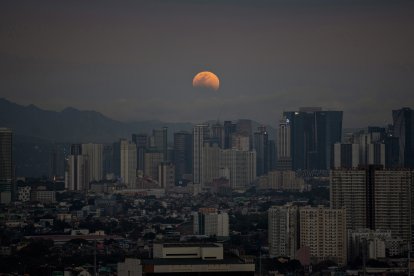
The full moon, also known as the "Blood Moon," towers over Manila's buildings.
How long did the eclipse last?
- Beginning of the partial eclipse
- Entrance into the total phase (red moon)
- Maximum point of the eclipse
- Progressive exit of the shadow
- Stepwise exit of the shadow
The total phase, when the moon looked completely red, lasted about an hour, although the entire phenomenon extended over several hours.
Total lunar eclipses are not extremely rare, but they also do not occur every month. Depending on the astronomical calendar, the next total eclipse visible in this region could take months or even a few years.
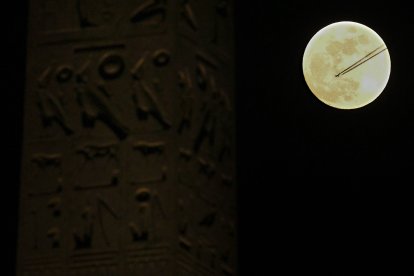
An airplane flies over the full moon, next to the Luxor Obelisks at the Place de la Concorde in Paris.
Where could it be observed?
No special equipment was needed to see it; just looking at a clear sky was enough.
Unlike solar eclipses, lunar eclipses:
- Pose no risk to eyesight
- Can be observed unprotected
- Are visible from anywhere the moon is above the horizon
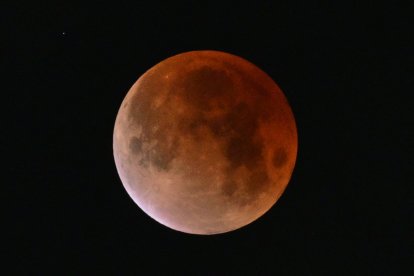
The "blood moon" lunar eclipse tints the moon red for a brief period early on March 3, 2026 in Los Angeles.
Does it have any special significance?
However, from a scientific point of view, it is a completely natural and predictable astronomical phenomenon.
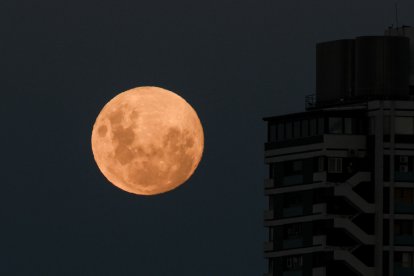
The moon rises in its crescent gibbous phase next to a building in Buenos Aires.
A spectacle that connects the world
- Thousands of people share photos
- Observatories organize public activities
- A renewed interest in astronomy is generated
Last night was no exception: social media was filled with images of the red-tinted satellite over cities, countrysides and coasts.