ANALYSIS
Global economy holds its breath amidst conflict in Iran: Strait of Hormuz in the spotlight
If Iran makes good on its threat to prevent commercial ship traffic through the passage, the price of oil would suffer a sharp rise, increasing inflation around the world. The Trump administration estimates that an "inflationary shock" would not be reached.
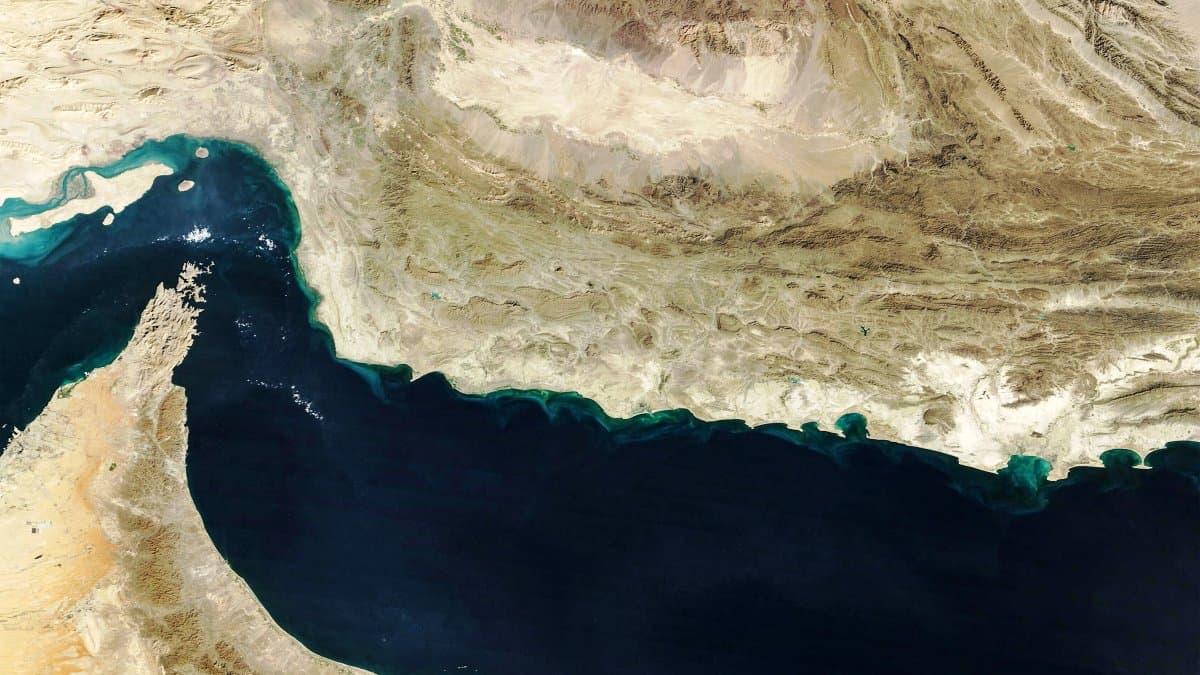

The consequences of the conflict unleashed by the joint attacks by Israel and the U.S. against Iran and which has already cost the life of Iranian supreme leader Ali Khamenei and a number of high-ranking officials are not only threatening the region. On the contrary, the global economy is holding its breath about the possible side effects of the war, starting with energy prices and their inflationary impact on world trade.
Both premises have a common denominator: the Strait of Hormuz, a vital area for world trade between Iran and Oman and through which one out of every five barrels of oil sold in the world passes. Iranian authorities know this very well, and they have already threatened to play this card on several occasions.
In this instance, they have already warned that they will prevent the passage of commercial vessels by force. Donald Trump recommended on Saturday that such a route be avoided given the current circumstances.
Saudi Arabia and China would be the most harmed
Through that small strip passes what amounts to practically all the oil production of Iraq, Kuwait and the United Arab Emirates, and two-thirds of that of Saudi Arabia. The latter would be the main victim since it is the country that moves the most crude oil through Hormuz, around 40% of the total.
According to the data, between 2020 and the first quarter of 2025, Saudi Arabia moved on average 6.05 million barrels per day. These figures are almost double Iraq's 3.1 million. They are followed by the United Arab Emirates (1.9 million) and Kuwait (1.6 million). Iran would also lose, since it moves through this passage some 1.1 million barrels a day. Qatar stands to lose 600,000 barrels per day.
However, both the European Union and the U.S. have pointed out that the biggest victim, in terms of a possible loss of supply, of this measure will be China, which is the main consumer of crude oil crossing the Strait of Hormuz (more than 30%). In the case of Europe, only 4.7% of the oil it consumes passes through this area, while the U.S. remains at 3.6%.
Fear of a possible "inflationary shock"
However, oil shortages are not the main risk for the global economy. The expected increase in prices will further raise global inflationary tension, and this will have repercussions not only on crude oil prices—which are far from their historic highs at the moment—but on all commodity prices.
In the case of the U.S., this could also lead the Federal Reserve to stick to its guns of not lowering interest rates to combat inflation, another of Trump's major battlefronts on home turf, in this case against Jerome Powell.
According to the Trump administration's calculations, the price of a barrel will rise in the markets, but it does not expect it to cause that dreaded inflationary shock. Goldan Sachs estimated that, in case of a real shutdown, the price of the barrel may reach $90-110. Some experts warn of a scenario that could reach $120-150 dollars per barrel.
At first, this does not seem possible, since OPEC had prepared a discreet increase in production (137,000 barrels per day) in view of the increase in demand for the summer. Also on Sunday, Saudi Arabia, Russia and six other members increased their oil production quotas by 206,000 barrels per day for the month of April at a meeting scheduled before the outbreak of the conflict.
Two major shipping lines announce that their ships will not cross the strait
At the moment, two of the world's major shipping lines, MSC and Maersk, have already announced that they are suspending the passage of their ships through the area. In fact, MSC has announced that its vessels will not pass through the entire Middle East region as long as the conflict continues.
In addition, Oman claimed that an oil tanker was attacked off its coast on Sunday morning. In view of this situation, insurance companies have suspended their coverage in the area. Maritime traffic monitoring sites reveal that transit has come to a standstill on both sides of the strait.
🛠 Do you think there is an error in this article?
Recommendations






LATEST