Cuba: Arbitrary arrests, torture and nearly 1,200 political prisoners at the end of 2025
Prisoners Defenders underscored the serious human impact of these figures. Among the political prisoners identified are 128 women and 32 people who were arrested as minors.
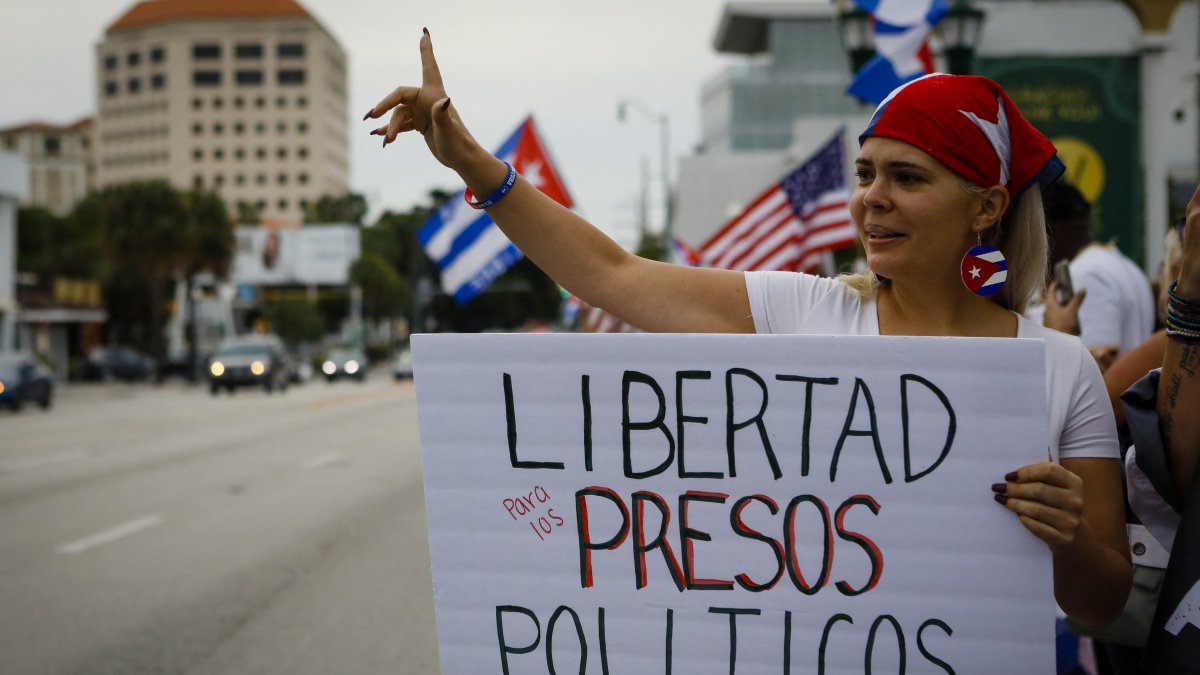
Protest in Miami against the Cuban regime (File).

Political repression in Cuba not only continued during 2025, but intensified, according to the annual report published Thursday by the international organization Prisoners Defenders, which documented 1,197 political prisoners at the close of the year, following the addition of 134 new politically motivated detainees in the last 12 months.
"The deprivation of freedom continues to be a central tool used by the Cuban state to silence citizens and repress fundamental rights," states the report, dated Jan. 15, 2026. In December alone, the NGO recorded 10 new political arrests, while five people were released from the list after serving their sentences in full, bringing the net total to 1,197 documented political prisoners.
Prisoners Defenders underscored the severe human impact of these figures. Among the political prisoners identified are 128 women and 32 people who were arrested as minors. In addition, the organization has verified 464 cases of prisoners with serious medical conditions and 42 with severe mental health disorders, all of them without access to adequate medical treatment.
"These ailments are not accidental: they have been deliberately caused or aggravated by poor nutrition, mistreatment and the systematic denial of medical care within the prison system," claimed Javier Larrondo, president of Prisoners Defenders, during the presentation of the report.
">📢Cuba cierra 2025 con 134 nuevos prisioneros políticos y termina el año con 1.197:
— Prisoners Defenders (@PrisonersDFNdrs) January 15, 2026
👉10 nuevos presos políticos en diciembre
👉128 mujeres y 32 menores
👉464 casos con enfermedades graves, sin atención médica.
👉42 con trastornos de salud mental agravados.
Examinamos cómo… pic.twitter.com/VdKJbptPyE
The document maintains that the registered cases are not isolated incidences, rather the consequences of a structural system of persecution, characterized by arrests without judicial protection, absence of due process and recurrent use of vague charges, such as the crime of "propaganda against the constitutional order," used to criminalize peaceful protest.
Most relevant data from the 2025 report
Prisoners Defenders also questioned the official discourse on the alleged "releases" announced by the Cuban government. According to the NGO, they are actually conditional releases, with ongoing sentences, permanent police control and constant threats. "They are not releases. People are still under persecution and have open cases," warns the report.

Export of Cuba’s repressive model
The report also expands its analysis beyond the island and warns about the export of Cuba’s repressive model, particularly to Venezuela. The organization documented the death of more than 60 Cuban military personnel integrated in the security ring of former dictator Nicolás Maduro, which, according to its investigations, confirms the massive presence of Cuban repressive forces in Venezuelan territory.
Likewise, Prisoners Defenders claims to have identified in Venezuela the same patterns of torture documented in Cuban prisons, including physical aggression, sleep deprivation, forced standing and stress positions, sexual torture, prolonged isolation, and deliberate denial of medical attention. "The methodology is identical," argues the report, which attributes these practices to a repressive model transferred from Havana.

Direct appeal to the international community: "Victims need protection"
The report concludes with a direct appeal to the international community. "Enough of normalizing the unacceptable," Larrondo demanded, urging democratic governments, the European Union and international organizations to adopt urgent, verifiable and effective measures. "Victims need protection, visibility and justice," he stressed.
LATEST