Saudi Arabia bombs the positions of a Yemeni militia supported by the United Arab Emirates
The evolution of these tensions could redefine the balance of power between two of Washington's main allies in the region.

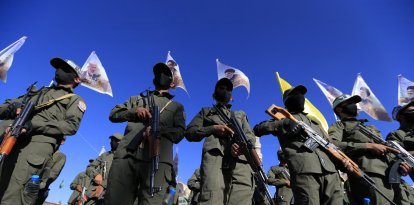
Protesters show their support for the Southern Transitional Council (STC)

Saudi Arabia launched airstrikes Friday against positions of a militia in southern Yemen backed by the United Arab Emirates, in a new episode that evidences the growing friction between two strategic U.S. allies in Middle East.
According to The Wall Street Journal, the Saudi bombings were directed against forces linked to the Southern Transitional Council (STC), a separatist group supported politically and militarily by the Emirates.
While the attacks left no casualties, experts say they marked a clear warning amid escalating tensions over territorial control in key areas of southern Yemen, especially in regions close to the border withSaudi Arabia and rich in energy resources.

Society
US sanctions transnational network recruiting Colombians to fight in Sudan’s war
Diane Hernández
The WSJ notes that Riyadh had previously asked the JTS to withdraw its forces from the governorate of Hadramaut, a territory of high strategic value. The group's refusal would have prompted the Saudi military response, interpreted by local sources as a direct message to halt its advance or face greater consequences.
Saudi Arabia and United Arab Emirates have had a complex relationship in Yemen for years: although the two countries fought the Houthi militia together—backed by Iran—they eventually began to support rival factions, especially in the south of the country. Currently, the JTS controls much of that region, displacing forces aligned with the internationally recognized government backed by Riyadh.
The conflict is not limited to Yemen. According to The Wall Street Journal, Saudi-Emirati differences are also reflected in Sudan, where both countries back opposing sides in the civil war, which has generated discomfort in both Washington and other Western partners.
This scenario poses an additional challenge for the administration of President Donald Trump, which has relied on a close relationship with the Gulf monarchies as a pillar of its Middle East policy in addition to the good relationship with Israel. Both Saudi Arabia and the Emirates are considered key security partners of the United States and central players in regional balances.

Meanwhile, the JTS defended its actions on the grounds that it seeks to neutralize security threats and curb smuggling routes used by the Houthis, while Riyadh accused the group of provoking unnecessary escalation that harms the Yemeni population.
The evolution of these tensions could redefine the balance of power between two of Washington's main allies in the region.
LATEST