U.S. Strikes ISIS Targets in Nigeria After Killing of Christians
These bombings are the first by the U.S. military in Nigeria under Donald Trump's administration.
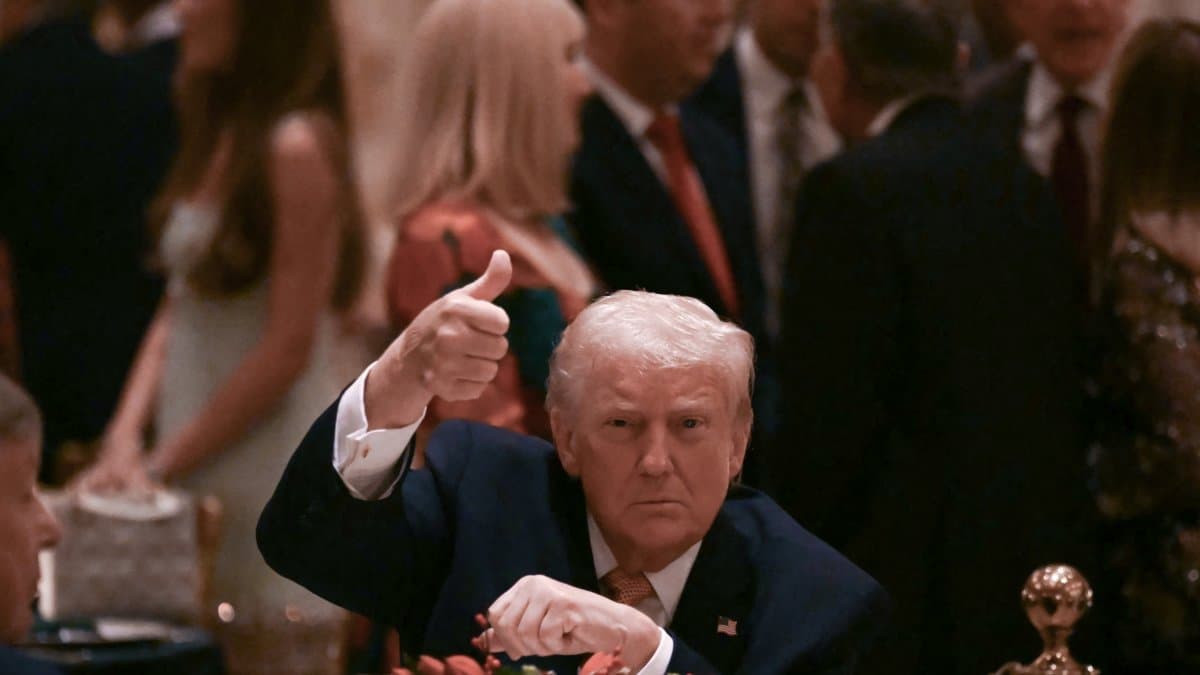

With information from AFP | President Donald Trump said Thursday that US forces carried out "powerful and deadly" strikes against members of the jihadist group Islamic State (ISIS) in northwestern Nigeria, after warning of the killing of Christians in that country.
These bombings are the first by the U.S. military in Nigeria under the administration of the Republican tycoon, who criticized the African nation in October and November by claiming that Christians there faced an "existential threat" tantamount to "genocide."
"I had previously warned these terrorists that if they did not stop the slaughter of Christians, they would pay dearly, and so it was tonight," he wrote on his Truth Social platform.
The president added that the "War Department conducted numerous flawless strikes" on Christmas Day against ISIS targets.
The U.S. military's Africa Command said on the X social network that it carried out a strike "at the request of Nigerian authorities in (Sokoto state) that killed multiple ISIS terrorists."
Pentagon chief Pete Hegseth praised his department's readiness to act in Nigeria on the same platform and said he was "grateful for the support and cooperation of the Nigerian government."
"Precision" attacks
Officials provided few details of this operation, however, andit was unclear how many people were killed.
Subsequently, U.S. defense officials disseminated a video of what appeared to be the nighttime launch of a missilefrom the deck of a warship flying the U.S. flag.
The African country's Foreign Ministry confirmed in a statement early Friday "precision strikes against terrorist targets in Nigeria through aerial bombardment."
"Nigerian authorities remain committed to structured security cooperation with international partners, including the United States, to address the persistent threat of terrorism and violent extremism," the foreign ministry added.
The diplomatic offensive was welcomed by some quarters but criticized by others as an escalation of religious tensions in Africa's most populous country, where there have been outbreaks of sectarian violence in the past.
🛠 Do you think there is an error in this article?
Recommendations




LATEST