Trump explains why he wants to talk to Maduro: "If we can save lives, fine. And if it's the hard way, that's fine too"
The president broached a possible call with the Chavista dictator on Air Force One.
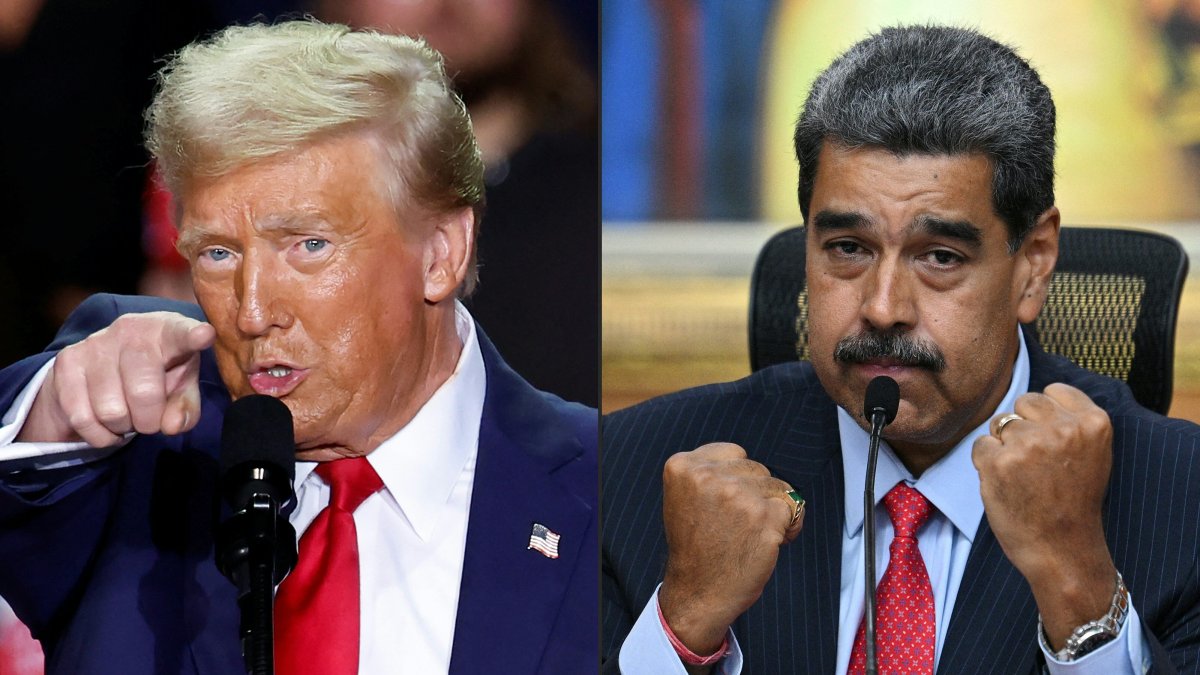
An edited file image shows Trump (l) and dictator Maduro (r).

President Donald Trump explained to reporters why he wants to speak via telephone with Venezuelan dictator Nicolás Maduro, accused of drug trafficking in the U.S., and also the leader of a designated terrorist organization, the Cartel de los Soles.
Aboard Air Force One, a journalist asked Trump why he is interested in meeting with a narco-terrorist leader, to which the US president responded by claiming that the objective is to "save lives."
"Mr. President, on Venezuela, sir, are you planning to talk to Nicolás Maduro?" asked a member of the press.
"I might talk to him; we'll see, but we're discussing that with the different steps. We might talk about Venezuela," the Republican leader quickly replied.
"Maduro, the U.S.-designated leader of this foreign terrorist organization. Why do you want to talk to him?" —the president was asked.
There Trump clarified his intention: "If we could save lives, if we can do things the easy way, that's fine. And if we have to do it the hard way, that's fine too."
#URGENTE | Trump desde el Air Force One sobre por qué quiere hablar con Maduro:
— Orlando Avendaño (@OrlvndoA) November 26, 2025
"Si podemos salvar vidas, si podemos hacer las cosas por las buenas, está bien. Y si tenemos que hacerlo por las malas, también está bien".
pic.twitter.com/mNHKLivYWk
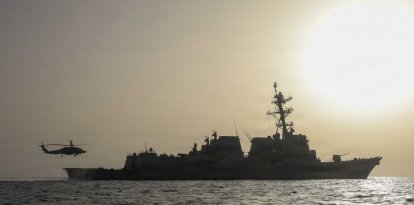
Then, the reporter asked about the goal regarding Venezuela in the context of a potential call with the Chavista dictator in amid the largest U.S. military deployment in the Caribbean Sea, just miles off the Venezuelan coast.
"I'm not going to tell you what the target is," Trump said. "You probably should know what the target is, but they've caused a lot of problems, and they've sent millions of people into our country."
Subsequently, the president linked the Maduro regime to the Tren de Aragua, another organization linked to the Chavista leadership that was designated terrorist by the U.S., as was the Cartel de los Soles.
"I'm not going to tell you what the is. You should probably know what the goal is, but they caused a lot of problems, and they sent millions of people into our country. I mean, they were probably the biggest abuser with Tren de Aragua and all the others that they sent to the drug dealers and drug lords, people that they sent in the jailbreaker. They opened their jails and prisons and dumped them into the United States, and they're not happy about it."
Politics
¿Quién es Dan ‘Razin’ Caine, el general “favorito” de Trump que destruyó al ISIS y ahora lidera la Operación Lanza del Sur contra Maduro?
Emmanuel Alejandro Rondón
World
US warns airlines that flying over Venezuela is a "potentially dangerous situation"
Emmanuel Alejandro Rondón
In recent months, Washington's pressure on Maduro's shoulders has grown relentlessly. First, the White House raised the reward for information leading to Maduro's capture to $50,000,000, the highest in the country's history. Then, as the months went by, the US launched a mega military deployment in the Caribbean to stop drug trafficking into the country, eliminating several narco-boats coming from Venezuela. Likewise, the US froze personal assets of the regime and its leaders and, in addition, designated as terrorist organizations the CdS and the TdA, both linked to Maduro, his entourage, and dozens of Venezuelan generals.
A narco-terrorist dictator, according to the U.S.
LATEST