US warns airlines that flying over Venezuela is a "potentially dangerous situation"
According to the FAA, the warning is in response to both interference in navigation systems and the intensification of military activities in Venezuela.
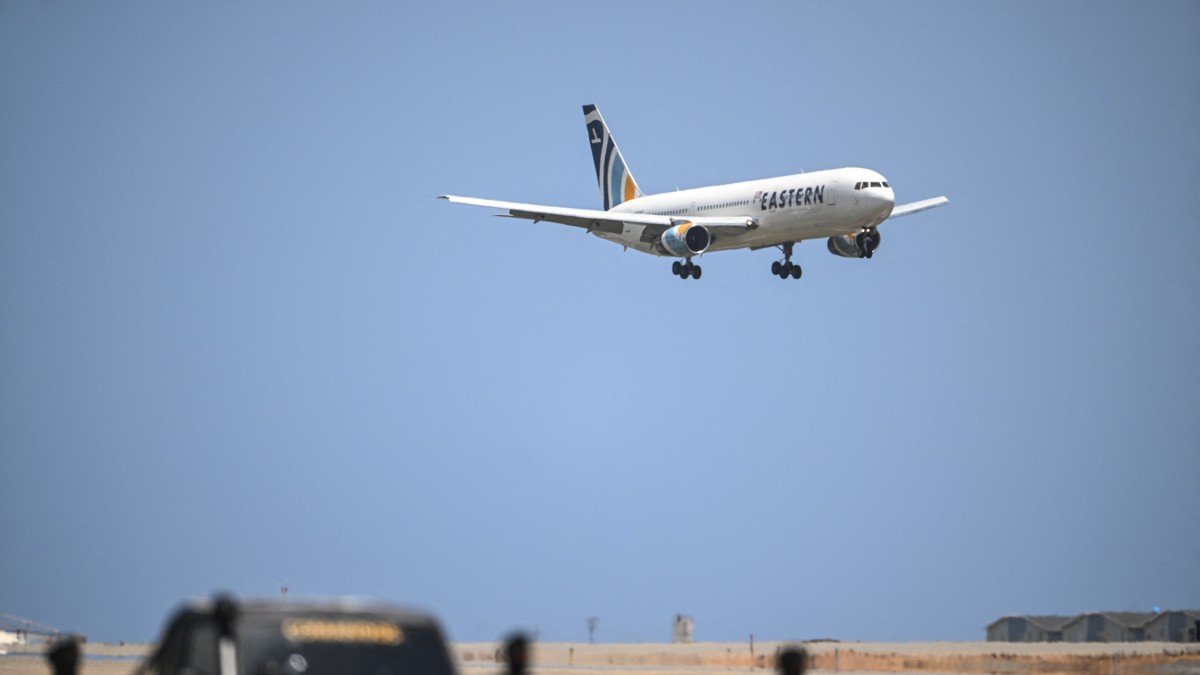
A plane carrying Venezuelan migrants repatriated from the U.S. landed at Maiquetia airport

The U.S. Federal Aviation Administration (FAA) issued an unusual formal warning to the country's commercial airlines about the risk of operating flights over Venezuela amid a military escalation in the Caribbean against narco-terrorist groups and growing tensions between the Trump Administration and the Nicolás Maduro.
In an advisory dated November 21,the agency alerted major airlines to the existence of a "potentially dangerous situation" for civil aviation and urged carriers to exercise extreme caution when transiting the Maiquetía Flight Information Region (SVZM FIR), the international airport of Venezuela located in La Guaira, a short drive from Caracas.
According to the FAA, the warning is in response to both interference in navigation systems and the intensification of military activities in Venezuela, a situation that has raised speculation about a potential US attack on Venezuelan territory or actions by the Maduro regime due to the US military deployment in the Caribbean to combat drug trafficking.
"Since September 2025, there has been an increase in Global Navigation Satellite System (GNSS) interference in the Maiquetia Flight Information Region (SVZM FIR), as well as activity associated with increasing Venezuelan military readiness," the agency warned.
"Some civil aircraft recently reported GNSS interference while transiting the SVZM FIR, which, in some cases, caused lingering effects throughout the flight. GNSS jammers and spoofers can affect aircraft out to 250 nautical miles and can impact a wide variety of critical communication, navigation, surveillance, and safety equipment on aircraft."
In addition, the FAA stressed that the Venezuelan Armed Forces have advanced fighter aircraft and weapons systems capable of reaching typical civilian aircraft operating altitudes, in addition to the existence of low-altitude risks from man-portable air defense systems (MANPADS) and anti-aircraft artillery.
According to Mary Schiavo, a former inspector general at the Department of Transportation, the FAA usually issues such warnings whenever there is a military conflict, although this does not mean there will necessarily be a Washington attack in the area.
“I wouldn’t take it as necessarily meaning there’s any kind of attack is imminent because I’ve seen these issued many times before. But as a pilot myself, I’d certainly heed it,” Schiavo said.
A militarized Caribbean and the start of Operation "Southern Lance"
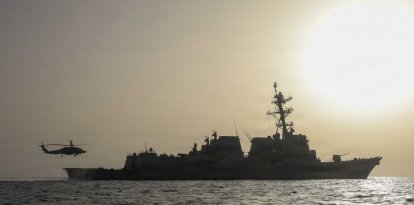
The FAA warning comes as the United States sustains one of its largest military deployments in history in the Caribbean. For months now, the Pentagon has positioned the Navy's largest aircraft carrier, the USS Gerald R. Ford, along with other warships, F-35 aircraft and surveillance units—as part of a device whose stated goal is to bolster hemispheric security, destroy drug cartels and pressure the Maduro regime, linked to narco-terrorist organizations such as the Tren de Aragua and the Cártel de los Soles.
In parallel, the Trump Administration has destroyed several drug vessels departing from Venezuelan shores as part of a broader strategy to combat the Cartel of the Suns, which the Trump Administration recently designated as a foreign terrorist organization.
As explained by Defense Secretary Pete Hegseth, such designation significantly expands the framework for U.S. military action against this organization.
"[The terror designation] gives more tools to our [War] Department to give options to [President Donald J. Trump] to ultimately say our hemisphere will not be controlled by narco-terrorists, it will not be controlled by cartels, [and] it will not be controlled by what illegitimate regimes try to push toward the American people. So, it's just about options, and we plan better than any organization in the world here."

World
Colombia welcomes Maduro leaving power, but in exchange for not being persecuted
Virginia Martínez

Trump says he will say something "very specific" to Maduro
In this context of diplomatic, military, and judicial pressure, President Donald Trump announced this Friday that he plans to communicate directly with dictator Maduro very soon. In statements to Fox News, Trump did not want to give further details about what he will discuss with the socialist leader: "We’re gonna be very much involved, I’ll be speaking to him in the not too distant future, but I can’t tell you what I’m going to be saying.”
Trump on Maduro/Venezuela
— CNW (@ConflictsW) November 21, 2025
“We’re gonna be very much involved, I’ll be speaking to him in the not too distant future but I can’t tell you what I’m going to be saying”
Trump also said he had “something specific to say” to Maduro#Venezuela https://t.co/ZClZ7mX4xT
The president's words add to growing signs that the White House is deepening its isolation strategy against the Venezuelan leadership, while the U.S. military presence in the Caribbean continues to expand. The FAA, meanwhile, assured that it will continue to monitor the risk environment for civil aviation in the region and make additional adjustments if necessary.
LATEST