Bolivia and US to reestablish diplomatic relations at the ambassadorial level
Seventeen years ago, former socialist president Evo Morales expelled the top U.S. diplomat during his first term in office, accusing him of supporting "a right-wing plot."

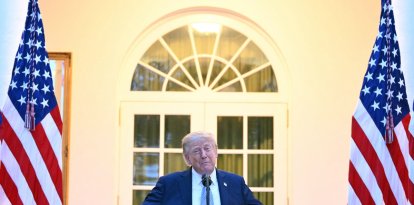
President Donald Trump and his Bolivian counterpart Rodrigo Paz
Following the catastrophic fall of the Bolivian left in the presidential elections, the Andean country and the United States will reestablish diplomatic relations at ambassadorial level, broken since 2008, as announced this Saturday by the Bolivian president, Rodrigo Paz, and U.S. undersecretary of state, Cristopher Landau.
"We are going to establish those relations," the center-right leader said in a statement alongside the representative of the government of President Donald Trump, who specified that they will be resumed "at the ambassadorial level, as they should always be."
Seventeen years ago, former socialist President Evo Morales expelled the top U.S. diplomat during his first term in office, accusing him of supporting "a right-wing plot." Washington, in reciprocity, did the same.
Morales ruled Bolivia continuously for three presidential terms (2006-2019), often violating the constitution and persecuting dissidents of his government. He was also a direct ally of regional socialist dictatorships such as in Cuba, Nicaragua and Venezuela. Critics denounced abuses against the private sector, the press and human rights violations during his administration.
With Paz, Bolivia is aiming for a leadership much more aligned with the values of the Trump Administration, recognizing regional conservative leaders such as President Javier Milei or Venezuelan leader Maria Corina Machado.
Recently, Paz made an open defense of the free market on his 'X' account as the economic model for his government: "To dismantle the tranca [jammed] state, the economy must revolve around the people. That is why our program 'Capitalism for all' seeks to reorganize the country, prioritizing production and empowering its regions with the 50/50, which proposes to decentralize fiscal resources in halves between the State and the regions. It will not be an easy task; it is a very difficult challenge that we set ourselves."
This article contains information from AFP
LATEST