ANALYSIS
US significantly expands its military deployment in the Caribbean: Here are the exact figures and potential measures against narcoterrorism and Maduro
Around 10,000 U.S. troops, seven warships, a nuclear submarine and a contingent of F-35 Lightning IIs are currently operating under the Southern Command.

Dictator Nicolas Maduro in military dress during an appearance

The Department of War has launched its biggest military deployment in the Caribbean in decades, with thousands of troops, strategic bombers, stealth fighters, warships and special operations helicopters deployed within 100 miles of the Venezuelan coast, according to various independent reports and sightings.
The operation, which the Trump administration frames as part of a campaign against "narcoterrorism" and Nicolas Maduro's regime, linked to narcoterrorist groups such as the Cartel de los Soles, the Tren de Aragua or guerrilla groups such as the ELN, has taken on a magnitude that exceeds the last missions in the hemisphere.
An unprecedented force
According to a report in the Financial Times, approximately 10,000 U.S. troops, seven warships, a nuclear submarine and a contingent of F-35 Lightning IIs are currently operating under the Southern Command.
The B-52H Stratofortress bombers, considered by experts to be the "backbone" of U.S. air power, performed an attack demonstration over the Caribbean days ago, with circular flights within the Maiquetia (Maiquetia Flight Information Region) FIR space.
Maiquetía is Venezuela's main airport, located in La Guaira, near the capital, Caracas. The FIR region is not Venezuelan airspace.
“I think we’re just trying to send a message to Maduro that ‘we can deploy, we can do whatever we want’,” a former senior military officer quoted by the FT said. It's a projection of power "designed to indicate we’re paying attention, we have the capability, and we’re demonstrating it for you."
The military deployment is bolstered by the presence of the amphibious group USS Iwo Jima, three Arleigh Burke destroyers - Jason Dunham, Gravely and Stockdale - the cruiser Lake Erie, the littoral combat ship Wichita and a Los Angeles-class nuclear-powered attack submarine.
In total, the U.S. Naval Institute estimates that 8% of the globally deployed U.S. naval fleet is now in the Caribbean, a significant and growing presence.
Puerto Rico and Trinidad: Pivotal points of the operation
The nerve center of the operation is concentrated in Puerto Rico, at the Roosevelt Roads base - closed in 2004 and reactivated as a forward headquarters for military deployment against narcoterrorism.
Satellite and Reuters images show the Marine Corps' F-35Bs, MQ-9 Reaper drones, P-8 Poseidon spy planes and an AC-130J Ghostrider gunship equipped with Hellfire missiles. Meanwhile, in the far south, The Washington Post identified MH-6 Little Bird and MH-60 Black Hawk helicopters training off Trinidad and Tobago, less than 90 miles off the Venezuelan coast.
Experts believe they belong to the 160th Special Operations Aviation Regiment, the elite unit that executed the operation to eliminate Osama bin Laden.
According to Mark Cancian, a senior adviser at the Center for Strategic and International Studies (CSIS), the inclusion of Little Bird helicopters suggests preparations for potential missions that could involve U.S. troops on the ground. He added that Black Hawks could be used in supporting roles — transporting additional troops, conducting combat search and rescue, or carrying out other operations.
The presence of the renowned regiment could also suggest special high-value targets on the ground. President Donald Trump himself said publicly that the United States is preparing the ground to launch "ground attacks" against the cartels. Likewise, he confirmed that he has authorized the CIA to conduct covert operations on Venezuelan soil, assuring that his administration will not tolerate the Maduro regime's continued protection of narco-terrorists.
Pete Hegseth's doctrine: "Crush the cartels, stop the poison, and keep America safe"
Secretary of War Pete Hegseth announced the creation of a Joint Counternarcotics Task Force, with the mission of coordinating air, maritime and special forces operations throughout the Caribbean. The goal, he stated, is to: "Crush the cartels, stop the poison, and keep America safe."
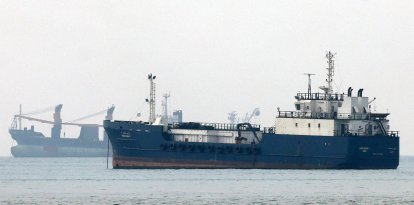
Since August, the Pentagon has launched at least seven strikes against vessels allegedly carrying drugs on international routes. Most of these narco-boats (and one submarine) were linked to Venezuelan and Colombian cartels.
Thirty-two people were killed in these operations, according to Axios, although U.S. authorities have not revealed the identities of the alleged drug traffickers killed, generating an internal struggle in Congress and criticism from some governments sympathetic to criminal groups, including Venezuela.
Diplomatic tension with Bogota
While the scale of the deployment has generated concern in the region, not many governments have challenged Washington. In addition to dictator Maduro, the most critical has been Colombian President Gustavo Petro, who accused the U.S. of "murder" following an attack that, according to him, killed a fisherman and not a trafficker. Petro has been criticized for his closeness to irregular groups and to Maduro's own regime. In response to Petro, President Trump announced a cut in military aid to Colombia, reducing assistance from more than $700 million to about $230 million and called the country a partner under the counternarcotics watch.
A diplomacy based on force
Trump administration officials have told the press, always under anonymity, that the military deployment is primarily focused on the fight against narcoterrorism, but that such actions do not exclude the dictator Maduro and a potential operation to depose him.
Some experts believe this is a diplomatic strategy that relies on military might to seek, at the lowest possible cost, the departure of Maduro.
"It sort of looks like we're in the throes of a 21st-century version of gunboat diplomacy," Brandan Buck, an analyst at the Cato Institute, said. "The Trump administration is doing what it can to force some sort of transition [of] power — out of Maduro's hands and into someone else's — without a classic invasion."
Analyst Ryan Berg (CSIS) partially agrees with Buck: the current configuration "is consonant with the potential for precision strikes using Tomahawk missiles or other weapons, but without risking the lives of U.S. service personnel." Berg says Trump likes to use such offensives so as not to put the lives of U.S. soldiers at risk.
However, experts are divided on whether precision strikes are enough to depose Maduro. Mark Cancian, in fact, warns that a ground invasion against Venezuela would require between 50,000 and 100,000 troops, five to ten times the current contingent. Some even raise that figure.
For example, in 1989, with much internal complicity of the Panamanian armed forces, the U.S. deposed dictator and drug trafficker Manuel Noriega with approximately 30,000 troops. Panama is a smaller and geographically less complex country than Venezuela.
Open scenario
Some military sources acknowledge that the deployment, at least for now, is not directly aimed at a conventional invasion, but to keep the dictator Maduro under constant pressure and to keep all response options open. In fact, some senior officials in the Trump administration are even talking about lethal strikes against Maduro himself.
"It's not just the CIA, it's all of our intelligence capabilities," a source close to discussions about the operation in the Caribbean told Axios. "The U.S. knows where Maduro is, where he stays, where he goes. If we wanted to kill him with a missile, we could have done it by now."
According to a former defense official, with U.S. assets positioned across the Caribbean, special operations units can do “pretty much anything.” He added: “Those operations can range from ‘operational preparation of the environment,’ which is like reconnaissance, to the highly dangerous missions to seize a high-value target.”
Moreover, should the decision be made to take the big step of a ground invasion, after implementing the maximum pressure approach, there are already 1,600 Marines ready for immediate entry. There is also, technically, the capability to strike "any point" in Venezuela within minutes, according to ABC reporter David Alandete.
Meanwhile, the Maduro regime and the cartels watch as bombers continue to patrol the Caribbean Sea, drones take off from Puerto Rico and the USS Iwo Jima remains in position off the coast of Venezuela. With all the deployments, the U.S. can continue to maintain its operations against narco-boats and other vessels carrying drugs, precision air strikes or even a special ground operation for high-value targets.
LATEST