A Gift to Petro: Colombia’s Disoriented Opposition Ahead of the Presidential Election
For more than two decades, Colombia’s left has tried, and failed, to bring down former President Uribe. That voices on the right are now joining that effort is incomprehensible —as is the self-sabotage now unfolding within Uribismo itself.

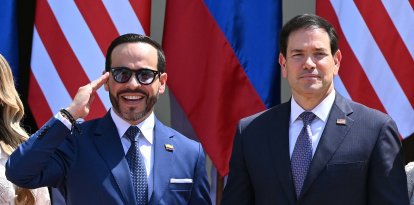
Paloma Valencia y su compañero de fórmula, Juan Daniel Oviedo.
Colombia faces the most consequential presidential election in its recent history. The risk is clear: under the ruling party’s candidate, Iván Cepeda, Gustavo Petro could continue expanding his authoritarian, liberty-eroding political project—one that has already inflicted significant damage on the country over the past four years. Cepeda is an ideological hardliner of the same mold as Petro, but far more disciplined—making him, in many ways, more dangerous.
And yet, Petro’s broad unpopularity presents the opposition with a remarkable opportunity—not only to win an election, but to consolidate a political movement capable of dismantling the far-left agenda and neutralizing petrismo as a lasting force. In theory, the opposition should win comfortably in a June runoff.
But a problem has emerged. Heading into the first round, the opposition is split between two candidates with real momentum.
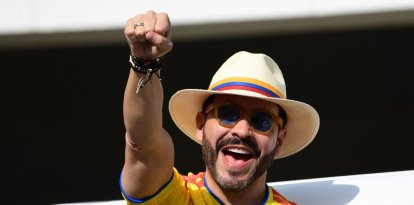
On one side stands Abelardo de la Espriella, a skillful conservative who has positioned himself as the most attractive option for Colombia’s hard right. Before entering politics, de la Espriella was known as a ruthless criminal defense lawyer—representing controversial figures and maintaining close ties to former President Álvaro Uribe, for whom he also served as legal counsel.
On the other side is Paloma Valencia, who won by a wide margin in the opposition primaries held on March 8. Valencia represents the Centro Democrático party, the political force led by Uribe—arguably the most influential figure in modern Colombian politics.
Both de la Espriella and Valencia appear strong. Following the primaries, Valencia’s odds of winning the presidency rose in betting markets. According to a poll by the respected firm AtlasIntel, the first-round outcome would likely pit Iván Cepeda against de la Espriella. However, in hypothetical runoff scenarios, both de la Espriella and Valencia defeat Cepeda by a comfortable margin, with Valencia posting the strongest numbers. In short, the outlook for the opposition is not bleak—but it is still early, and anything can happen between now and election day.
Shortly after the primaries, both candidates announced their running mates. De la Espriella selected José Manuel Restrepo, a respected technocrat who had been serving as president of one of Colombia’s leading private universities. Valencia, for her part, chose Juan Daniel Oviedo—a former official in Iván Duque’s centrist government, socially and culturally left-leaning, economically liberal, and a strong second-place finisher in the March 8 primaries. He is also openly gay—an aspect that, while not inherently relevant, has become part of his political identity.
From that moment on, Colombia’s opposition descended into a fratricidal struggle. Uribismo remains the most influential political force on the right, but it is now fractured.
Valencia commands the loyalty of Uribe’s party base and much of the moderate right. De la Espriella, meanwhile, has attracted not only the more hardline elements of Colombia’s right but also a significant number of uribistas disillusioned with what they see as the Centro Democrático’s turn toward moderation.
By choosing Restrepo, de la Espriella broadened his appeal without courting the left. His running mate is not known for progressive social stances, but for academic seriousness—adding a measure of sobriety to what is otherwise a clearly populist project.
Valencia, by contrast, has pursued a more ambitious—and riskier—strategy: to attract not only moderate conservatives, but also the political center—if such a thing still meaningfully exists—and even segments of the left disillusioned with Petro.
But her strategy has opened a significant rift on the right. Many who have historically been loyal to Uribe—regarding him as the central reference point of Colombian conservatism—are beginning to look elsewhere. Politically orphaned, they are finding refuge in de la Espriella’s movement.
The real problem is that this division has distracted the right from confronting its primary adversary: Iván Cepeda. Even more troubling, some on the right have succumbed to a fatal temptation: attacking former President Álvaro Uribe.
One of the deepest fault lines in Colombian society is the so-called “peace” process—better understood as impunity—granted to the communist guerrillas. This divide has shaped the country’s political and social conflict for decades. It admits no gray areas. Colombian politics has long been organized around those who defend impunity and those who stand for justice.
Within that divide, uribismo represents order and justice against chaos and impunity. Álvaro Uribe, therefore, is not merely a political figure—he is a symbol. A symbol of the triumph of order over disorder in a conflict that has defined Colombia since the mid-20th century. It was Uribe who, after decades of internal war, defeated the FARC through decisive military force.
To attack that symbol—as some on the right are now doing, in the belief that it benefits one candidate over another—is senseless. It is self-destructive. Even for Abelardo de la Espriella, who openly identifies as a uribista, it is counterproductive for his supporters to undermine the man who once saved Colombia, simply to weaken Paloma Valencia.
For more than two decades, Colombia’s left has tried—and failed—to destroy Uribe’s image. To this day, he remains the most influential political figure in the country. That voices from the right are now joining that effort is nothing short of incomprehensible.
And yet, much of this could have been avoided had Paloma Valencia chosen her running mate more carefully. This is not to justify the attacks on Uribe—but to recognize that her choice of Oviedo also carries political costs. Oviedo supports the peace agreements of Juan Manuel Santos—agreements that reversed many of Uribe’s military and political achievements. In Colombia’s defining political divide, Oviedo stands on the side of impunity, not order.
If uribismo has historically represented order, and it now incorporates into its own platform elements associated with impunity, then the central political cleavage that has defined Colombia begins to dissolve. And with it, the identity of one of the two sides.
Adopting the positions of one’s adversary may be marketed as moderation, but it ultimately erodes political identity. It is clumsy. And it lies at the heart of the instability within Valencia’s current ticket.
That inconsistency was laid bare this week in the first joint interview between Valencia and Oviedo. The two openly disagree on the issue of “peace” and the transitional justice framework inherited from Santos. But that is not their only point of contention. The interview revealed deep differences on issues such as adoption by same-sex couples, abortion, gender-transition procedures for minors, and even how to characterize Colombia’s far left. While Oviedo justifies past outbursts of left-wing violence, Valencia labels them “urban terrorism.”
Both insisted that these differences do not divide them—but unite them. They argued that if they cannot reach agreement, they are unfit to govern. But this is not a convincing argument. Colombia needs a sovereign authority capable of restoring order, reclaiming territory, and stabilizing the economy—an authority that acts with unity of purpose. Politics allows for internal disagreement within a government, but at the center of power there must be a single will. Fragmented authority risks dissolving altogether.
It is clear that the Valencia–Oviedo alliance is strategic and electoral, not principled. If they were to win, it would begin as a weakened government: fragile, sustained by legitimate interests, but not by a coherent moral foundation—one that transcends short-term calculations. That is a serious problem.
There are only two possible outcomes. Either Oviedo becomes irrelevant within a Valencia administration and is sidelined, or, as they themselves suggest, they govern jointly and shape Colombia after Petro together.
If the former occurs, chaos is likely. Oviedo has already said he would feel betrayed if policies were advanced without his agreement.
If the latter occurs, Valencia’s voters will feel deceived. They expect a right-wing government, not one that accommodates the relativism and globalism currently undermining Western societies.
This leaves the opposition to Petro in a kind of Catch-22. The core of the struggle against the far left has long been support for Álvaro Uribe’s political project. But now, backing the uribista proposal risks conflicting with that very objective.
This drift and confusion threaten to deepen tensions within Colombia’s opposition. The fear is that wounds will open that cannot be healed before the runoff. Colombia can emerge from the crisis Petro has led it into—but only if society remains cohesive.
LATEST