Federal appeals court upholds Texas law mandating the display of the Ten Commandments in classrooms
The Fifth Circuit Court of Appeals rejected the ACLU's arguments and ruled that the law does not violate the First Amendment. Still, the court battle continues and the case could reach the Supreme Court.
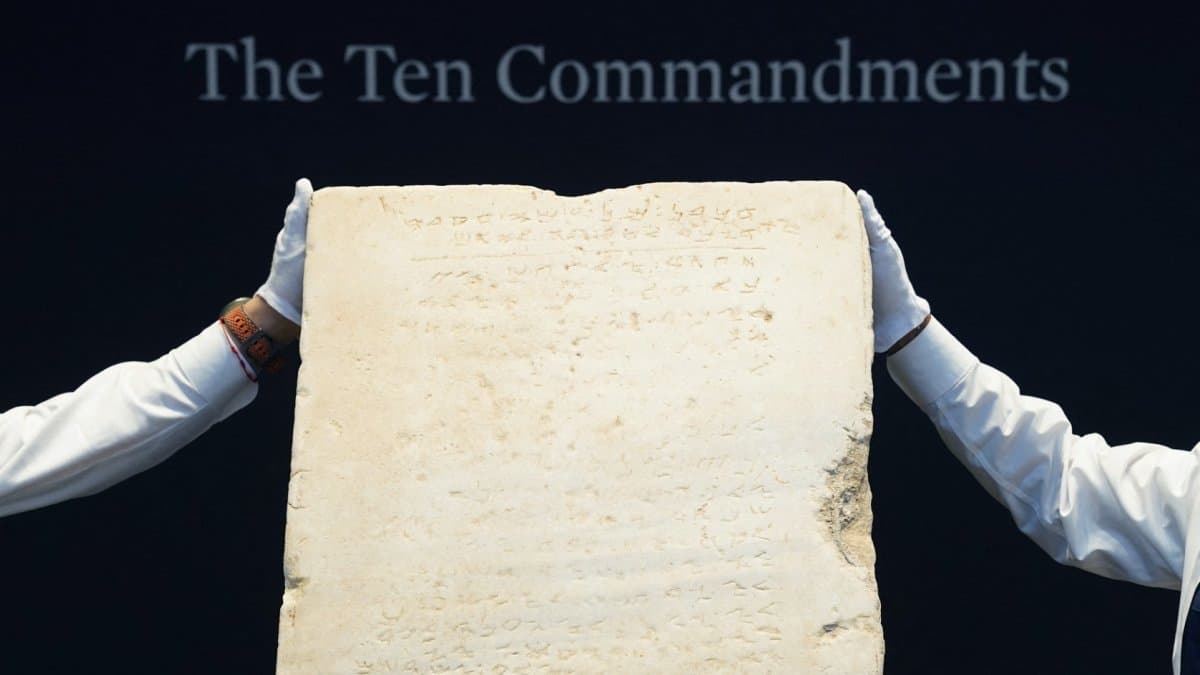

Texas won a major legal battle on Tuesday, after the Fifth Circuit Court of Appeals upheld the constitutionality of a state law requiring public schools to display the Ten Commandments in every classroom, rejecting arguments that the rule violates the separation of church and state.
"The foundation of Western law & morality belongs in our classrooms. Texas stands for faith, freedom, and the values that founded our great state," Texas's Republican governor, Greg Abbott, celebrated.
The law, enacted in June 2025, requires all public elementary and secondary schools to display in every classroom a poster or a framed copy of the Ten Commandments measuring at least 16 inches by 20 inches, in a conspicuous place and in a legible typeface.
The lawsuit was filed in December 2025 by the American Civil Liberties Union (ACLU) and religious freedom organizations, on behalf of 18 families with children attending public schools in the state. The plaintiffs argued that the legislation forced their children to "observe and worship" a religious text at the government's direction, thereby violating their constitutional rights. Sixteen school districts were named as defendants in the case.
Lawsuit dismissed
Despite the insistence of activists and organizations that condemned the law, the Fifth Circuit did not uphold those arguments. In its opinion, the court noted that the law does not compel any student to recite, believe or affirm the divine origin of the Ten Commandments, nor does it instruct teachers to promote the religious content of the poster or to contradict those who do not share those beliefs.
The court laid out a clear distinction between the display of a historical text and the imposition of religious practices, stressing that religious establishments of the past were characterized by "government pressure to engage in religious worship," a situation that, in its view, this law does not address.
"S.B. 10 ... does not tell churches or synagogues or mosques what to believe or how to worship or whom to employ as priests, rabbis, or imams. It punishes no one who rejects the Ten Commandments, no matter the reason. It levies no taxes to support any clergy. It does not co-opt churches to perform civic functions. These are the kinds of things 'establishments of religion' did at the founding. S.B. 10 does none of them," a portion of the appeals court opinion reads.
The ACLU reacted quickly to the ruling against it, vowing to continue the legal battle.
"We are extremely disappointed in today's decision. The Court's ruling goes against fundamental First Amendment principles and binding U.S. Supreme Court authority. The First Amendment safeguards the separation of church and state, and the freedom of families to choose how, when and if to provide their children with religious instruction. This decision tramples those rights," the organization said in a statement.
According to the ACLU, the decision harms the right of families to choose how and when to provide religious instruction to their children.
Meanwhile, Republican Senator Phil King, the bill's author, celebrated the ruling.
"As I have said all along, few documents in the history of Western civilization and in American history have had a larger impact on our moral and legal code, and our culture, than the Ten Commandments," King said. "This is a great day for Texas."
Despite the Republicans' win and the Texas government's victory, the court battle will most likely continue all the way to the Supreme Court.
🛠 Do you think there is an error in this article?
Recommendations









LATEST