ANALYSIS
Did Obamacare really deliver on its promises? The health care experiment that generated a 'cost explosion'
President Obama set three major priorities for his ambitious healthcare plan: increasing the number of people with health insurance, lowering insurance premiums and expanding coverage for those with pre-existing conditions. More than a decade after it went into effect, the law remains at the center of public debate.
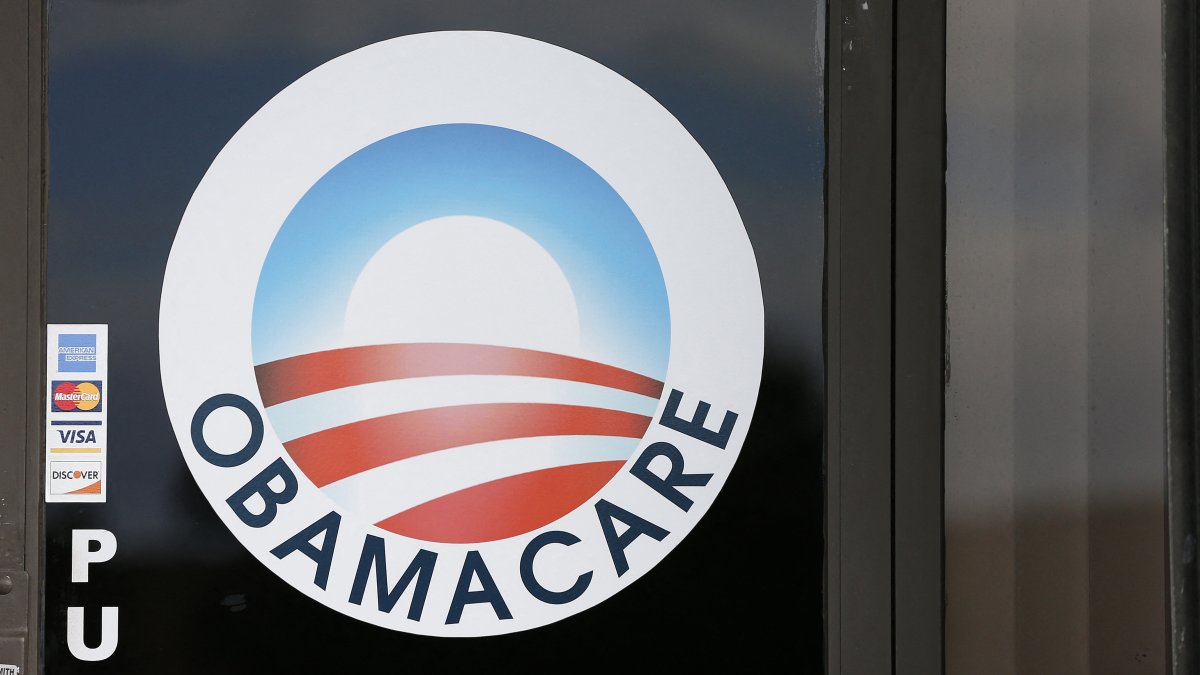
Obamacare logo at a health care company in Miami/ Rhona Wise.

March 21, 2010, was a historic day for the Barack Obama presidency. On that day, Congress passed his ambitious health care plan. It was the Affordable Care Act, popularly known as the ACA or Obamacare. According to a viral video from the time, the president embraced and shook hands with Joe Biden, Rahm Emanuel, and dozens of officials gathered at the White House. Months of negotiations and headaches had finally paid off.
President Obama set three big priorities for his health plan: more people with health insurance, lowering insurance prices and expanding coverage for those with pre-existing conditions.
Two days later, Obama signed the bill, garnering not a single Republican vote on Capitol Hill. Many moderate Democrats also opposed it in the House. Most of its contents went into effect a few years later, in 2014.
During and after the debate in Congress, ACA aroused a sense of anger in much of the country. Hundreds of people began flooding the events of members of Congress. Angry and informed, often with the law printed and underlined, they were sometimes not-so-quietly showing their displeasure with the reform.


Health
Medicaid vs. Medicare: What is the difference, and which one is right for me?
Diane Hernández
This polarization blew up in President Obama's face in the 2010 midterm elections, when he lost 63 seats in the House of Representatives, the biggest defeat for the party in power since 1938. Additionally, they lost six Senate seats, including in Democratic states such as Illinois and Massachusetts.
The ACA was so disruptive that it survived a 2018 repeal attempt by one vote, when John McCain, Obama's rival in the 2008 election, voted to save his former rival's plan.
Twelve years after it went into effect, critics are leaning on President Obama's promises to cast doubt on the results of his flagship legislation. The plan promised to expand coverage, lower costs and protect the most vulnerable patients. More than a decade later, the big question remains open: Did Obamacare deliver what it promised?
How does Obamacare work?
Before discussing the changes introduced by the Obama administration, it is necessary to explain how the previous system worked.
In addition to the public options, Medicaid, Medicare and VA, a good portion of the population had private health insurance through their employers. Freelancers and others could then opt for private options.
As with any insurance market, health companies assessed the risk posed by each customer before pricing coverage. Young, healthy people who used the system infrequently were enrolled in low-risk funds and paid lower premiums. In contrast, those with chronic illnesses, costly medical histories, or a higher likelihood of using services were assigned to separate funds, with higher premiums reflecting that higher expected expense.
This scheme allowed insurers to balance their books, offer less expensive plans to low-risk enrollees, and, in many states, refer the most costly patients to special programs partially funded by state governments.


Again, the Democratic president's goals were to increase the number of people with coverage, make insurance more affordable, and protect people with preexisting conditions.
To carry out his mission, new rules of the game were created for insurers.
New minimum coverage standards
Obamacare forced healthcare companies to offer more robust, generous plans that covered more benefits considered essential. In many cases, these went above and beyond many existing plans.
In addition, the issue guarantee was created, which meant insurers could not deny coverage to people with pre-existing conditions and could not charge them more for those conditions.
Previously, each patient paid according to the risk they represented for the company. If you were healthy, you paid less, and if you were unhealthy, you paid more. The insurers had a pool for each group. This was prohibited, and they could only raise the premium based on age, geographic area, family size, or smoking status, but not on prior illnesses.
Therefore, they could no longer offer plans that did not meet these minimum requirements established by law.
Regulated markets
One of the central points of ACA is the creation of regulated private markets, called "exchanges."
These function as digital marketplaces where private insurers compete under the same set of rules. They are not intended for the entire population, but primarily aimed at those who do not receive insurance through their work.
Some states run their own "exchange," while others use the federal one on the official Healthcare.gov website. ACA forces participating insurers to comply with the new minimum coverage standards.
Within these marketplaces, insurance is organized into metallic categories - Bronze, Silver, Gold and Platinum - that indicate how much of the average medical expense the plan covers and how much the patient pays.
The Silver plan occupies a middle ground among the three and has served as the system's benchmark, since federal subsidies are calculated based on this plan's price.


Large subsidy plan
This plan operates within the regulated market so that the federal government can help insurers cover the premiums of people they are now required to accept at a lower price.
The primary mechanism is called the Premium Tax Credit. This subsidy does not reach the patient, but is transferred directly to the insurer.
Initially, this assistance was limited to households with incomes up to 400% of the federal poverty level, but with subsequent reforms, the well-known subsidy expansion of the Biden era which effectively eliminated that cap. Today, if the benchmark insurance plan costs more than approximately 8.5% of a household's annual income, the government covers the difference.
The result is that the subsidy no longer distinguishes by need, but also reaches broad sections of the middle class and even higher incomes. Health insurance thus came to function as a regulated tariff: the real price exists, but the consumer pays only part of it, while the Treasury absorbs the rest.
Medicaid expansion
Before the ACA, Medicaid was limited to specific categories. As required by law, all adults with incomes up to 138% of the poverty level, regardless of family situation, were eligible for the program.
As part of a co-administered program with the states, the federal government committed to finance 100% of the expansion costs in the first few years, then permanently reduced its contribution to 90%.
As a result, millions of people who were previously left out of the system or who could have signed up for a plan in the marketplace went directly to public insurance, displacing private coverage to a state scheme.

Just The News
HHS report finds Medicaid paid over $200 million in incorrect payments for deceased recipients
Misty Severi

Did Obamacare live up to its promises?
In mid-2009, President Obama claimed that his plan "will ultimately lower health care costs." He even went so far as to talk about premiums of no more than $2,500 a year.
A few years later, the results appear to be otherwise.
According to a report published by The Heritage Foundation, individual insurance premiums increased on average by 133% between 2013 and 2024, well above inflation and "twice as fast as premium increases in the employer-based health insurance market."
When it comes to assigning blame, Republicans and conservatives argue that by imposing a broader minimum coverage standard and prohibiting insurers from adjusting prices based on the enrollee's health status, the plans ended up covering more expensive services and including people who were expected to use the system more frequently. To offset these higher costs, the companies passed the expense on to consumers through higher premiums and deductibles.
At the same time, the system's design depended on the massive enrollment of young, healthy individuals to balance the risk pool, something that occurred only partially and inconsistently, especially after the repeal of the individual mandate. With fewer low-risk contributors and greater coverage obligations, the result was a sustained increase in premiums, even in plans marketed as "low-cost."
The effect wasn't limited to the exchange itself, but extended to the entire healthcare system. By imposing a new minimum level of coverage, redefining which services plans had to include, and altering the system's economic incentives, the law also impacted insurance plans offered outside the new marketplace. Even for those who kept their employer-sponsored plans, these changes resulted in higher premiums, more limited provider networks, or higher deductibles.
A simple way to understand this is to imagine a club that has to cover the medical expenses of all its members with a single monthly fee. If the club decides to accept anyone regardless of their health status and, in addition, requires the fee to include more services, the club's total expenses increase. If not enough young, healthy members join who use the system infrequently, the only way to maintain balance is to increase the fee for everyone.
A "cost explosion"
VOZ spoke with Robert Moffit, director of the Center for Health Policy Studies at the Heritage Foundation, who explained that Obamacare had three major problems: less individual freedom, less competition and a decrease in the supply of plans in the marketplace. All together, they coalesced into what he summarized as a "cost explosion."
"So the patients started to lose access to their preferred providers, access to preferred physicians or specialists or hospitals and other medical facilities. So you put it all together, you know, you have higher costs, you have reduced access to providers, you have a decline in personal choice, a decline in competition and your out of pocket cost especially if you're not subsidized are crazy. Think you're talking really expensive insurance," Moffit explained.
More people insured...by the government?
One of Obamacare's big goals was to reduce the number of uninsured Americans. In numerical terms, it achieved that.
By 2024, the Department of Health and Human Services (HHS) reported that more than 45 million people had enrolled in ACA-related insurance plans.
According to the USA Facts portal, which uses Census Bureau data, in 2013, 85.5% of Americans had public or private health insurance, leaving 14.5% uninsured. In 2024, that figure rose to 92%, representing an increase of 6.5 percentage points.
However, most of that growth was public, not private, thanks to the Medicaid expansion.


Before ACA, Medicaid was limited to specific categories: single mothers, people with disabilities, children or seniors. Beginning with the law, all adults with incomes up to 138% of the poverty level, regardless of health status or family situation, were eligible for the program.
"Since the passage of the ACA, increases in public coverage have accounted for most of the change in the uninsured rate: from 2010 to 2024, public insurance coverage grew 5.8 percentage points, from 29.7% of the population to 35.5%, while private coverage grew 0.3 percentage points, from 65.8% to 66.1%," USA Facts explained.
The problem with subsidies
Initially, the ACA subsidy system was strictly capped. Only those who bought their insurance in the marketplace and had incomes up to 400% of the federal poverty level were eligible for subsidies, seeking to concentrate them in low- and middle-income households.
Currently, the criteria for accessing subsidies no longer depend on a fixed income level; instead, they depend on the insurance price relative to the household's income. This change was part of the famous subsidy extension implemented by Joe Biden in 2021.
The system went from asking "how much do you earn?" to asking "how expensive is your insurance relative to your income?" And that difference completely changed the scope of the program.
Under the scheme, anyone who buys a plan on the exchange can receive help if the premium for the benchmark plan exceeds about 8.5% of their annual income, regardless of their income level.
In practice, this opened the door for subsidies to be extended well beyond the originally intended population. According to the think tank Heritage, nine out of ten Obamacare beneficiaries today receive taxpayer-funded subsidies to pay their premiums.
This new dynamic had a significant fiscal impact. For example, according to estimates by the Committee for a Responsible Federal Budget, the gross federal cost of these subsidies and related expenditures went from $18 billion in 2014 to $138 billion in 2025.


Unsustainable by design?
Going back to the concept of the risk pool, before the ACA, insurers operated with separate funds: one for young, healthy people, one for those with expensive illnesses, and others in between. Each group paid according to the risk it represented, as in any insurance scheme. With the reform, these compartments were unified under a solidarity criterion: all in the same fund.
Although the intention was solidarity, the problem was mathematical. By mixing people who make little use of the system with those who use it intensively, and by prohibiting price adjustments based on the higher expected expenditure, the average cost of the fund increased.
To maintain financial equilibrium, insurers raised premiums and deductibles for everyone. The effect was especially concentrated on the young and healthy, who began paying more than they consumed. Many opted out of the system.
Intentions vs. outcomes
VOZ spoke on this point with Chris Pope, a health public policy expert and senior fellow at the Manhattan Institute. While he noted that the program had good intentions, especially in addressing medical coverage for people with pre-existing conditions, it didn't get it right in forcing insurers to mix healthy with sick.
"However, the ACA did not simply target a subsidy at Americans who were uninsurable or unable to afford insurance coverage at actuarially fair rates. Instead, the legislation required insurers to price plans the same for people who signed up before they got sick, as for enrollees who have major pre-existing medical conditions. This made it rational for many people to wait until they got seriously ill before purchasing insurance from the individual market. (...) This forced plans to drive premiums higher, hike deductibles, and cut access to providers most appealing to the seriously ill, in order to stay in business," Pope, who testified on the subject before Congress in 2020, explained.
In this respect, the design of the risk pool made the system difficult to sustain over time. By relying on the continued participation of young, healthy members who pay more than they use, and by limiting price adjustment mechanisms, the ACA created a dynamic in which each cost increase pushes more people out of the market. The result was a system that, in order to function, requires ever-increasing subsidies, shifting its shortcomings onto public finances.
At the same time, even many critics of the ACA acknowledge that the reform achieved one of its central objectives: guaranteeing access to health insurance for people with pre-existing conditions who previously faced exclusions, prohibitive premiums, or simply the inability to obtain coverage. For these patients, the change was structural and tangible.
The cost of that protection, however, did not disappear: it was redistributed within the system. By eliminating risk-based segmentation and shifting the higher expected costs to the entire pool, the ACA ensured coverage for the most vulnerable, but it did so by raising costs for other groups, particularly young, healthy, and middle-income enrollees who do not qualify for substantial subsidies.
LATEST