Trump reclassifies marijuana as a less dangerous drug to allow research
The reclassification had begun in 2024 during the Biden Administration, but had been left unfinished.

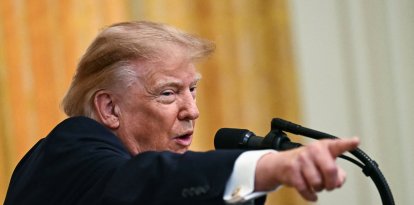
Donald Trump in the Oval Office/Brendan Smialowski.

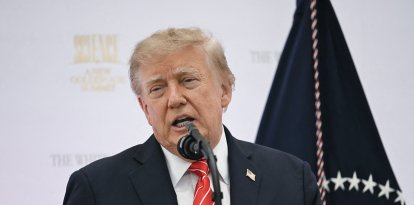
Donald Trump signed an executive order to expedite the reclassification of marijuana as a less dangerous drug. The president made the announcement in the Oval Office, accompanied by medical experts and Health and Human Services Secretary Robert Kennedy Jr.
The reclassification began in 2024 during the Biden administration, but had been left unfinished.
According to a senior White House official who spoke to reporters at a briefing, the central goal of the move is to allow research that is prohibited under the existing classification.


"The president has heard from so many people who have talked about the potential benefits of medical marijuana and CBD use, but he’s also heard from patients and from doctors that there’s not enough research to inform medical guidelines and that many patients are using these products without talking to their doctor about them," the official said.
However, the executive order maintains restrictions for products deemed to "pose serious and potentially life-threatening health risks," so it will have no impact on criminal penalties or recreational use of marijuana.
"This is a scientific question that has divided our country for many, many years. Five administrations have promised to act on this issue. This will finally allow us to study this issue and to answer these questions for the American people," Secretary Kennedy said during the Oval Office event.
"With this reclassification, it will allow research to be conducted with regard to cannabis. There is anecdotal evidence that cannabis benefits these conditions. And now we'll have an opportunity to see if research does prove that it is effective. And if it is so, then it will open up a whole new method of treatment for our veterans with regard to this particular issue," added Dan Wiley, national commander of the American Legion, a 100-year-old veterans' organization.
What is marijuana reclassification all about?
The drug rule was established by the Nixon Administration in 1971, when the Republican president signed the Controlled Substances Act (CSA). This legislation established U.S. federal policy on drugs that are classified as follows: Schedule I, Schedule II, Schedule III, Schedule IV and Schedule V, with Schedule I being the most dangerous and Schedule V being the least dangerous.
Currently, and according to the CSA, marijuana falls under Schedule I, as a substance that has no medicinal value.
"Drugs, substances, and certain chemicals used to make drugs are classified into five (5) distinct categories or schedules depending upon the drug’s acceptable medical use and the drug’s abuse or dependency potential. The abuse rate is a determinate factor in the scheduling of the drug; for example, Schedule I drugs have a high potential for abuse and the potential to create severe psychological and/or physical dependence. As the drug schedule changes -- Schedule II, Schedule III, etc., so does the abuse potential -- Schedule V drugs represent the least potential for abuse," explains the official DEA site.
LATEST