Exclusive
GOP plan to hold the House in 2026: Capitalize on Hispanic vote in key districts
Hispanic voters were already key to Donald Trump's victory in 2024. The National Republican Congressional Committee (NRCC) hopes they will also be key to retaining Congress in the midterm elections.
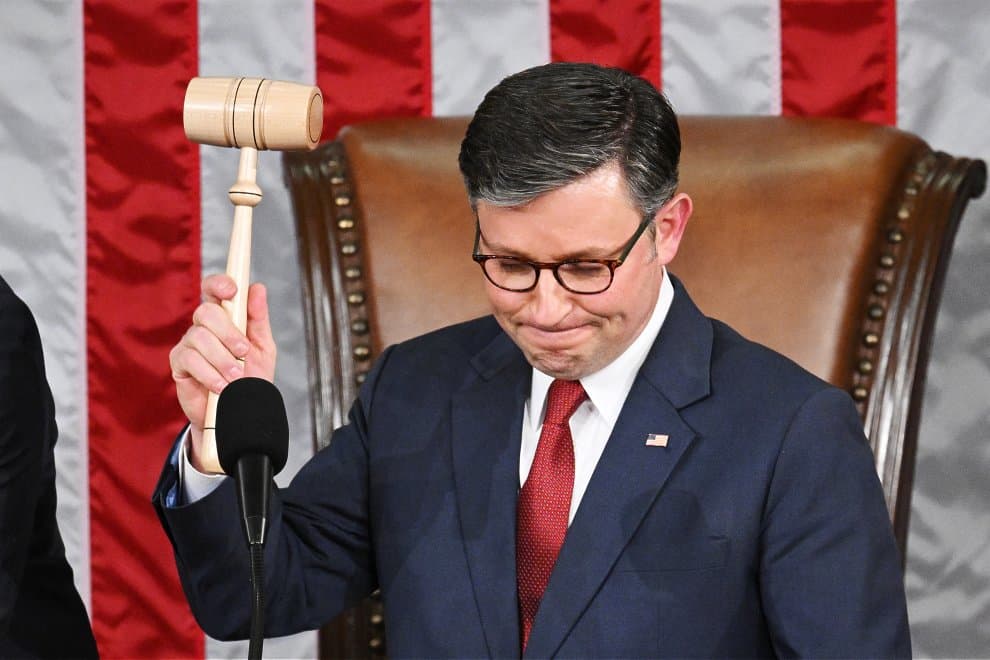
Johnson aims to retain the gavel in 2026/ Mandel Ngan.

With the midterm elections drawing ever closer, the big challenge for the Republican Party is to retain its majority in the House of Representatives. Although the mission looks uphill, given the current slim majority and that voters historically tend to punish the party in power, Republicans have a secret weapon to consolidate and increase their majority in 2026: Hispanic voters.
Mike Johnson and congressional Republicans hope to avoid a scenario like 2018, when they lost more than 40 seats and a majority in the House. Instead, they aim to make it look more like 2002, when George W. Bush became the last Republican president to win House seats during the midterm elections.
The task of maintaining and even increasing Republicans' majority in the House falls to the National Republican Congressional Committee (NRCC), the GOP arm that ensures more Republicans are elected to the House and as few as possible leave it.
For 2026, they see the growing Hispanic trend toward conservative policies as a big opportunity to keep the gavel in Johnson's hands.


Politics
Worried about Trump, Democrats spend $20 million on study to connect with working-class men
Luis Francisco Orozco
Democrats targeted by the NRCC for 2026
Because of their impact in key pro-GOP states, Hispanic voters played a big role in Donald Trump winning against Kamala Harris, both in the popular vote and the electoral college, which ultimately returned him to the White House.
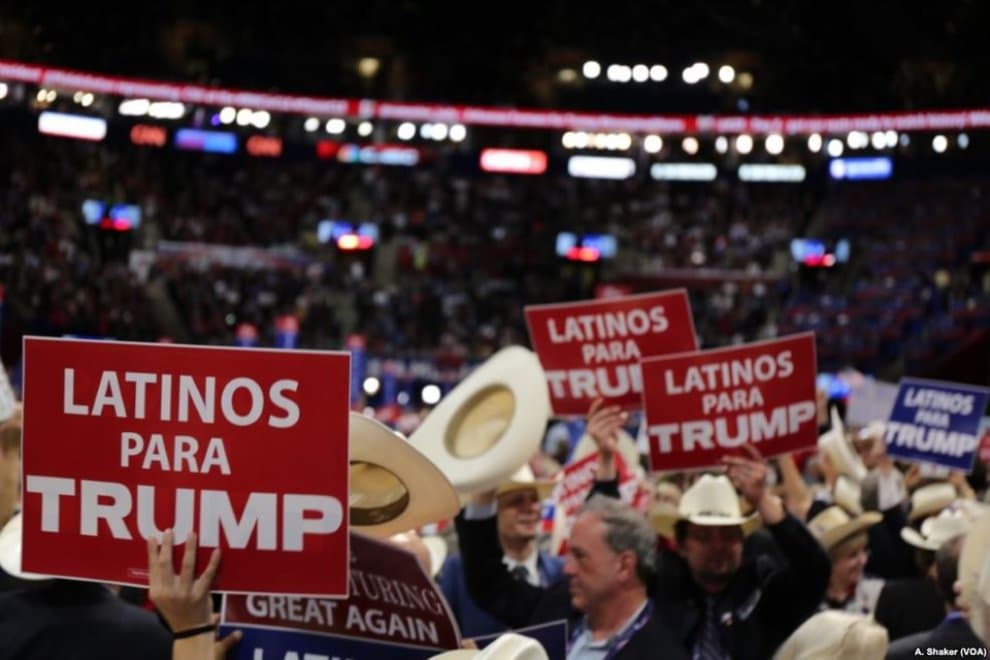
On this premise, the NRCC is launching a surgically crafted ad campaign against a group of Democratic congressmen representing districts with two key characteristics: a majority Hispanic population and an electoral endorsement of Trump in 2024.
Five Democrats meet these requirements:
- Henry Cuellar (TX-28)
- Vicente Gonzalez (TX-34)
- Nellie Pou (NJ-09)
- Adam Gray (CA-13)
- Josh Harder (CA-09)
The most striking cases are the first two, given that they have a strong majority Hispanic population. In Gonzalez's district, where 83% of the population is Hispanic, Trump got 53% of the vote. He gained ten points compared to 2020 and twenty-two more than in 2016, when he first ran.
Identical is the case of Cuellar, whose constituency has a 65% Hispanic majority. There, despite Colin Allred beating Ted Cruz by six points, Trump won with 52% of the vote.
The NRCC's logic is to take advantage of the national trend of this demographic group towards the Republican Party and turn it into its surprise weapon to retain the House in 2026 and deepen the identity crisis in the Democratic Party.
In addition to the five key districts mentioned above, the NRCC also looks closely at other areas with similar patterns. Such is the case of Raul Ruiz (CA-25), Jim Costa (CA-21) and Darren Soto (FL-09), who also represent districts with a good number of Hispanics and where Trump showed notable growth in 2024.
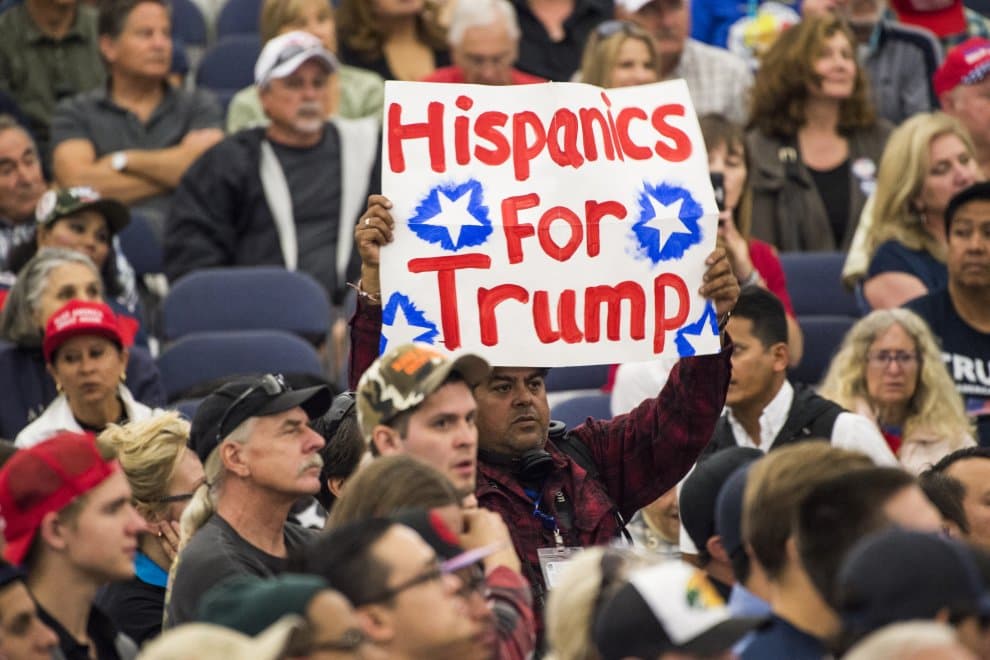
For example, in Jim Costa's district, the incumbent reached 48% of the vote: seven points higher than in 2020 and nine points higher than in 2016
Similar is the case of the ninth district of Florida, currently represented by Soto, where Trump achieved 48% of the vote. He added eight points more than in 2020 and thirteen points over 2016.
The NRCC is looking for Trump to become the first Republican since George W. Bush to win seats during a midterm election. The key: tapping into Hispanic support in strategic districts.
Hispanics trending toward the Republican Party
The 2024 presidential election confirmed Hispanic voters as a demographic with growing electoral clout. Perhaps more importantly, they confirmed that this group is increasingly moving away from the Democratic Party, which took its support for granted after Barack Obama in 2012.
While Hispanics seemed to be a key and immovable piece of the famous "Obama coalition" that seemed invincible, time yielded surprising results.
According to the exit polls of the last elections, Trump obtained the best performance of a Republican candidate among Hispanics, with 45%. He gained 13 points over 2020 and gained among Hispanic men, rising from 36% in 2020 to 54% in 2024.
Over the years, this demographic has been moving away from the Democratic agenda to embrace that of the GOP increasingly. This accelerated after the economic, border and educational outcomes of the Biden-Harris administration.
Indeed, they are quite far from the latest platform of Democrats, who, in the words of Congressman Seth Moulton (D-MA), spent too much time trying "not to offend anyone" instead of focusing on the important issues.
A recent poll by The Libre Institute found that Hispanics' top concerns include taxes, the state of the economy and border security.
“Latino voters are turning away from House Democrats who push radical identity politics and just voted for the largest tax hike in generations, hurting working families across the country. The NRCC will make sure voters don’t forget how they betrayed our Latino communities," Christian Martinez, NRCC spokesman, explained.
Why is it important for Trump to keep the House?
As for the dangers that losing the House poses to the White House agenda, Ben Shapiro commented on the matter in his podcast.
"Trump knows effectively that the minute Democrats take over Congress, then his administration is done. Because it will just be investigations, there will be lawsuits. The pen and the phone probably won't suffice at that point. He won't have a Congress to work with. Impeachment will almost certainly be on the table in the House of Representatives literally day one," the popular conservative commentator noted.
🛠 Do you think there is an error in this article?
Recommendations






LATEST