Venezuela Reveals a Colossal Debt of $240 billion and Is Heading Toward the Largest Sovereign Debt Restructuring in History
This figure far exceeds investors’ previous estimates, which put the debt at between $150,000 and 200,000 million.
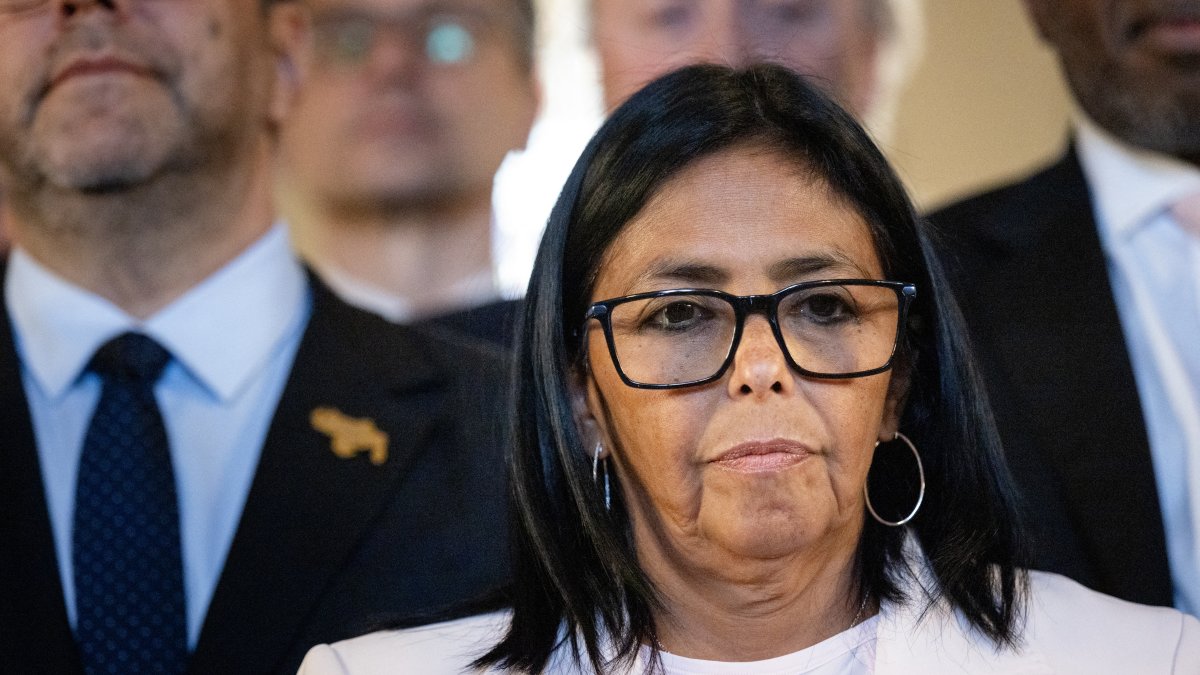
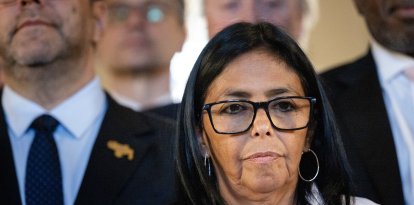
Delcy Rodríguez.

The true magnitude of the economic collapse inflicted by the Chavista regime in Venezuela is about to be exposed to international markets: According to an exclusive report by the Financial Times, the South American nation is preparing to reveal to its creditors an accumulated debt of $240,000 million.
This figure far exceeds investors’ previous estimates, which placed the debt between 150,000 and 200,000 million dollars.
With this volume of unpaid obligations, Venezuela’s financial stabilization process will formally eclipse Greece’s historic default in 2012, becoming the largest sovereign debt restructuring in modern history.
A 72% economic collapse in the shadow of Chavismo
Under the leadership of Delcy Rodríguez, the interim regime seeks to reach a definitive agreement with bondholders before the end of 2026, in order to overcome the financial isolation that has marginalized the country for nearly a decade.
To this end, the U.S. firm Centerview Partners, hired as Caracas’s financial advisor, will present a roadmap for economic sustainability in early July inspired by the technical standards of the International Monetary Fund (IMF).
The financial firm’s assessment forecasts a devastating outlook for the productive legacy of the Bolivarian Revolution.
The macroeconomic framework to be published later this month estimates the current size of the Venezuelan economy at just 100,000 million dollars. This represents a 72.9% plunge compared to $370,000 million recorded in 2012, Hugo Chávez’s final year in office.
As a result of this contraction, the country’s debt-to-GDP ratio has skyrocketed to over 200%.
The complex debt portfolio includes approximately $60,000 million in government bonds and bonds issued by the state-owned PDVSA, plus nearly $40,000 million in interest accrued since the suspension of payments.
In addition, commercial debts are estimated at between $30,000 and 50,000 million to oil companies and suppliers, more than $20,000 million in legal compensation for the massive expropriations carried out by the Chávez regime, and bilateral commitments ranging from 10,000 to 20,000 million with China, 6,000 million with Russia, and 4,000 million with development banks.
The Return to the Dollar and the End of Trade Discounts
The political and economic shift in Caracas has been met with optimism in Washington. U.S. Treasury Secretary Scott Bessent stated in an interview with CNBC that the U.S. dollar will be the cornerstone of trade in this new phase for the South American country.
The official from the Donald Trump administration emphasized the importance of the U.S. dollar within the reconstruction strategy. Bessent noted that the Maduro regime’s economic policies forced Caracas to bypass traditional channels, compelling it to conduct transactions outside the global banking system
“They were selling oil at a discount to China and weren’t getting any dollars,” the Treasury official stated, noting that the use of the U.S. currency offers full liquidity benefits and access to capital markets.
The U.S. secretary noted that Washington’s foreign policy will continue to promote the global dominance of its currency: “The new Venezuela will conduct business in dollars; they are returning to the dollar system.”
Although oil exports rose to $5.5 billion in the first quarter of this year—compared to $4.4 billion at the end of the previous administration’s term—international analysts warn that a full recovery will take time.
Investment fund analysts point out that, given the technical complexity and the variety of creditors involved, the restructuring process could extend into 2027.
Politics
The Department of State spokesperson told Voz News: 'We have high hopes for Dinorah Figuera's talks with the Chavistas'
Luis Francisco Orozco
World
Ramiro Valdés, the relentless architect of domestic espionage and political persecution in Cuba, dies at 94
Andrés Ignacio Henríquez
LATEST