Venezuela: After the ‘Niño Guerrero’ Strike, the U.S. Ramps Up Military Backing for Delcy Rodríguez's Regime to Purge the Southern Orinoco's Gold of the Mafias
There is an economic motive behind this move. The gold in the southern Orinoco region—spanning Bolívar, Amazonas, and part of Delta Amacuro—contains some of the region’s most coveted reserves, but its extraction is de facto controlled by the Tren de Aragua, the Tren de Guayana, and other criminal groups such as the Colombian ELN guerrilla group or mafia-linked unions in Bolívar state.
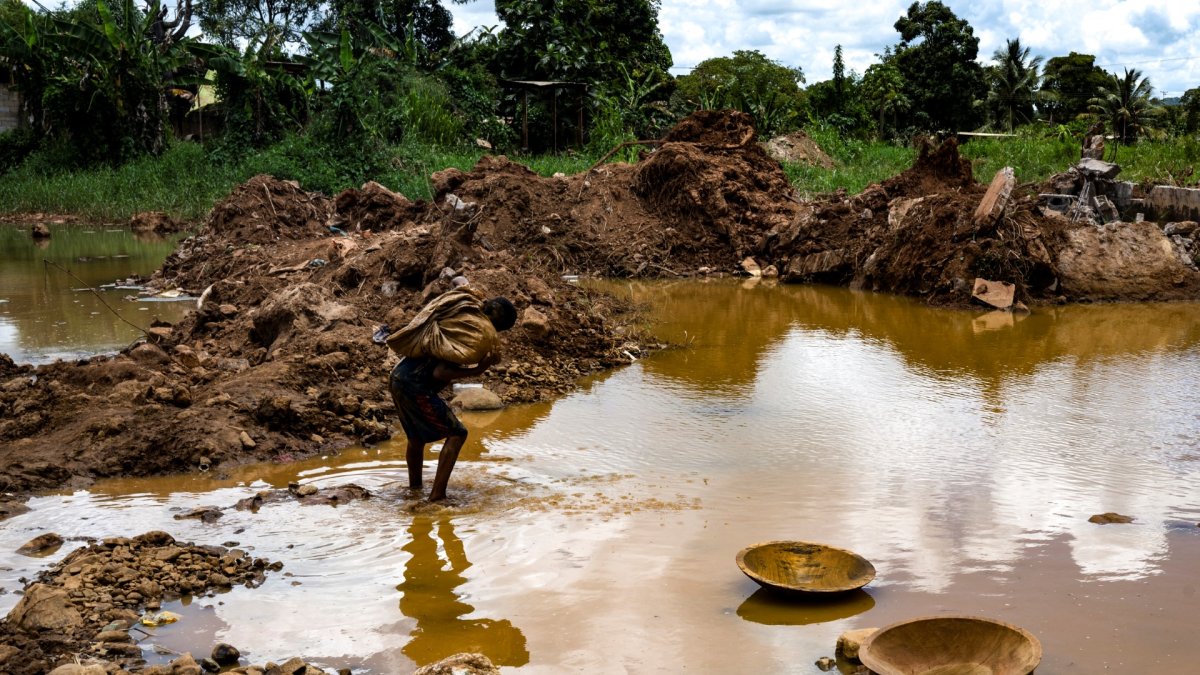
A young Venezuelan man works in an open-pit mine searching for gold

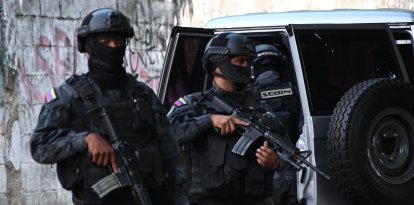
After taking down one of Venezuela’s most dangerous criminals south of the Orinoco River, in Bolívar state, the United States went a step further and began providing military firepower, technology, and intelligence to Venezuela’s interim regime, which has been tasked—under Washington’s guidance—with expelling the armed groups that control the gold-rich region in the south of the country andclear the way for U.S. investment.
According to a report by The Wall Street Journal, which cited unnamed U.S. officials, Washington is reportedly providing intelligence, technology, and military support to a regime that until recently was an adversary, while interim authorities in Caracas attempt to regain control of a mining belt that for years remained in the hands of organized crime. Those officials maintained that the joint effort would continue—and would include intelligence sharing by the CIA— and that it would mark the beginning of a broader offensive, although they did not specify its scope.
The first episode of this coordination wasthe death of Héctor Rusthenford Guerrero Flores, alias "Niño Guerrero," leader of the Tren de Aragua, in an attack announced by President Donald Trump on June 12. Defense Secretary Pete Hegseth, stated that the operation was carried out at the “invitation” of the Venezuelan regime and presented it as the start of a sustained campaign. “We were able to identify where he was and kill him, just like we would kill al Qaeda or ISIS,” he said.

There is an economic motive behind this move. The gold in the southern Orinoco region—spanning Bolívar, Amazonas, and a portion of Delta Amacuro—contains some of the region’s most coveted reserves, but its extraction is de facto controlled by the Tren de Aragua itself, the Guayana Train, and other criminal groups such as the Colombian ELN guerrilla group or mafia-linked unions in Bolívar State, precisely where Guerrero was killed. In March, according to the WSJ, the leader of the interim regime, Delcy Rodríguez, reportedly gave private assurances to senior Trump administration officials and mining executives that she would protect foreign companies willing to enter the market. That overture was followed by a mining law passed in April, Treasury licenses lifting sanctions on Venezuelan gold, and technical visits by U.S. investors to El Callao and the Las Cristinas mine in early June.
In El Callao, the main gold-processing center in Bolívar state, Councilman Omar John welcomed the arrival of U.S. forces. He argued that seeing the U.S. Army using “cutting-edge technologies to identify specific individuals” should “set off alarm bells” for anyone up to no good. Even so, he urged incoming investors not to limit themselves to mining: “We hope they also consider the social aspect,” he told the WSJ, referring to the area’s lack of infrastructure, schools, and healthcare.
The underlying question is the same one the operation has left open since its inception: whether the deployment aims to dismantle criminal structures at their roots or merely to clear areas with concessions for investors, while the gangs retreat to other enclaves. Researcher Bram Ebus of the International Crisis Group warned that Washington is relying on a segment of the Venezuelan military that has profited from the lawlessness in the southern Orinoco region. “Rather than halting extraction, Venezuelan military forces have long collected payments in gold from the gangs in control of mines, including Colombian guerrillas, Brazilian criminal syndicates, and Venezuelan bands,” he wrote on his organization’s website.
World
South of the Orinoco, criminal gangs still control the gold the Rodríguez regime is selling to US companies
Emmanuel Alejandro Rondón
On the ground, there has been no sign of a crackdown in much of the region. Venezuelan journalist Fritz Sánchez notes that fuel continues to flow unabated to fuel illegal mining in the Wonken–Unotöy sector, in the Gran Sabana, and that devastation is spreading around the Karuay River, in Pemón indigenous territory—an area distinct from the Sifontes and El Callao enclaves where the operation was concentrated. According to Sánchez, the death of “Niño Guerrero” does not address the bigger problem: the drug lord is merely “one link at the end of a long chain” that continues to ravage the south of the country.
The monitoring organization SOS Orinoco frames this devastation as a deliberate policy rather than a simple power vacuum. According to its account, the Orinoco Mining Arc—created by decree in 2016—opened the door to chaotic extractivism after the Chavista government dismantled formal projects: the revoked concession granted to Gold Reserve led to a $769 million award by ICSID, and the expropriation of Crystallex resulted in a $1,202 million judgment. With the state-owned company Minerven absorbed and operating at a minimum capacity, the mines fell into the hands of gangs classified as terrorist groups, which impose their rule through massacres and “protection money.” The collapse of the Bulla Loca mine in 2024, which left 16 dead and 36 injured, illustrated the resulting chaos to that organization.
For now, neither the regime nor the Armed Forces have publicly detailed how far the offensive will go or whether it will include minimum environmental, labor, and social standards for the industry that Caracas and Washington want to establish. Therefore, the question remains whether the U.S.-backed campaign will wipe out crime throughout the entire gold-mining belt or whether it will be confined to the perimeter of the mining concessions.
LATEST