Tehran is touting the agreement with the US as a victory, while Trump claims he has the Iranian regime on the ropes
The agreement was signed last week by Washington and Tehran, launching a process aimed at reaching a permanent solution.
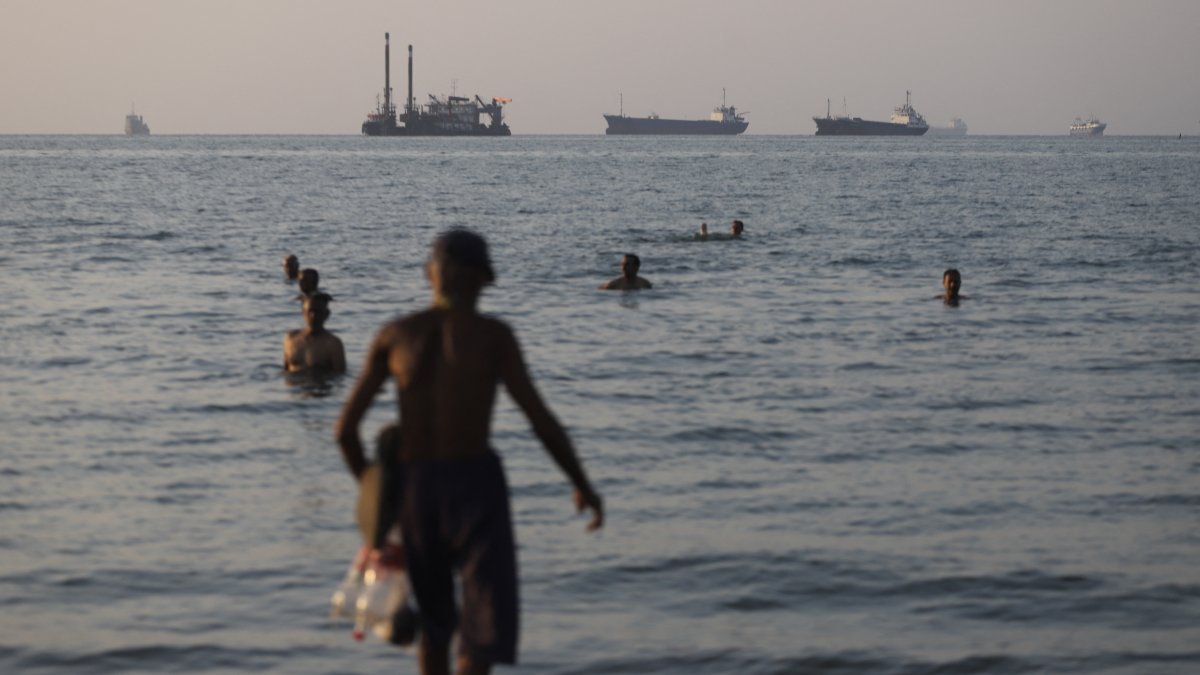
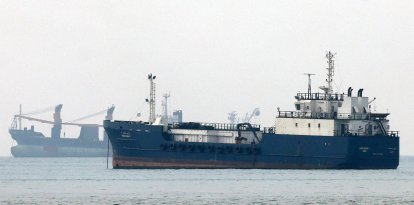
Cargo and commercial ships anchored in the Strait of Hormuz

Iran continues to portray the agreement reached with the United States to end the war in the Middle East as a political victory, while disagreements persist over nuclear inspections and control of the strategic Strait of Hormuz.
The conflict began on Feb. 28 and appears to be concluding with an agreement that the Islamic Republic is attempting to portray as a triumph. The war caused significant regional instability, with Tehran responding by blocking a major maritime route for energy transport and launching thousands of drones and missiles against its Gulf neighbors.
The agreement was signed last week by Washington and Tehran, initiating a process aimed at reaching a permanent solution.
Mohammad Bagher Ghalibaf, Iran’s chief negotiator, stated Wednesday that the pact was made possible thanks to Pakistan’s mediation.
"The Islamabad understanding was not the result of pressure and coercion, but rather the result of the resistance and authority of the brave Iranian nation."
"That is why, the Islamabad Memorandum of Understanding became a declaration of America's defeat," he added. He also maintained that security in the Middle East must be guaranteed by the countries of the region.
Rubio in the United Arab Emirates
Meanwhile, Secretary of State Marco Rubio began a tour of the Gulf countries to reassure regional allies. Rubio arrived in the United Arab Emirates and was scheduled to meet with President Sheikh Mohamed bin Zayed before traveling to Kuwait and Bahrain to attend a meeting of the Gulf Cooperation Council.
The U.S. Secretary of State indicated that he would discuss with regional leaders the memorandum of understanding between Washington and Tehran, which does not address Iran’s missile program or Iranian-backed militias, two longstanding concerns for the Gulf states and Israel.
Rubio also reiterated the U.S. position on the Strait of Hormuz, after Oman and Iran, which share geographical control of the waterway, indicated that they were considering imposing fees for navigation.

"It's an international waterway," he stated upon arriving in Abu Dhabi.
"No country is allowed to charge tolls or fees on an international waterway. That's existing international law."
However, Iran maintained a defiant stance. Ghalibaf asserted that the region must move toward a closer relationship with the Islamic Republic.
"We see the future of the region not in confrontation but in interaction and not in elimination but in coexistence," he said.
The Iranian negotiator also insisted that peace in Lebanon is an essential element for reaching a final agreement with the United States.
“For us, the ceasefire in Lebanon has been and is as important as the ceasefire in Iran, and the end of the war in Lebanon has been as important as the end of the war in Iran” he noted.
Disagreements over nuclear inspections persist
One of the main points of contention remains Iran’s nuclear program. Western powers have for years accused Tehran of developing nuclear weapons, an accusation the Islamic Republic systematically rejects.
President Donald Trump stated on Tuesday that Iran has “fully and completely agreed” to allow the return of United Nations nuclear inspectors.
"Iran has fully and completely agreed to allow nuclear inspections at the highest level for a very long period of time (INFINITY!). This will ensure 'nuclear honesty'," Trump wrote on Truth Social.
The president also announced that he had agreed to keep the Strait of Hormuz open.
“Based on this and other major concessions made by Iran, I have agreed to allow the Strait of Hormuz to remain OPEN, with no further Naval Blockade,” he wrote.
"However, all ships will remain in position should it be necessary to reinstate the Blockade, which, at this point, seems highly unlikely."
Nevertheless, shortly before those statements, Iran asserted that the United Nations nuclear watchdog would not be allowed to inspect the major nuclear sites previously attacked by U.S. and Israeli forces.
Trump criticizes Senate resolution
“So, I have Iran on the 'ropes,' ready to go down for the fall...and the U.S. Senate decides to have a poorly timed and meaningless War Powers Act Vote," he wrote on Truth Social following the 50-48 vote.
“These Senators have just made my job more difficult, but I will get it done, one way or the other, because I always get it done!,” he added.
LATEST