At least 25 ships pass through Strait of Hormuz in a single day, reaching highest level in two months following agreement between US and Iranian regime
Although the agreement calls for an initial 60-day period, security risks persist in the area following an alert from the Pakistani Navy regarding the sighting of a mine in the strait, which recommends navigating with “extreme caution.”
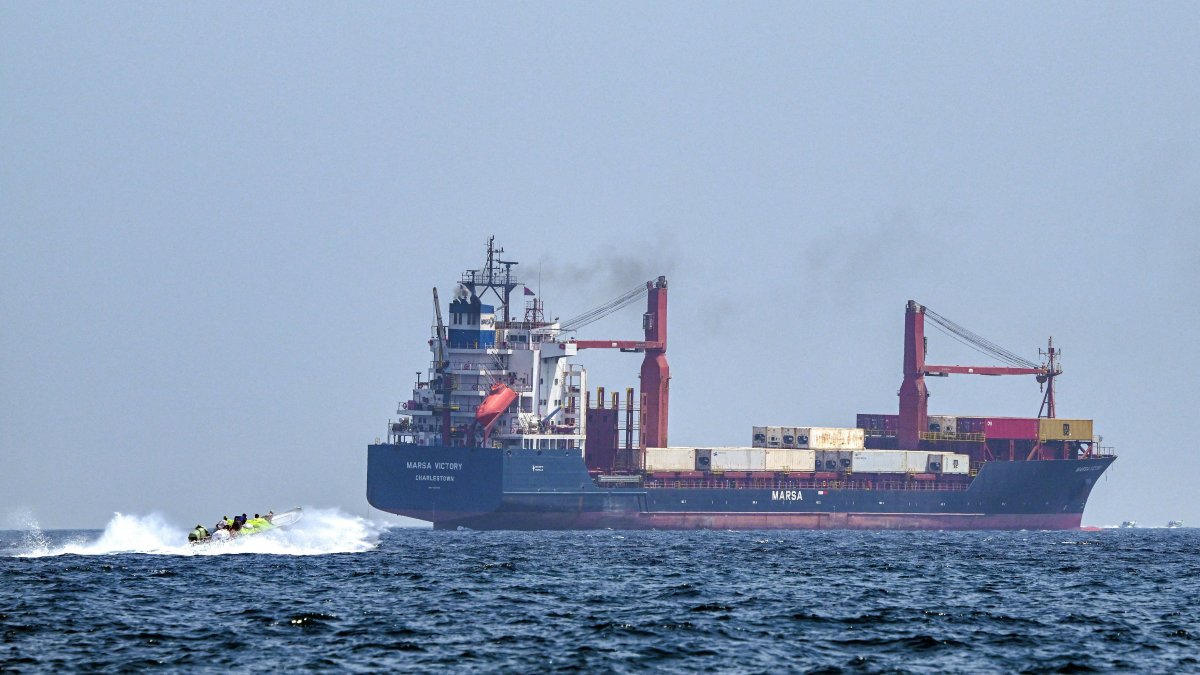
An oil tanker navigates the waters of the Strait of Hormuz / Giuseppe Cacace

Commercial traffic through the Strait of Hormuz, one of the world’s most important maritime routes for oil transport, reached its highest level in two months on Thursday, according to data from the maritime tracking company AXSMarine.
According to the firm, a total of 25 commercial vessels crossed the strait on Thursday, the highest figure since mid-April and more than triple the daily average recorded since early March (approximately seven vessels per day).
Uptick in activity in the Strait of Hormuz despite security risks
Eyewitnesses cited by AFP reported a notable increase in activity at nearby ports. At the Emirati port of Korfakkan, south of the strait, lines of empty trucks stretched up to three kilometers as they waited to load cargo, while at least four container ships were unloading. Other ships remained on standby on the horizon.

World
'They're finished!': Trump issues ultimatum to Iran after negotiations hit a snag
Alejandro Baños
This uptick follows the agreement reached this week between the United States and Iran to end the conflict and reopen the strait, a waterway through which approximately 20% of the world’s crude oil passes.
Although the agreement provides for a period of 60 days, the talks scheduled for this Friday in Switzerland were postponed. In addition, security risks persist: the Pakistani Navy issued an alert regarding the presence of a mine near the coast of Oman and recommended navigating with “extreme caution.”
The Iranian regime’s rules
Iran’s Strait of Hormuz Authority announced this Friday new regulations for maritime transit during the 60-day ceasefire agreement.

World
Peace Awaits: US and Iran postpone their first round of talks amid escalation in Lebanon
Diane Hernández
In a post on X, it stated that all ships wishing to transit the strait must request authorization at least 48 hours in advance.
In addition, it announced that during this 60-day period, the collection of "fees" and "Iranian insurance" from vessels crossing the area will be suspended.
Impact on the oil market
“The energy and transportation sectors will be the first to feel the relief, before it spreads to the rest of the economy,” Ipek Ozkardeskaya, a senior analyst at the banking group Swissquote, told AFP.
Still, the expert warned that doubts remain about the stability of the ceasefire, especially following reports of new Israeli attacks in Lebanon, even though a ceasefire between Israel and Hezbollah was subsequently announced.
More than 500 commercial vessels and around 11,000 seafarers remain stranded in the Persian Gulf, according to the International Maritime Organization (IMO), which estimates that some 20,000 people linked to the maritime sector in the region have been affected by the conflict.
LATEST