Talks stalled from day one? Chavismo and the '2015 Assembly' postpone the start of US-backed negotiations
The lack of transparency in the statements has raised concerns about the mechanism's actual effectiveness.
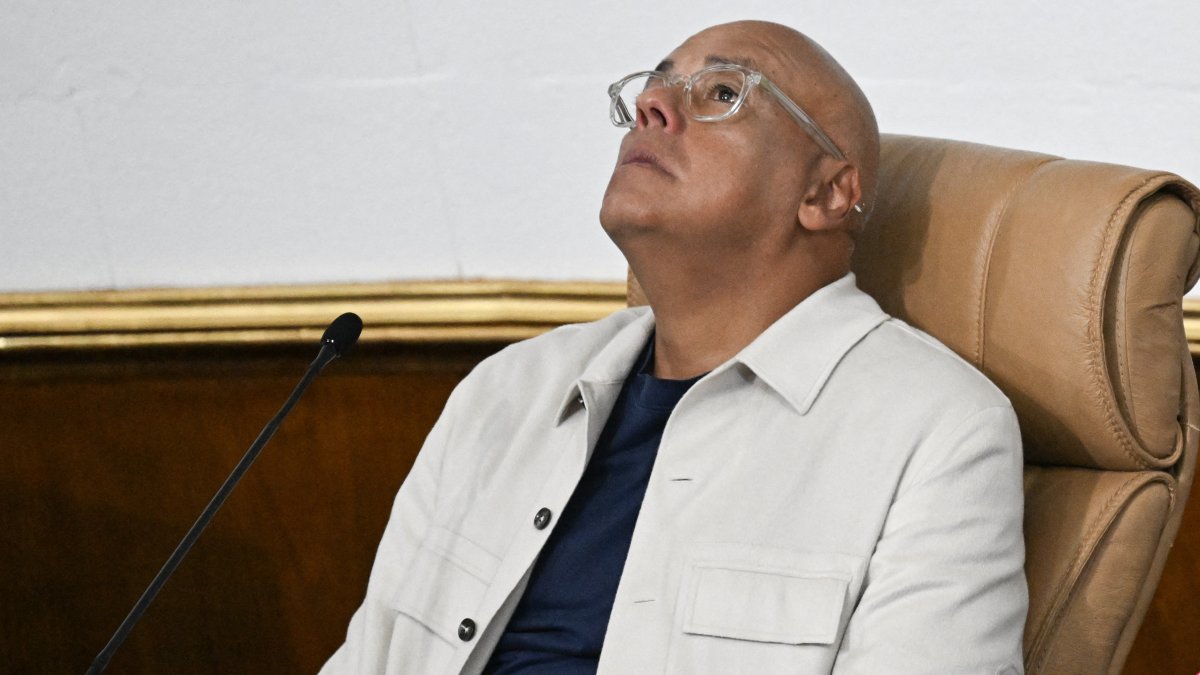
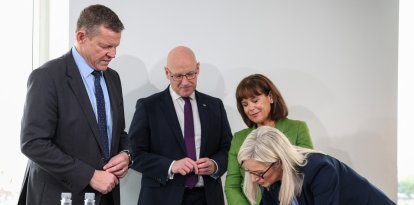
Jorge Rodríguez, president of the Chavista-controlled National Assembly.

The announced negotiation process between the Chavista regime and the group of former deputies from the so-called "2015 Assembly" hit a snag before it even began.
Although the formal start of in-person talks in Caracas was scheduled for this Saturday, August 1, the day passed without the working groups being established, and the official statements were characterized by ambiguous information.
Through messages posted on social media, the president of the pro-government National Assembly, Jorge Rodríguez, and the representative of the "2015 Assembly," Dinorah Figuera, confirmed that they had held a phone call to try to work out the logistics.
However, the exchange of messages failed to specify the location, exact date, or agenda for the first meeting, postponing it indefinitely to some point next week.
The lack of transparency in the statements has raised alarms about the mechanism's actual effectiveness. While Chavismo presented the call as a simple contact to define support measures and general topics, the "2015 Assembly" sector attempted to portray the phone call as the milestone marking the start of the process.
Both sides briefly mentioned a three-point agenda: assistance for victims of the twin earthquakes on June 24, 2026; the "strengthening of democracy"; and the debate on political rights.
However, none of the documents specified the verification mechanisms or the actual goals that would justify the validity of these talks in the Venezuelan capital.
The process has the strategic backing and endorsement of the U.S. government and Secretary of State Marco Rubio, as explicitly acknowledged by the 2015 parliamentary group in its statement.
The role of María Corina Machado at the negotiating table
One of the most critical elements of the design of this working group is the marginalization of political leader María Corina Machado. Despite being the figure with the greatest popular support in the country, the talks promoted by Washington have opted for representatives from the "2015 Assembly" and the traditional party system.
Despite being excluded from the negotiating committees appointed by the "2015 Assembly" and the Chavista camp, Machado has maintained a pragmatic stance, publicly stating that she will not hinder diplomatic efforts or initiatives aimed at pressuring the regime.
The alignment of the pro-government delegation—led by Jorge Rodríguez, Jorge Arreaza, and Pedro Infante—with the roster of parliamentary leaders from 2015 reveals a closed dialogue framework that raises serious questions about its actual representativeness.
World
Venezuela: Citizens protest to demand a political transition and free elections
Williams Perdomo
LATEST