Vance Responds to Criticism of the Iran Deal: Promises Nuclear Inspections and the Destruction of the Highly Enriched Arsenal
Vance specified that the text of the document—a framework to end the conflict agreed upon by both nations—will be released following a formal signing ceremony scheduled for Friday in Switzerland.

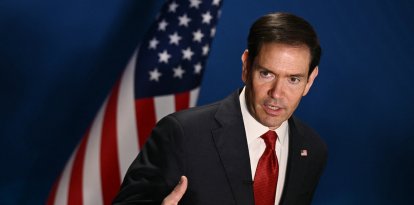
JD Vance at the White House in a file photo

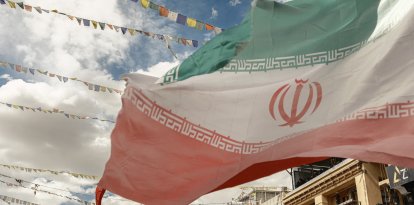
U.S. Vice President JD Vance defended on Monday on national television the agreement reached with Iran to end the months-long war in the Middle East and assured that nuclear inspectors will return to Iran to ensure the elimination of highly enriched uranium from Tehran.
In an interview with NBC News, Vance responded to criticism of the agreement and stated that inspectors will “absolutely” return to Iranian territory. The vice president maintained that one of the central parts of the agreement is that the International Atomic Energy Agency (IAEA) and the United States will help Iran destroy its stockpile of highly enriched uranium. "That's something that's spelled out very clearly," in the memorandum of understanding (MOU), he said.
Vance specified that the text of the document—a framework to end the conflict agreed upon by both nations—will be released following a formal signing ceremony scheduled for Friday in Switzerland, in line with the timeline announced by President Donald Trump. The vice president attributed the delay to "some technical details to work out," related not to the text itself, but to its implementation, and he thanked Qatar and Pakistan for their mediation.
Mundo
Netanyahu breaks his silence on Trump's deal with Iran: 'We often agree, and often we don't'
Andrés Ignacio Henríquez
Regarding the start of inspections, the U.S. vice president expressed confidence that they would take place "very quickly" without providing further details. "If the Iranians comply, benefits will flow to them, and that's what we hope to see. We want them to behave like a normal country," he added, and made those benefits contingent on a commitment from Tehran not to build a nuclear weapon.
The vice president also dismissed the doubts expressed by former Democratic President Barack Obama, who had previously given an interview with "Good Morning America" on ABC and questioned whether Trump’s deal represented a significant improvement over the nuclear agreement his administration negotiated in 2015—the Joint Comprehensive Plan of Action (JCPOA), from which Trump withdrew the United States during his first term.
"The Iranian nuclear program has been completely destroyed, and what we're saying is: Make the long-term commitment not to rebuild it," replied Vance, who dismissed the comparison with the widely questioned JCPOA as "fundamentally not right."
Vance also downplayed Iran’s intention to charge fees for ships passing through the Strait of Hormuz, a key oil route. According to the vice president, the agreement guarantees toll-free transit through that route during the 60 days of negotiations for the final deal. Critics say this toll was not charged before the conflict began.
For his part, Iranian President Masoud Pezeshkian described the framework as "an important step toward stopping the war and beginning negotiations," though he cautioned that "a final agreement has yet to take shape."
LATEST