ANALYSIS
Geopolitical 'coincidences': What happens before Spain faces a migration crisis
The two major migration crises Spain has faced in recent years were preceded by decisions made by the same person: Pedro Sánchez.
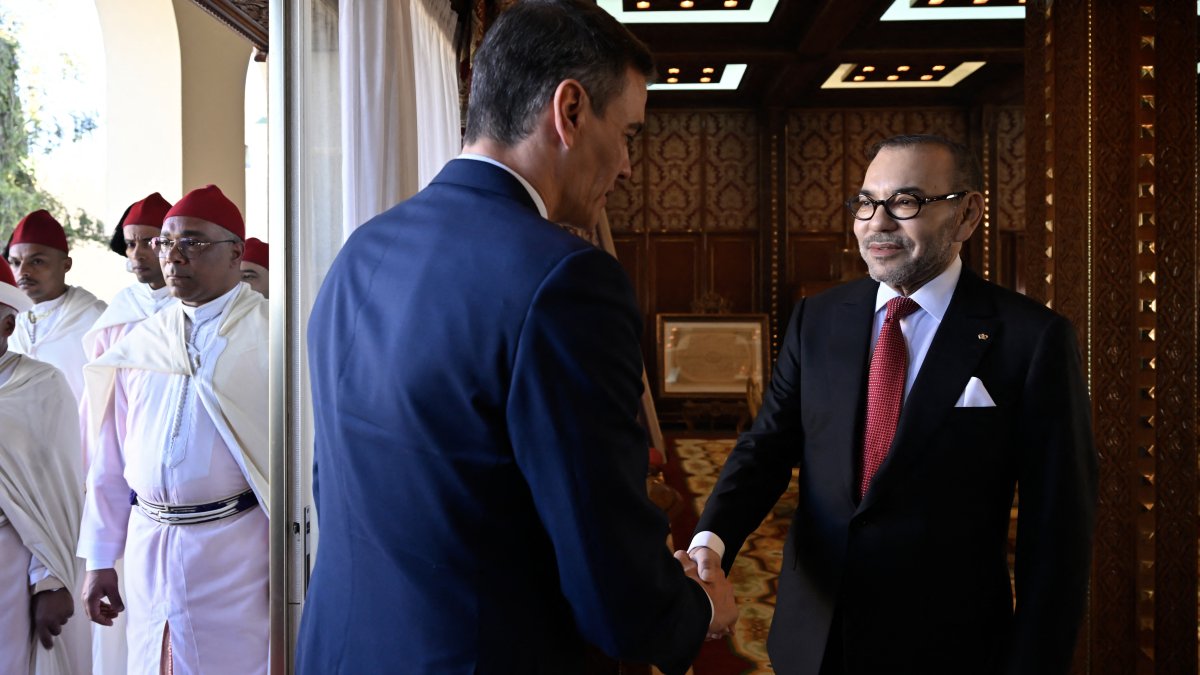
Most recent meeting between Pedro Sánchez and King Mohammed VI of Morocco. February 2024

Spain is facing a migration crisis of unprecedented proportions, which has intensified in recent hours. Tens of thousands of individuals have managed to enter the country illegally by sea or land via Ceuta—a city belonging to Spain located on the African continent, bordering Morocco—in violation of all border regulations and physical barriers intended to regulate transit between the two countries.
In terms of the volume of arrivals, this episode has already surpassed the previous one that occurred just over five years ago in the same city. That crisis in May 2021 also shares a fundamental parallel with the current one: its political trigger.
In both instances, the mass influx was preceded by actions by the Spanish government that Morocco interpreted as a diplomatic challenge. They coincide in the figure who made those decisions: Pedro Sánchez.
2021: Sánchez and the reception of the Polisario Front leader
In May 2021, Ceuta experienced what was, to date, the worst migration crisis in the recent history of Spanish and European borders. In less than 48 hours, more than 10,000 people managed to cross illegally from Morocco into Spain, breaking through or scaling the border fences. Some even swam across, navigating around the breakwaters.
To understand that episode, one must look back to a few weeks prior. On April 18, the Sánchez government authorized the landing of a helicopter carrying Brahim Ghali, secretary-general of the Polisario Front—a movement fighting for the independence of Western Sahara, a region under Moroccan sovereignty—at a military base in the province of Zaragoza. The reason was so he could receive medical treatment at a Spanish hospital. Ghali was in a delicate state of health, having contracted COVID-19.
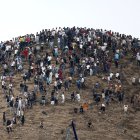
Sánchez and Arancha González Laya—then minister of foreign affairs—justified Ghali's admission as a "strictly humanitarian gesture." However, the transfer of the Polisario Front leader to Spain was carried out in secrecy, without prior consultation with the Spanish Congress or Morocco.
When Moroccan intelligence services discovered that Ghali was in Spain, Rabat interpreted this as an act of hostility and a breach of loyalty between two countries that were strategic partners. As a result, Morocco deliberately relaxed border surveillance, and that was when thousands of people began entering Spain illegally via Ceuta, without Moroccan security forces intervening to contain the situation.
2026: Sánchez, the amendment to immigration law and his agreements with Algeria
The episode currently unfolding is preceded by not one, but by two actions carried out by Sánchez and his government.
The first is a legislative decision. The Spanish prime minister pushed through immigration reform aimed at regularizing the status of hundreds of thousands of illegal immigrants. Furthermore, that regulation included a provision prohibiting so-called "immediate deportations"—that is, the immediate expulsion of anyone who entered the country illegally, in violation of border protections or regulations.
World
Ceuta and Melilla are not colonies: History, law, and full integration into Spain
Williams Perdomo
Weeks later, following a legal dispute, the Supreme Court—Spain's highest judicial body across all jurisdictions—upheld the law, leading to the regularization of hundreds of thousands of people who were in the country illegally.
Added to this was Sánchez's official trip to Algeria and his meeting with its president, Abdelmadjid Tebboune. During that visit, both leaders agreed to "strengthen" bilateral relations and to be "strategic partners," in addition to boosting trade and economic ties between the two countries. It should be noted that Algeria has been Spain's leading supplier of natural gas since the beginning of this year, according to a statement from the Spanish prime minister.
This official meeting was viewed as a provocation by Rabat. For years, Morocco and Algeria have been locked in a diplomatic dispute due to various incidents related to Western Sahara, espionage, and economic and trade matters. Their bilateral relations are currently completely severed.
Both in 2021 and in the current situation, the shifts in the Sánchez government's foreign and domestic policies have triggered similar responses from Rabat, exposing the extreme vulnerability of Spain's borders in Ceuta and cementing migration as the main barometer of the complex relations between Spain and its neighbors.
World
The White House attributes the migrant crisis in Ceuta to the far-left policies of the Spanish government
Andrés Ignacio Henríquez
LATEST