ANALYSIS
Ceuta, the most sensitive spot on the European Union map
The Spanish city, one of the alliance's three land-border enclaves outside the European continent, is facing one of its worst migration crises. Furthermore, it lives under the threat of Morocco.
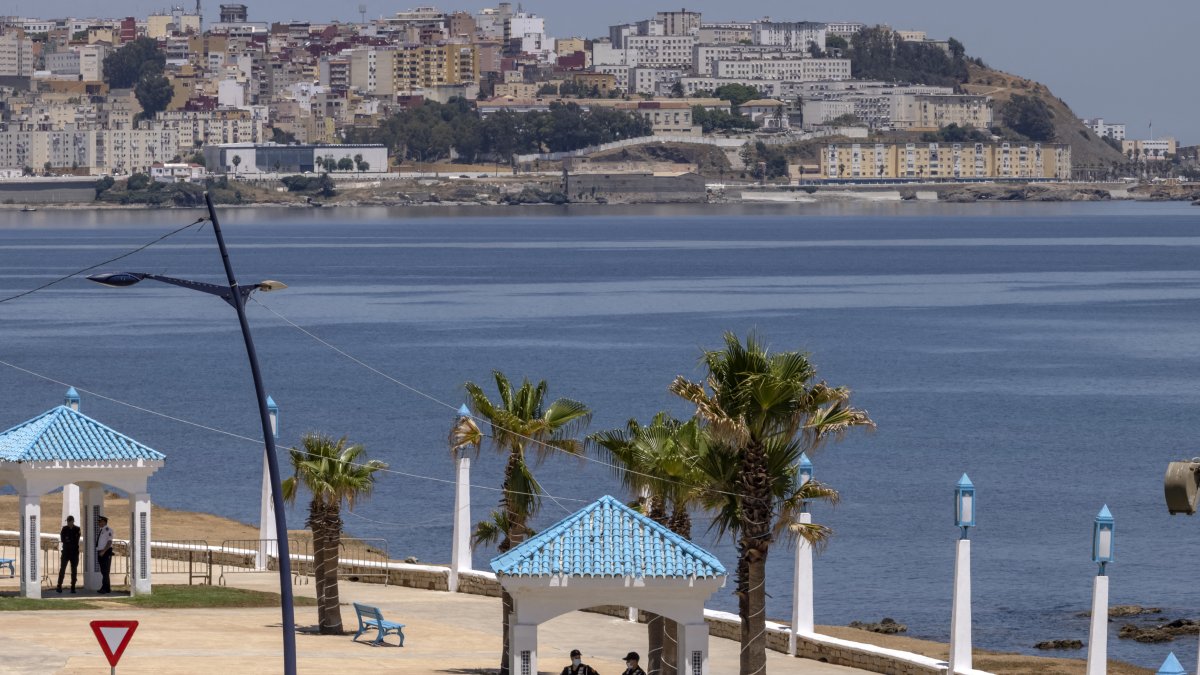
The Spanish city of Ceuta in the background. File photo

Imagine a small territory that belongs sovereignly to one country but is located outside its borders and on another continent, maintaining its own customs, language, flag, and currency. That is Ceuta, a city that has been part of Spain since the late 16th century—and, therefore, of the European Union (EU)— which, however, is not located on the European continent, but rather in Africa, specifically on the northern coast, bordering Morocco.
For years, Ceuta, which has a population of around 85,000, has been the epicenter of one of the most delicate situations facing the European Union: a migration crisis that, in recent weeks, has intensified following the massive influx of illegal migrants—many of them of Moroccan origin—across the sea. Spanish immigration law, recently revised by the government of Pedro Sánchez and upheld by the country's Supreme Court—stipulates that a person who has entered without circumventing any border controls cannot be immediately deported, even if they did so illegally. The sea is not covered by these provisions.
Aside from this issue, Ceuta—like the Spanish city of Melilla, which is also European territory in Africa—faces another problem: it is the subject of a constant claim by Morocco, which does not recognize Spanish sovereignty and refers to it as an "occupied city" or a colonial remnant. This historical dispute has led Rabat to use control over migration flows as a tool for exerting geopolitical pressure in its bilateral negotiations with Madrid and the EU, opening or closing the migration tap depending on the state of bilateral relations.
In fact, there was a dramatic episode a little over five years ago, in May 2021, when Morocco decided to relax its border surveillance due to issues related to the Western Sahara conflict, which resulted in approximately 10,000 people, including hundreds of minors, entering Ceuta in less than 48 hours by jumping over and breaking through the border fences without the Moroccan police taking any action to contain the situation. The Spanish government, led at the time by Sánchez, was forced to deploy the army to regain control and restore stability.
That event made it clear that Ceuta is not just a matter of border management, but a chessboard where diplomacy and transnational security intersect. In this and in all the problems that arise in the city—whether related to the migration crisis or the standoff with Morocco— Brussels always reacts by backing Spain and warning Rabat that any destabilization of the area would be considered an act of aggression against the entire EU.
Since then, the relationship has gone through phases of tense calm, sustained by often fragile economic and police cooperation agreements. It remains to be seen how it will fare after the events unfolding in Ceuta these days.
LATEST