Javier Milei bans foreigners who express hate speech against Argentina from entering country
The new regulation also provides for the deportation and revocation of residency for foreigners who engage in such conduct. The measure is in effect, although Congress has yet to rule on its validity.
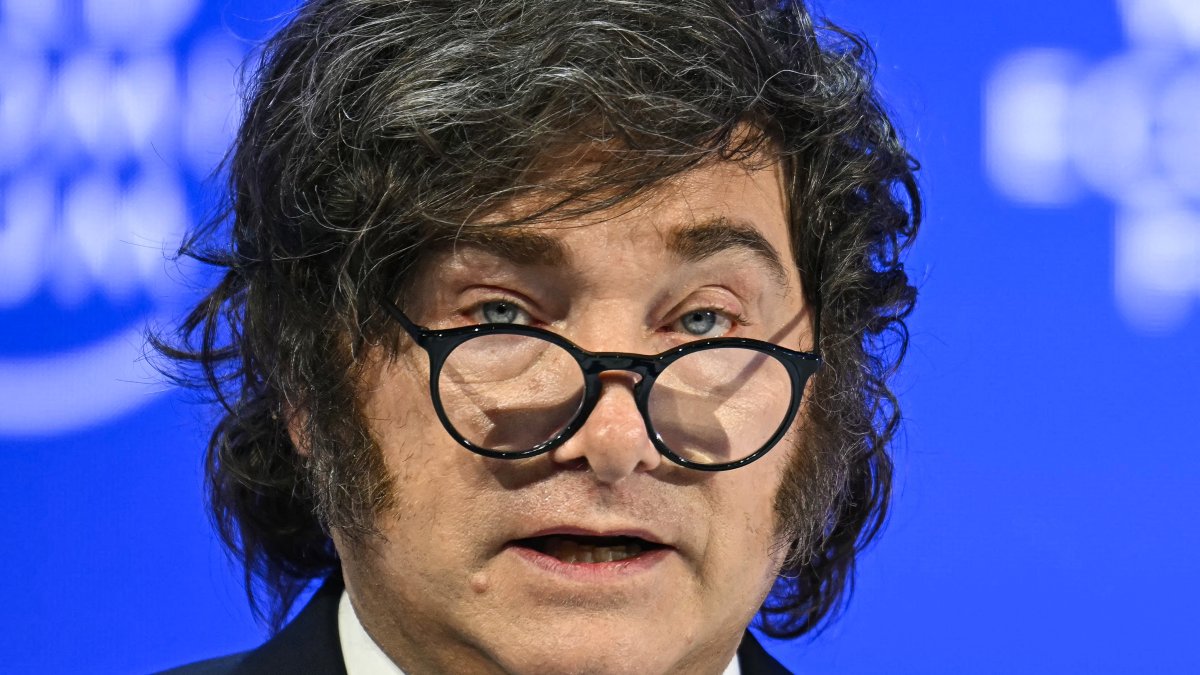
Milei in Davos, Switzerland

Argentine President Javier Milei amended the immigration law by decree to prohibit the entry of foreigners who express hate speech against the country, according to the text published Wednesday night that will be submitted to Congress.
The new regulations also provide for the deportation and revocation of residency for foreigners who engage in such conduct. The measure is in effect, although Congress has yet to rule on its validity.
According to the presidential decree, the measures will apply to those found to have "directed hate speech, either orally or in writing, or incited violence against the Argentine people as a whole, or against any Argentine citizen, motivated by the latter's nationality."
"Having committed or participated in acts of desecration of national symbols; or having incited others to commit any of the acts provided for in this subsection," it adds.
A country open to immigration
Argentina has historically been a country open to immigration that has ensured equal rights to health care, education and housing for its residents, as well as civil rights guaranteed by its constitution.
The acting president issued the measure days after highlighting the existence of an alleged "anti-Argentine campaign" for which he provided no evidence but which he claimed is funded by the governments of Brazil and Mexico and the U.S. Democratic Party, in apparent reference to criticism that went viral on social media on the sidelines of the World Cup.
The decree is a response "to recent displays of hostility toward the Argentine Republic and Argentines. ... Anyone who attacks the Argentine Republic is not welcome in our country," stated a press release from the presidential office on X.

Soccer
FIFA opens disciplinary proceedings against Argentina over serious incidents in the final
Andrés Ignacio Henríquez
What does the decree entail?
The decree clarifies that "under no circumstances" may these penalties be applied to "expressions of ideological dissent or political, academic or civic criticism that constitute a legitimate exercise of constitutionally enshrined rights."
Argentina is in the midst of a diplomatic crisis with Brazil after Milei participated in an opposition political rally in São Paulo, during which he referred to President Luiz Inácio Lula da Silva as a "thief" and a "convict."
LATEST