Interior Department announces severe cuts to Colorado River water allocations for Arizona, California, and Nevada due to extreme drought
"The Department has a responsibility to ensure the Colorado River system remains reliable and resilient for the millions of Americans, communities and industries that depend on it," said Interior Secretary Doug Burgum.
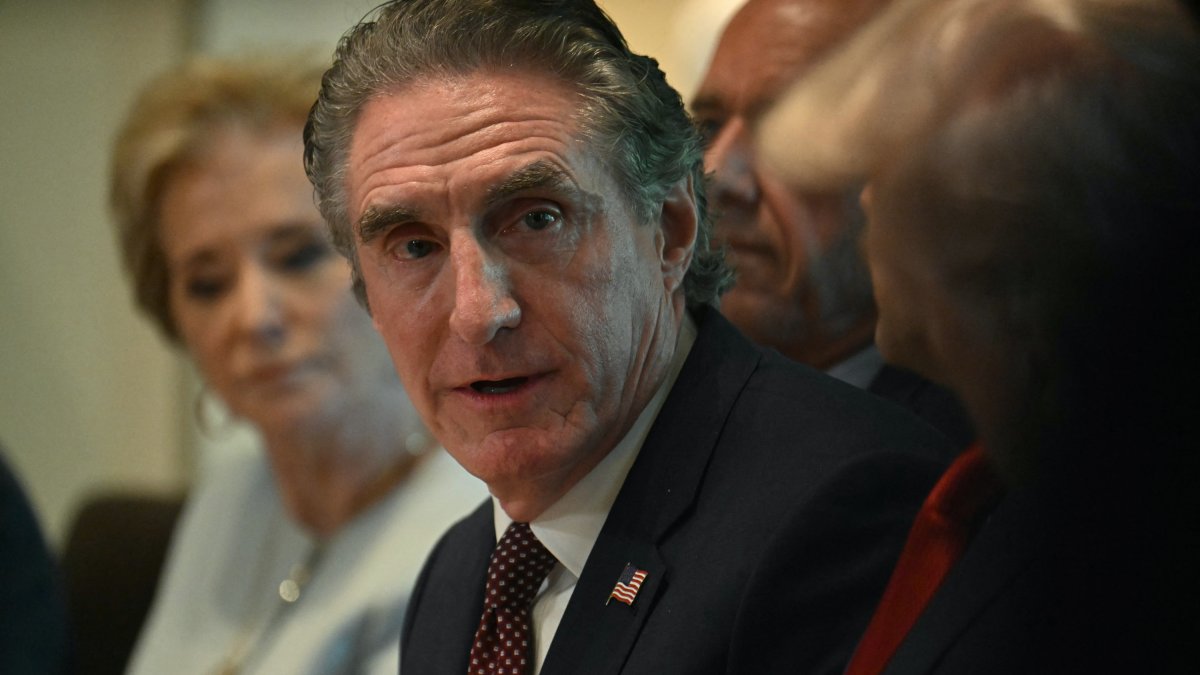
Burgum at a cabinet meeting—File photo/Jim Watson

The Department of the Interior unveiled its plan on Friday for the future management of the Colorado River, which calls for significant water cuts for several western states. The measure is a response to record-breaking droughts.
According to the U.S. Bureau of Reclamation's roadmap, the lower basin states—Arizona, California, and Nevada—could face collective cuts of up to 3 million acre-feet of water per year (about 3.7 billion cubic meters) through 2036. That amount is roughly equivalent to the annual consumption of nine million households.

Politics
Trump launches federal program to replace illegal truck drivers with military veterans
Joaquín Núñez
The actual extent of the reductions will depend on reservoir levels and hydrological conditions. The plan will take effect in October and remain in place for two years, after which it will be reevaluated.
"The Department has a responsibility to ensure the Colorado River system remains reliable and resilient for the millions of Americans, communities and industries that depend on it," said Interior Secretary Doug Burgum.
A deepening dispute
The measures aim to alleviate a water dispute that has divided the region for years and has intensified this year due to an exceptional drought. In mid-July, the combined levels of Lake Powell and Lake Mead—the two largest reservoirs in the United States, both fed by the Colorado River—reached their lowest point in more than 60 years.
The Colorado River supplies drinking water to more than 40 million people and generates hydroelectric power in seven states. However, the situation does not affect everyone equally. The upper-basin states—Colorado, Utah, Wyoming, and New Mexico—will not face the same water cuts as those in the lower basin, a difference that is likely to create new tensions.
Decades of overuse
Washington was forced to intervene after the affected states once again failed to reach an agreement to reduce their water consumption. The federal plan now seeks to impose a common framework in the face of a crisis that can no longer be delayed.
LATEST