ANALYSIS
Zapatero and Sánchez, global referents of anti-Americanism
Both, both socialists who have served as presidents of the Government of Spain, have been the protagonists of episodes with which they have sought to champion global opposition to the United States.
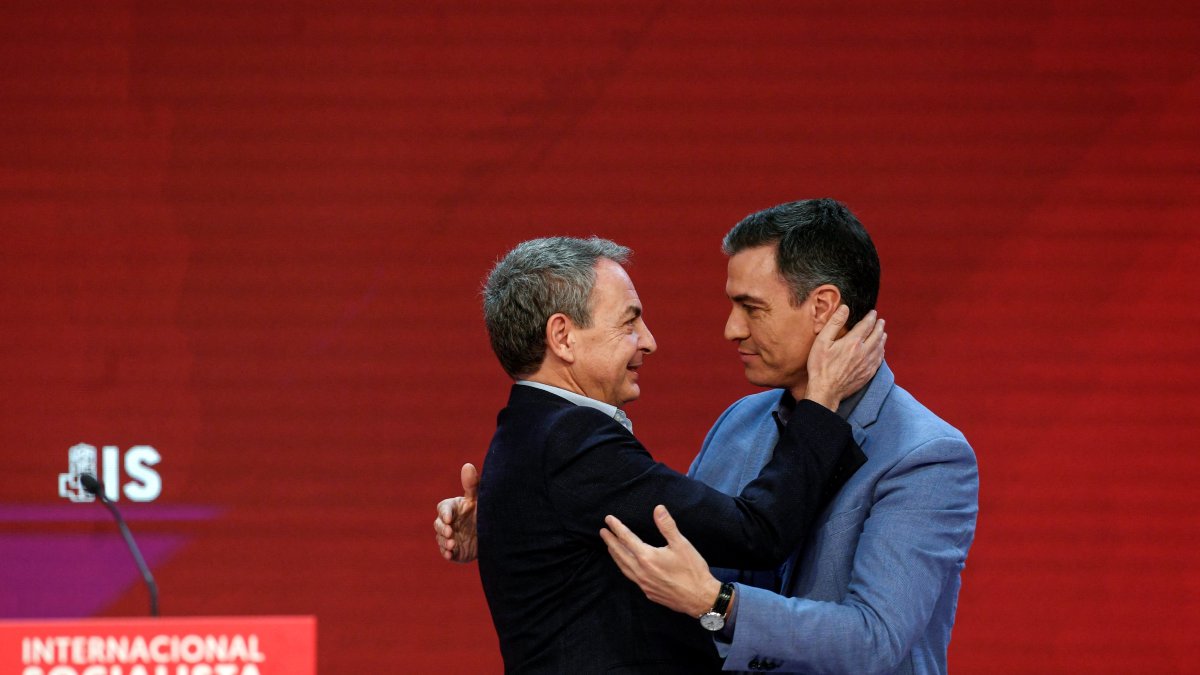
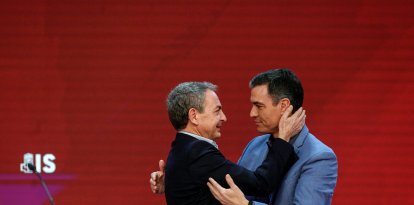
José Luis Rodríguez Zapatero and Pedro Sánchez, during an event of the Socialist International in 2022

Throughout history, numerous international leaders and movements have wanted to be the ensigns of the rejection of the United States and everything that concerns it, basically due to ideological principles. A tendency that comes mainly from the political left in many countries, including Spain. There, this divergence, this anti-Americanism has been represented, among others, by two prominent figures of Spanish socialism in the 21st century: José Luis Rodríguez Zapatero and Pedro Sánchez.
It turns out that both have held the same office: President of the Government of Spain. The former was from 2004 to 2011; the latter has been since 2018. Both, members of the Partido Socialista Obrero Español (PSOE), have provided signs of anti-Americanism while in power or before assuming it, with measures and episodes that have even become, even, offenses against the United States.
Zapatero: disrespect for the U.S. flag and the withdrawal from Iraq
Zapatero left his country in a disastrous position in different areas at the end of his mandate: economic, social... and diplomatic. Mainly, with the United States. Before arriving at Moncloa—the seat of the Spanish executive power—being the leader of the PSOE and of the opposition, he faced strong criticism after, during the parade of the Día de la Hispanidad (also, Spain's National Day) on October 12, 2003, he did not get up from his seat when a military delegation carrying the American flag passed by.
That bad gesture, which Zapatero argued as a sign of protest against the entry of the U.S. Army in Iraq—an action supported by the then Prime Minister of Spain, José María Aznar—was met with harsh reproaches from Washington. So much so that the former president George W. Bush did not want to receive Zapatero at the White House during his second term and deliberately delayed his congratulations to the former Spanish president when he won the elections. They only saw each other at international events. Moreover, George Argyros, former U.S. ambassador to Spain, described that image as "an offense to all Americans."
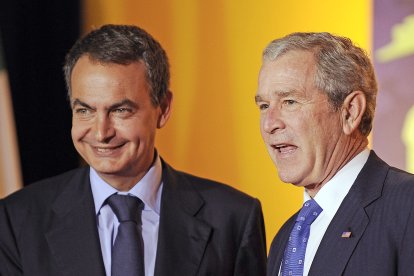
José Luis Rodríguez Zapatero and George W. Bush, at a G20 summit in 2008
With his arrival at the Moncloa and in relation to the image of rejection of the American flag, Zapatero ordered the immediate withdrawal of Spanish troops in Iraq, fulfilling a promise he made during his election campaign and being one of the most controversial measures of his mandate. A measure that only strained bilateral relations between Madrid and Washington DC.
His ties to Chavismo that ultimately led to his indictment
Years after leaving the Spanish Government, Zapatero assumed a role—unofficial, but very active—as mediator with some of the Latin American dictatorships. Specifically, with Venezuela, but also with others, such as Cuba. He positioned himself as an interlocutor between the regime and the opposition, although maintaining much more than close positions with the dictator Nicolás Maduro, a matter that reflects his anti-Americanism. In addition, he served as a sort of arbiter in the fictitious Venezuelan electoral processes.
Zapatero's ties with Venezuela have gone even further. So much so that the Spanish Justice has charged him for "leading an organized scheme of illicit and structurally organized exercise of influence," having benefited—he and people of his closest environment, such as his two daughters—of more than 2 million dollars (around 1.9 million euros). All this framed in the case known as Case Plus Ultra. In this way, he becomes the first former Prime Minister of Spain to be formally charged, whatever the crime. The United States cooperated in the investigation of Zapatero.
Sánchez: recognition of the State of Palestine and "no to war"
Unlike Rodríguez Zapatero, the case of Sánchez and his anti-Americanism does not emanate from hostile gestures towards the Americans and their mandataries, but from measures implemented to impede actions in foreign policy and economy carried out by the White House, specifically by the Trump Administration. In addition, the President of the Government of Spain has publicly singled out President Donald Trump for considering him as a person of the extreme right.
Sánchez's first display of anti-Americanism came in 2024, when he made official his recognition of the State of Palestine. "A historic decision with the sole objective of contributing to Israelis and Palestinians reaching peace," stressed the Spanish prime minister. A measure that does not fit at all with U.S. policy, since Trump has subsequently pointed out that doing so would be giving "a prize" for the terrorist group Hamas.
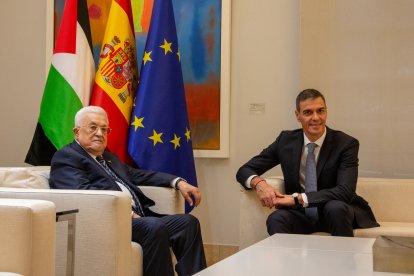
Meeting of Pedro Sanchez with the president of the Palestinian Authority, Mahmoud Abbas, in 2025
Another was when Trump demanded that Sanchez raise his defense spending, as did members of the North Atlantic Treaty Organization (NATO). The Socialist opposed, so the president threatened severe tariffs on Spain for not doing so.
With the conflict in the Middle East already underway, Trump asked the Pedro Sánchez government— already besieged by corruption scandals—to allow him to use two Spanish military bases located in the south of the country to make his offensives against the Iran's Islamist regime. The socialist's response, aided by the "no to war"—one of the PSOE's historic slogans—and his animosity towards Israel, was one of rejection, disassociating itself from the views of some of its closest allies, such as France, Germany and United Kingdom.
Relations with China and Hispanic socialism; the 'Google tax'
There are more signs of Sanchez's anti-Americanism. For example, his friendship with the China's communist regime, the main 'enemy' of the United States. Since he has been prime minister, he has traveled four times to Beijing to visit and meet with Xi Jinping, while he has only been to the White House once to hold a dialogue with former President Joe Biden. In those official visits to China, Sanchez obtained major trade agreements for his country.
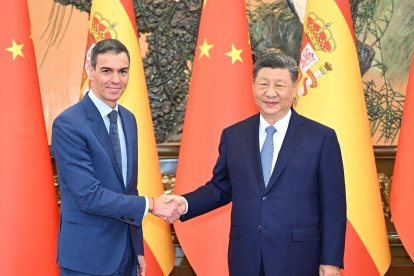
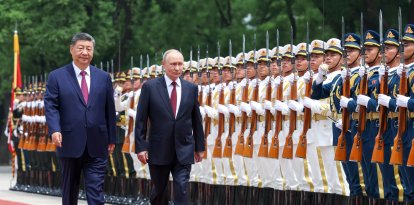
Last meeting of Pedro Sánchez and Xi Jinping. April 2026
Just like Rodriguez Zapatero, Sanchez has also shown a close closeness towards his socialist counterparts in Central or South America, openly anti-American. For example, with Gustavo Petro (Colombia) or with Luiz Inácio Lula da Silva (Brazil). It has also established diplomatic channels with the dictatorial regimes of Cuba and Venezuela.
Finally, the so-called Google tax. Sanchez pushed for measures to make technology giants pay taxes for their digital services, which led to trade tensions between the United States and Spain. Washington DC, which saw this intention as an offense to competitiveness and local business success, warned of imposing tariffs.
LATEST