The four men the Cuban regime killed that explain the indictment of Raúl Castro: What was Brothers to the Rescue and why the case is back now
The indictment, although belated, changes something in the background of the case: for the first time, a court document puts the names of Armando Alejandre, Carlos Costa, Mario de la Peña and Pablo Morales in front of a specific defendant.
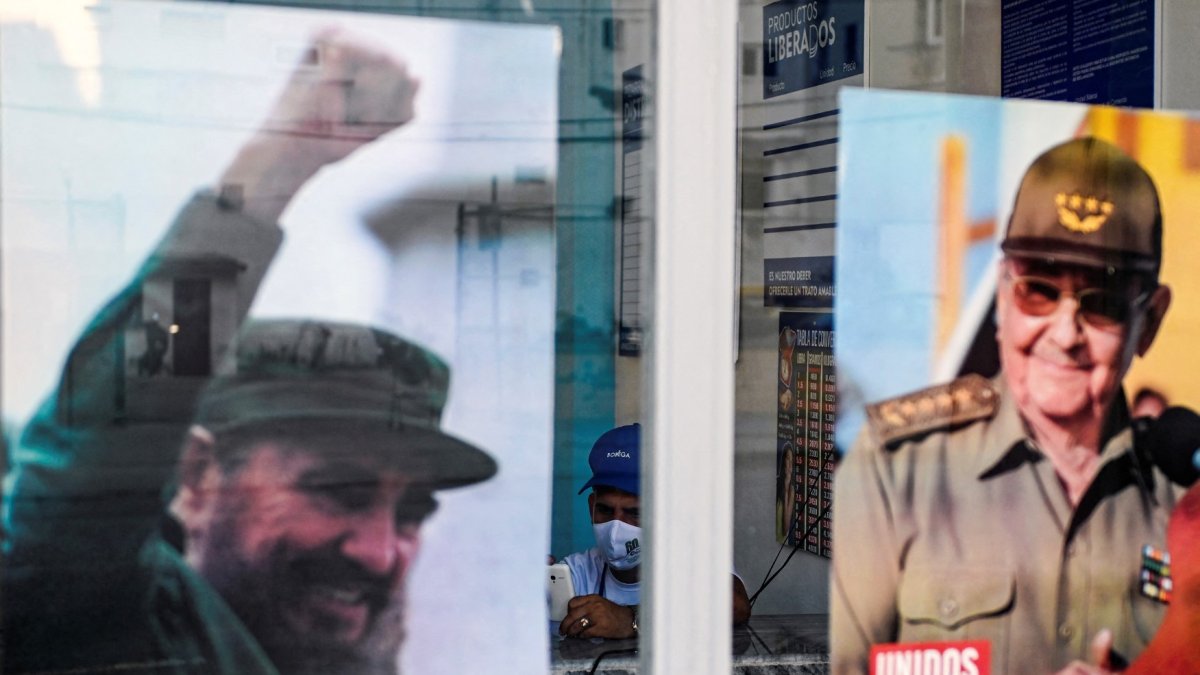
In Cuba, posters of the late Fidel Castro and his brother, Raul Castro.

Three decades passed. Along the way, Fidel Castro died. In 2021, 94-year-old Raúl Castro relinquished the presidency of the Cuban Communist Party. There was famine, health crisis, blackouts and thousands of Cubans fleeing the island. Many died in the attempt. However, just when hope for justice seemed to fade, an old file reopened and, with it, a little light at the end of the tunnel. The United States this week indicted former Cuban dictator Raul Castro for the 1996 shoot-down of two civilian planes belonging to the pro-democracy organization Brothers to the Rescue, an attack that killed four men flying over the Florida Straits in search of Cuban rafters. Acting Attorney General Todd Blanche read the charges against the youngest of the Castro brothers, four counts of murder, plus conspiracy to kill U.S. citizens and destruction of aircraft, at Miami's Freedom Tower, the building that for decades welcomed Cubans fleeing the island. The choice of setting was not accidental, since as it is a symbol for Cuban exiles in South Florida.
However, beyond the diplomatic war and the names making headlines today, Trump, Rubio, Raúl Castro, Havana, are the four men whose deaths remain unanswered in court. It is transcendental to remember them, and also the organization to which they belonged.
A flotilla of planes to search for rafters
Brothers to the Rescue emerged in Miami in 1991, at the height of the migration boom from the island to the United States. The fall of the Soviet Union had left Cuba without its main breadwinner and plunged the island into the notorious Special Period. Cubans suffered, in addition to a ferocious communist regime, constant blackouts, hunger, fuel shortages and an accelerated deterioration of their quality of life and freedoms. Thousands of people desperate, threw themselves into the sea in any small boat that floated, if it could be called that, hoping to reach the shores of Florida. Many did not make it. The trigger for founding the group, according to the organization itself, was the death of a teenager, Gregoria Perez Ricardo, who died of dehydration during the crossing.
The group's method, led by former pilot Jose Basulto, was simple: They would depart in small Cessnas from Miami-area airports, monitor the strait for precarious vessels, mark their position and pass it to the U.S. Coast Guard so the Coast Guard could organize a rescue. Sometimes they would drop water and food near the rafts. Eventually, they also went a bit further, taking it upon themselves to drop leaflets over Havana, pamphlets reproducing texts such as the Universal Declaration of Human Rights, which was effectively banned on the island. Of course, this did not please the Castro regime.
Havana called these incursions a threat to its security and labeled the group a terrorist organization. However, testimony and expert opinions indicate that Brothers to the Rescue pilots were unarmed volunteers, and their most confrontational action was dropping leaflets over the island. No legitimate international organization supported the claim of a military threat to Cuba. On the contrary, both the Organization of American States and the International Civil Aviation Organization later concluded that the attack was illegitimate, in violation of international law.
Two ships destroyed, four lives
The background report of the Inter-American Commission on Human Rights, which investigated the case, preserves the profile of each. They are:
Armando Alejandre Jr. was 45, the oldest of the four. Born in Cuba but raised in Miami, he was a naturalized U.S. citizen and had served during the Vietnam War. He worked as a consultant for the Metro-Dade County Transit Authority. He left behind his wife, Marlene, to whom he had been married for 21 years, and a college-age daughter.
Carlos Alberto Costa, 29, was born in the United States. A lifelong aviation enthusiast, he dreamed of one day running the operations of a major airport. He had graduated from Embry-Riddle Aeronautical University and worked as a training specialist in the Dade County Aviation Department.
Mario Manuel de la Peña, also an American by birth, was the youngest of the victims: 24. He was in his final semester at Embry-Riddle to become a commercial pilot and had already landed a highly contested spot at American Airlines. The university awarded him his degree posthumously.
Pablo Morales was the only one who did not have U.S. citizenship but held residency. His story was intimately tied to what he was doing with the group: Born in Havana in 1966, Morales had fled Cuba on a raft in August 1992 and was rescued precisely by Brothers to the Rescue. He joined as a volunteer to, in a way, repay what they had done for him by helping other fellow Cubans achieve long-awaited freedom. He was flying as co-pilot the day he was killed.
What happened on Feb. 24, 1996, was described with technical coldness in a report by the Inter-American Commission on Human Rights. Three Cessnas took off from Florida for a routine mission. Two Cuban MiG-29 fighters intercepted two of them between 3:21 p.m. and 3:27 p.m. and reduced them to nothing with air-to-air missiles. There was no prior warning, no attempt to force them to land, nor any of the maneuvers required by international law before opening fire on a civilian aircraft. The first and only response was to destroy them. There was practically nothing left of the planes, only a trace: An oil stain on the water that indicated where they had gone down. The third aircraft, piloted by Basulto, miraculously escaped after a long chase.
But why now?
To understand why Washington is revisiting a 30-year-old crime to go after a 94-year-old former dictator, one must understand history and go back to the time when it happened, for it was one of the most tense episodes in the entire U.S.-Cuba relationship after the Cold War.
In the mid-1990s, with the island economically suffocated, officials from both countries maintained discreet contacts to evaluate a possible thaw before an eventual second term for Bill Clinton, as described by the BBC in a recent report. Several Cuban analysts and historians argue that this opening and policy of rapprochement was exactly what the late dictator Fidel Castro did not want. Improved relations with Washington would have brought pressure on the regime for political and economic reforms, and that threatened the absolute control on which the Castros power rested.
From that perspective, the shooting down of the civilian aircraft was not an attack to safeguard Cuba's national security, but an action to provoke the Clinton Administration and make any sign of rapprochement impossible.
If the experts are right, Castro's calculation worked. Clinton reacted harshly. First, he condemned the attack and, weeks later, signed the Helms-Burton Act, which reinforced the embargo and limited the ability of future presidents to lift it. With this, Havana obtained the confrontational scenario that allowed it to close ranks, toughen internal repression against dissidents and present itself to its population as a besieged fortress. The regime changed little or nothing internally and consolidated itself during a convulsive period.
The only serious attempt to normalize relations came almost 20 years later with Barack Obama, who in 2014 reestablished relations and traveled to the island. By then, the Castros were already old and managed the rapprochement without yielding on what was essential for their survival, that is, without lifting a finger to agree to a real political opening in exchange for the thaw and Cuba kept its one-party system intact.
This week's indictment, however, is part of a radical shift from that stage. Trump's administration has returned to a policy of maximum pressure on Havana: sanctions on the leadership and the intelligence apparatus, a blockade on the military businesses that sustain the regime and a frontal discourse embodied by the Secretary of State Marco Rubio, a son of Cuban immigrants and longtime critic of the Castro regime. The move against former dictator Raúl Castro also comes on the heels of the capture of former Venezuelan dictator Nicolás Maduro, which Washington is presenting as a trophy of its willingness to prosecute dictatorial leaders in the region it accuses of crimes against the United States. Castro, 94, is only the fourth ruler or former ruler in the region to be indicted by the United States.
While it is unlikely that the former dictator will ever make it to a U.S. courtroom, as, for example, Maduro did, Cuban exiles and the families of the victims, who for nearly three decades have returned every anniversary to demand justice, likely understand this reality. Nevertheless, the indictment, although belated, changes something in the substance of the case: For the first time, a judicial document places the names of Armando Alejandre, Carlos Costa, Mario de la Peña and Pablo Morales before a specific defendant. After 30 years of injustice, torture, repression, assassinations and hunger, that is no small thing.
LATEST