72 hours with María Corina Machado: VOZ journalist follows Nobel Peace Prize winner during her trip to Madrid
"We have the support of the United States assuring that this will be a transparent process, and if they want to know who is with the regime or with us, just ask if they want elections or not," said Machado, who insisted that she does not regret sharing her Nobel Prize with President Donald Trump.


Freedom. That's what defines the last three days in Madrid with the visit of Venezuelan leader and 2025 Nobel Peace Prize winner María Corina Machado. Tears, the longing for democracy and the desire to return soon to her country were what the Venezuelans who accompanied Machado during her activities in the Spanish capital experienced.
There is no doubt: María Corina's leadership goes beyond politics. She is a woman who generates confidence in her fellow citizens, and this is seen in every hug she received when she entered the headquarters of Spain's Popular Party (P.P.) to meet with its leader, Alberto Núñez Feijóo. In that meeting, the agenda of the issues that Venezuelans are asking Western democracies to support was set: the release of political prisoners, dismantling of the repressive system and, finally, free elections.
"Spain's place is at María Corina's side and not with the tyranny that has persecuted her, with freedom and not with the dictatorship on the sly at [Madrid] Barajas Airport, with a free Hispanic America and with democracy," said Feijóo, concluding by saying that "Spanish society never fails and is with María Corina Machado."

María Corina Machado with Alberto Núñez FeijóoJosé Altuve / @Altuveb17.
Upon leaving the P.P. headquarters, Machado continued on to the offices of a key ally for the Venezuelan cause: the VOX party and the Disenso Foundation. There, party leader Santiago Abascal reaffirmed the importance of accompanying the cause of freedom in Venezuela for the entire West. Both Machado and Abascal insisted on the need for the democracies of the world to promote a transition in Venezuela.
"Everyone chooses where they are. We chose to be with María Corina Machado, others have chosen today to be with the faces of oppression, with the accomplices of tyranny in Venezuela during the last few years," Abascal assured.

María Corina Machado with Santiago AbascalJosé Altuve / @Altuveb17.
World
Machado mobilizes thousands in Madrid, highlights Washington's support and promises free elections in Venezuela
Andrés Ignacio Henríquez
But upon leaving the headquarters, an image was recorded that was the sign of what would be experienced in the following days: a child embracing the Nobel Peace Prize winner as she leaves the building and beginning to cry. He only managed to say a few words: "I have never seen freedom in Venezuela." That scene, more than an isolated instant, seemed to sum up years of exile, pain and waiting. She embraced him like a mother embraces a child.

María Corina Machado leaving DisensoJosé Altuve / @Altuveb17.
That same afternoon, Machado received the keys to the city. The scene was both something of ceremony and something of venting. Outside, people did not expect security protocols: they expected to touch her, to whisper something in her ear, to leave her a brief story amid the noise.
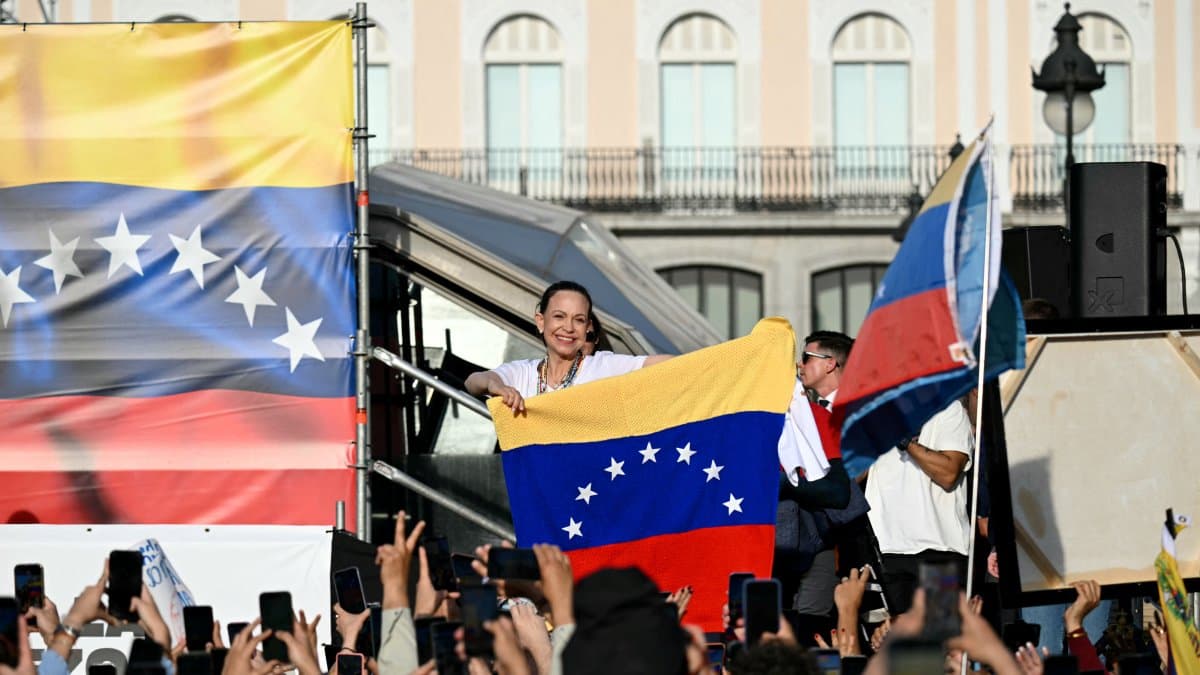
Saturday did not start: it exploded. From early on, Madrid's Puerta del Sol was filled with Venezuelan accents, people with flags folded under their arms, entire families who seemed to arrive with a single idea in common. When it finally appeared, the plaza was no longer a plaza: it was a message.
"Today we begin the return home," Machado said before thousands of people in the heart of Madrid. And then, almost as if she needed to repeat it to believe it along with them, "Today our return begins."

Venezuelans in Madrid's Puerta del SolJosé Altuve / @Altuveb17
The phrase did not land as a speech. It landed as a shared promise. In the demonstration, many were not recording: they were crying. Others held up rosaries, flags, photos. Some simply closed their eyes to live that moment.
The presentation of the Gold Medal by Isabel Díaz Ayuso was the institutional act, but what happened afterwards was something else. Politics was diluted in a scene difficult to classify: thousands of people shouting "freedom" in unison, as if the word could, by insistence, become a reality.
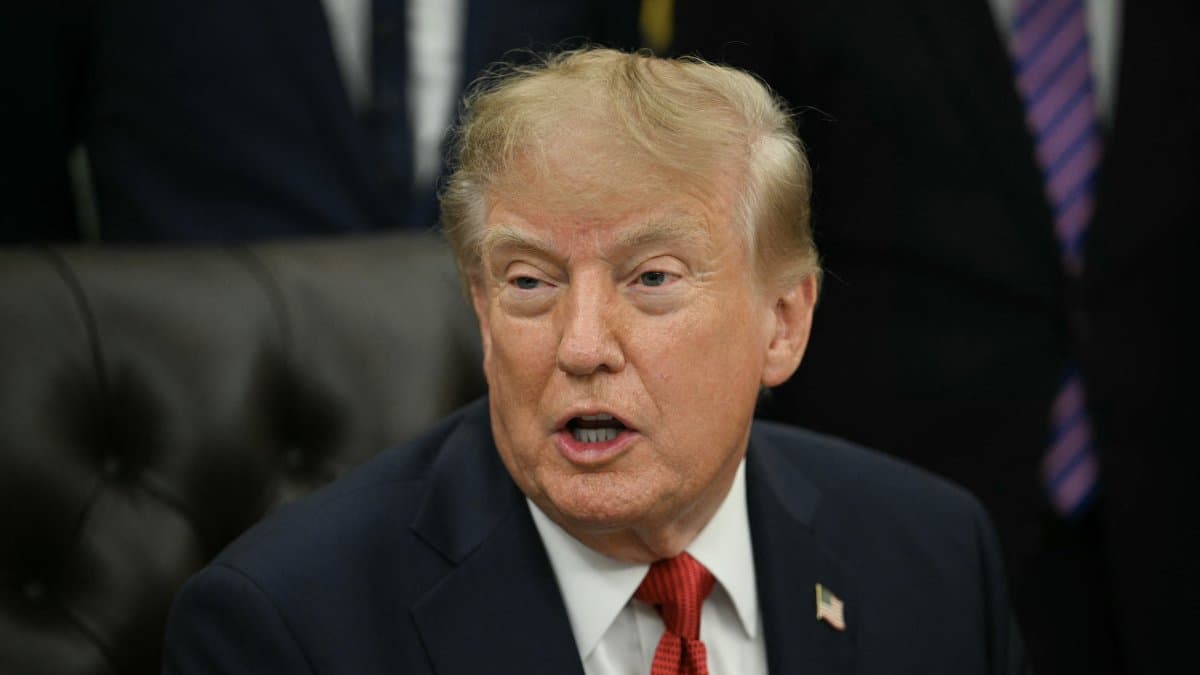
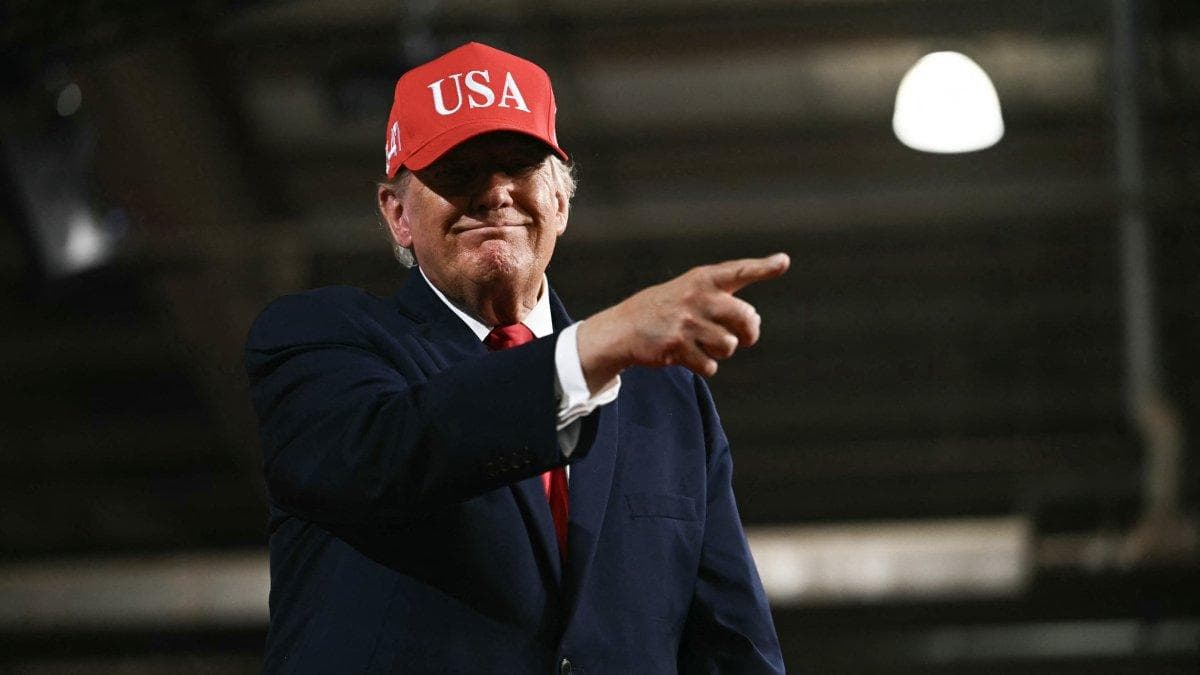
"We have the support of the United States assuring that this will be a transparent process, and if they want to know who is with the regime or with us, just ask if they want elections or not," said Machado, who insisted that she does not regret sharing her Nobel Prize with President Donald Trump.

Demonstration of Venezuelans in Madrid.José Altuve / @Altuveb17
In addition, she emphasized that Trump is the only president in the world who has risked the lives of Americans for the freedom of Venezuela. This, she says, he should be thanked for. "We Venezuelans will always remember and always be grateful, so, no, I have no regrets."
During Machado's speech, The request was clear. Without a nuance: elections now.
International pressure and political pulse
The rally was attended by diverse profiles of Venezuelan exiles: professionals, journalists, service sector workers and opposition political figures, all in a scene marked by flags, chants and personal stories of those who left the country because of the crisis.
From the stage, Machado insisted that the key to the transition lies in the international pressure led by Donald Trump's administration, which supports the demand for free elections for which millions of Venezuelans are raising their voices today.
Hours later, when the crowd began to disperse, there remained in the air a feeling difficult to define: that of having witnessed something that can't be turned off when the microphones are silenced. The hope that, soon, the exiles (more than 8 million worldwide) will be able to return to their homeland.

María Corina Machado in Madrid's Puerta del SolJosé Altuve / @Altuveb17
Sunday was different. Quieter. No crowds or chants, but just as political. Machado met with three former Spanish prime ministers: Mariano Rajoy, José María Aznar and Felipe González. Three eras, three styles, one same conversation: Venezuela.
But even there, far from the plaza, the constant did not change.
Because if something ran through every meeting, every act and every displacement during these 72 hours, it was the same phrase, repeated like a persistent echo: "Take me home." It was heard in a low voice, in tears, like a plea. And not only in scheduled events. She also burst in unexpectedly: on the streets, at the entrance of a local shop, in that instant when someone recognized her by chance and, without further ado, condensed in a few words the feeling of a whole absent country.
And perhaps that's where everything is understood. Madrid was a stage, yes, but above all it was a momentary refuge of an emotion that does not fit in a political act. For three days, the city functioned as a symbolic anteroom to something greater: the (still uncertain) attempt to return. Even for her, which, despite the threats, she has promised will happen.
🛠 Do you think there is an error in this article?
Recommendations
LATEST