ANALYSIS
Colombia: In an unprecedented and authoritarian move, a court has prohibited candidate de la Espriella from using his campaign slogan and national symbols
The decision was adopted as a precautionary measure while the court thoroughly reviews a constitutional complaint filed by attorney Dylan Lizarazo Ramos, who argues that de la Espriella has made improper and indiscriminate use of national symbols.
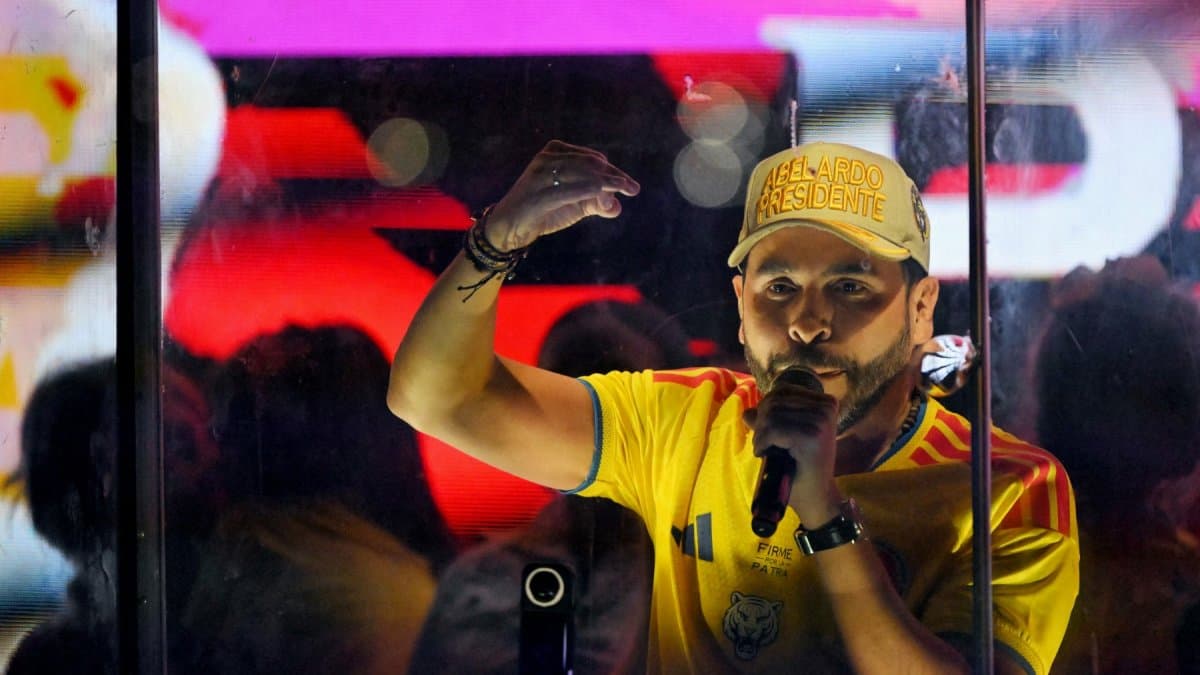
EThe Superior Court of Bogotá ordered right-wing presidential candidate Abelardo de la Espriella on Tuesday to remove, within the next 24 hours, all political propaganda in which he uses national symbols such as the flag and the national coat of arms of Colombia, as well as images alluding to military and police institutions. In a ruling by Judge Rafael Chavarro, the court also ordered the candidate to stop using the slogan “Stand Firm for the Homeland” and the name of his movement, “Defenders of the Homeland,” all of this despite the fact that it is a legally constituted civic organization and that there are less than two weeks remaining before the second round of the presidential elections, in which he will face off against socialist candidate Iván Cepeda.
The decision was adopted as a precautionary measure while the court thoroughly reviews a constitutional complaint filed by attorney Dylan Lizarazo Ramos, who argues that de la Espriella has made improper and indiscriminate use of national symbols during his presidential campaign. According to the judge, based on the evidence gathered, “there is evidence of the inappropriate use of national symbols in the aforementioned political campaign, an action that disregards electoral freedom.”
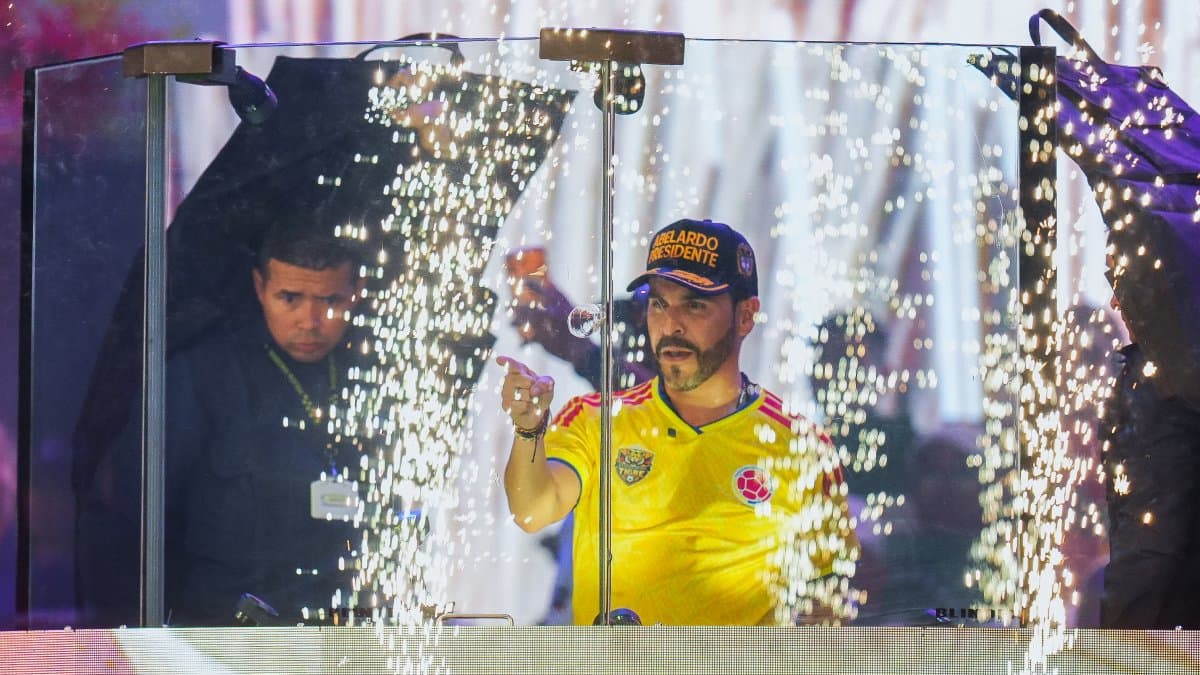
Far from being the first judicial restriction imposed on the right-wing candidate in the midst of his election campaign following the first round of the elections, the truth is that recently another judge imposed a preliminary injunction prohibiting de la Espriella from wearing the Colombian national team jersey, a fact that numerous analysts have considered one of the hallmarks of his entire campaign. Despite this, de la Espriella has not complied with the order and has continued to wear the soccer jersey.
For several experts, the measure taken by the Bogotá court is nearly impossible to justify, given that it turns symbols belonging to all Colombians into items that are practically off-limits for a presidential candidate. Prohibiting the use of the flag, the national coat of arms, or even expressions such as “homeland” not only fails to protect electoral freedom but also restricts political freedom of expression in the midst of a campaign. Furthermore, the decision takes on authoritarian overtones by allowing a court to determine which concepts, symbols, and ideas may or may not form part of a presidential candidate’s discourse, setting a troubling precedent for democratic debate and free electoral competition in Colombia.
Although nearly all polls predicted a landslide victory for the socialist Cepeda in the first round of the elections, de la Espriella delivered a genuine surprise by emerging victorious and setting the stage for him to now be the clear favorite to win the presidency, taking into account not only the point difference between the two candidates but also the fact that a very large portion of the votes for the Democratic Center candidate, Paloma Valencia, will be absorbed by him.
🛠 Do you think there is an error in this article?
Recommendations






LATEST