






Justice against Islamic terrorism: A Taliban commander who kidnapped an American journalist is sentenced to 42 Years in prison
The events underlying the U.S. Attorney’s Office’s indictment date back to 2008, when Najibullah coordinated the capture of David Rohde.


A federal court in the District of Manhattan sentenced Taliban commander Haji Najibullah to 42 years in prison on Tuesday, after he pleaded guilty to charges of hostage-taking and providing material support for the commission of terrorist acts against Western targets.
The court ruling brings an end to the criminal proceedings against the insurgent leader, who formally acknowledged having provided logistical and operational support to jihadist cells focused on the extermination of U.S. troops abroad.
During the reading of the verdict, District Court Judge Katherine Polk Failla emphasized the severity of the defendant's actions, noting that Najibullah's conduct was marked by "casual brutality" and the systematic use of "psychological torture" against defenseless citizens.
The events underlying the U.S. Attorney’s Office’s indictment date back to 2008, when Najibullah coordinated the capture of David Rohde, then a New York Times correspondent, who was conducting research in the region for the publication of a book.
Along with the American reporter, Taliban forces intercepted a local journalist, Tahir Ludin, and his driver, Asadullah Mangal, transporting them to insurgent-controlled areas in Pakistani territory.
According to the files submitted by the Public Prosecutor’s Office, the commander falsely accused the civilians of spying, subjecting them to forced interrogations about their family backgrounds.
To break the captives’ resistance, the factions under his command forced them to watch propaganda videos of executions and beheadings.
The captors attempted to use the hostages to demand ransom payments and force the release of Islamic prisoners of war. The extent of the harassment was documented in coercive audiovisual recordings in which Rohde was forced to beg for his life while a machine gun was pointed at him.
After seven months in captivity, Rohde and Ludin managed to evade the compound’s security by climbing the walls with makeshift ropes, then taking refuge at a military outpost.
Responsibility for the deaths of U.S. soldiers
Although the defendant’s legal counsel requested a reduced sentence of 18 years, citing alleged remorse and an intermediate rank within the radical movement’s hierarchical structure, the U.S. Attorney’s Office argued for the maximum sentence due to the organization’s extensive history of violence.
Authorities directly linked Najibullah’s faction to an ambush carried out in 2008, in which three U.S. military personnel and an Afghan interpreter were killed, whose bodies were subsequently mutilated and set on fire by the militants.
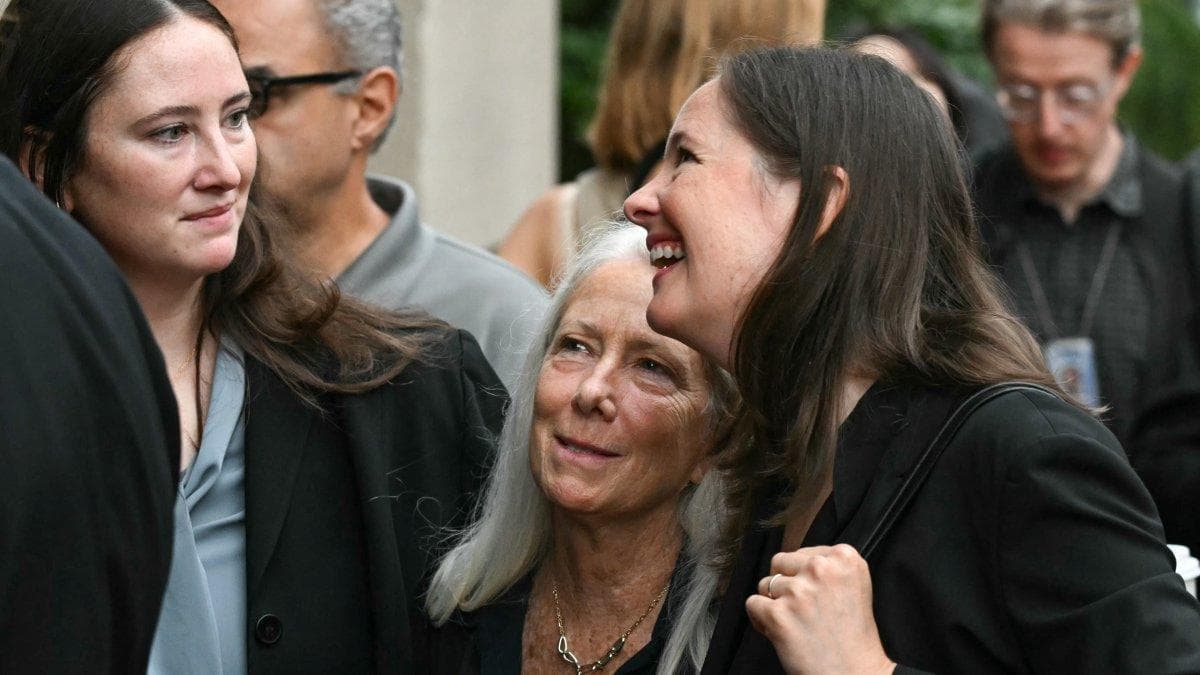
The journalist who was himself a victim of the kidnapping appeared in the courtroom to honor the memory of the soldiers killed in the line of duty, describing the deprivation of liberty of civilians as "a cruel and cowardly crime."

Politics
FBI arrests three men accused of conspiring to support ISIS and attack U.S. military
Joaquín Núñez


Just The News
‘Hoodies 'n' Hijabs’: Michigan’s El-Sayed pushed viral Muslim hate crime hoax in critique of America
Just The News | Jerry Dunleavy
🛠 Do you think there is an error in this article?
Recommendations



LATEST