LIVE | Iran warns it will block Red Sea if US naval blockade continues, says it is prelude to ceasefire violation
Oil prices continue to fall on hopes for a deal to end the Middle East conflict.
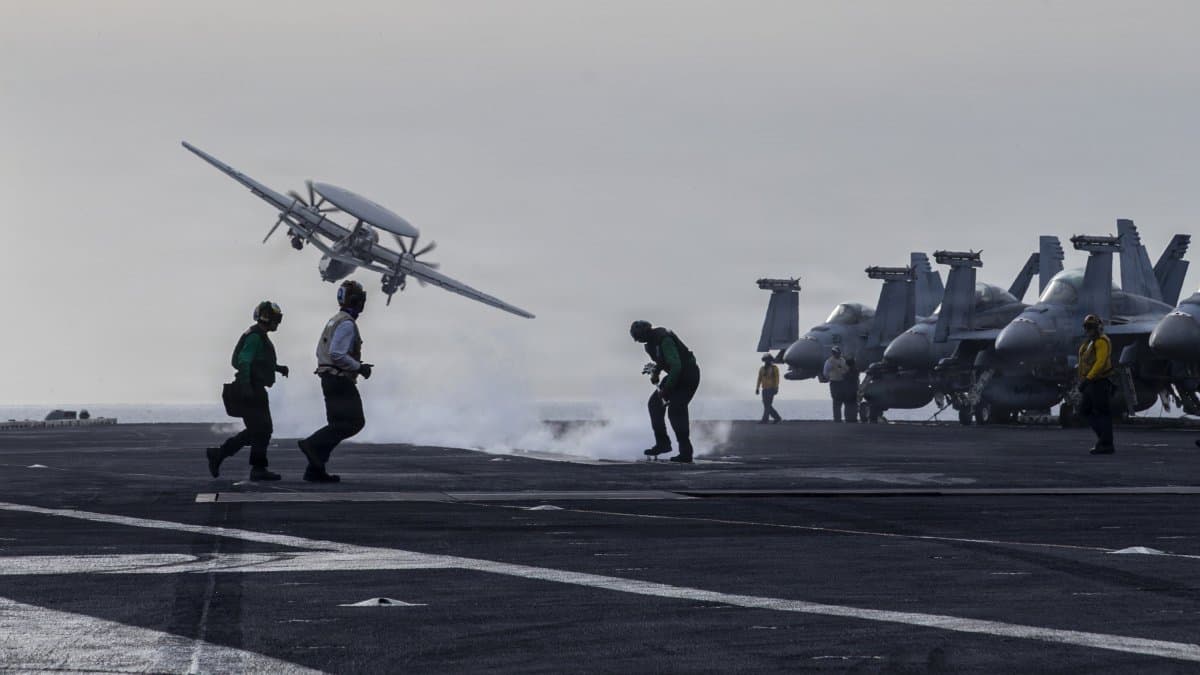

After failing in its attempt to prevent the meeting in Washington between representatives of Israel and Lebanon, terrorist group Hezbollah tried to derail any chance of an agreement and jeopardize the fragile Middle East ceasefire by firing 30 rockets into northern Israel. Netanyahu’s government responded with attacks and called on the population to evacuate southern Lebanon.
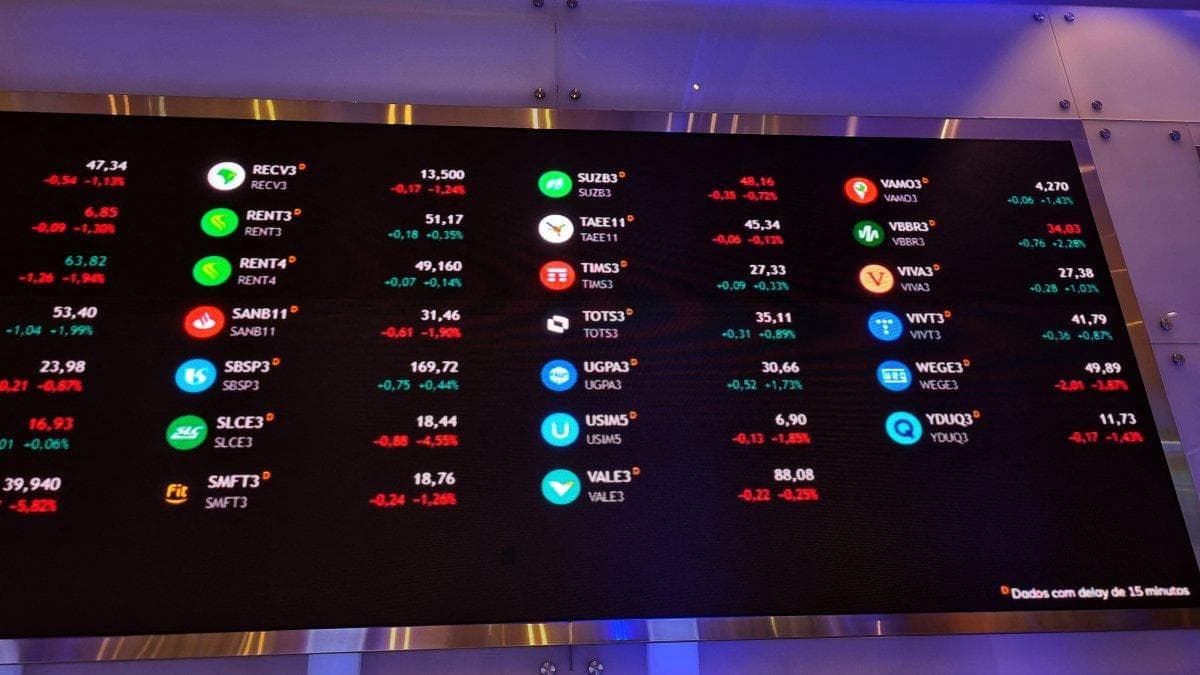
The price of oil continued to fall, and stock markets rose on optimism over a possible early end to the war in the Middle East. The implementation of the U.S. naval blockade and Trump's words about the proximity of the end of the war gave investors a boost.
All times are Eastern Standard Time (EST).
01:40 pm · U.S. claims to have prevented the passage through Hormuz of nine ships from Iran
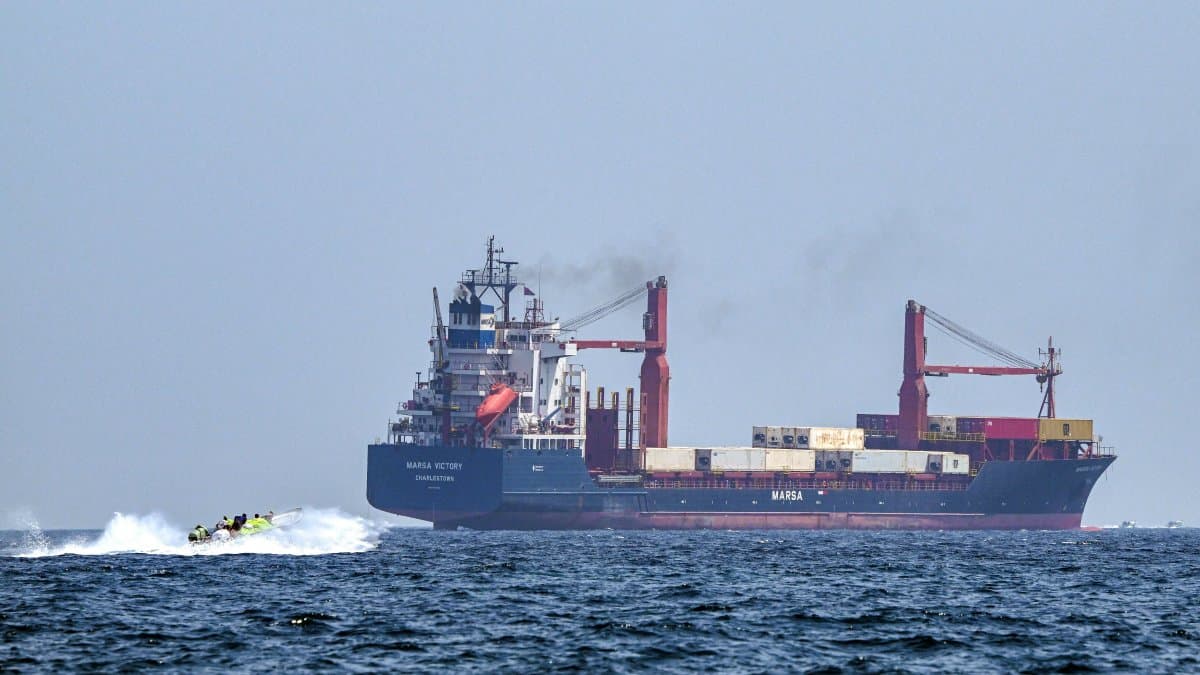
The U.S. military said Wednesday that it prevented the passage of nine vessels that had sailed from Iranian ports during the first two days of the naval blockade imposed on the Islamic republic.
12:40 Am · Iran receives a Pakistani delegation
Iranian Foreign Minister Abbas Araqchi on Wednesday welcomed a Pakistani delegation led by army chief Asim Munir, days after failed U.S.-Iran talks in Pakistan to end the Middle East war.
Iran's foreign ministry reported Wednesday that it has been maintaining contacts with the United States through Pakistan since the return of its delegation that traveled to Islamabad for the negotiations.
11:40 Am · Israel considers talks with Lebanon a "historic opportunity"
The Israeli government on Wednesday hailed the dialogue launched the previous day in Washington between Israel and Lebanon, calling it a "historic opportunity to end decades of Hezbollah's domination over Lebanon."
10:40 Am · Starmer will not budge
British Prime Minister Keir Starmer said he would not "yield" to pressure from Donald Trump to join the Iran war after the U.S. president threatened to renege on a U.K. trade deal.
"We're not going to get dragged into this war. It is not our war," Starmer told parliament.
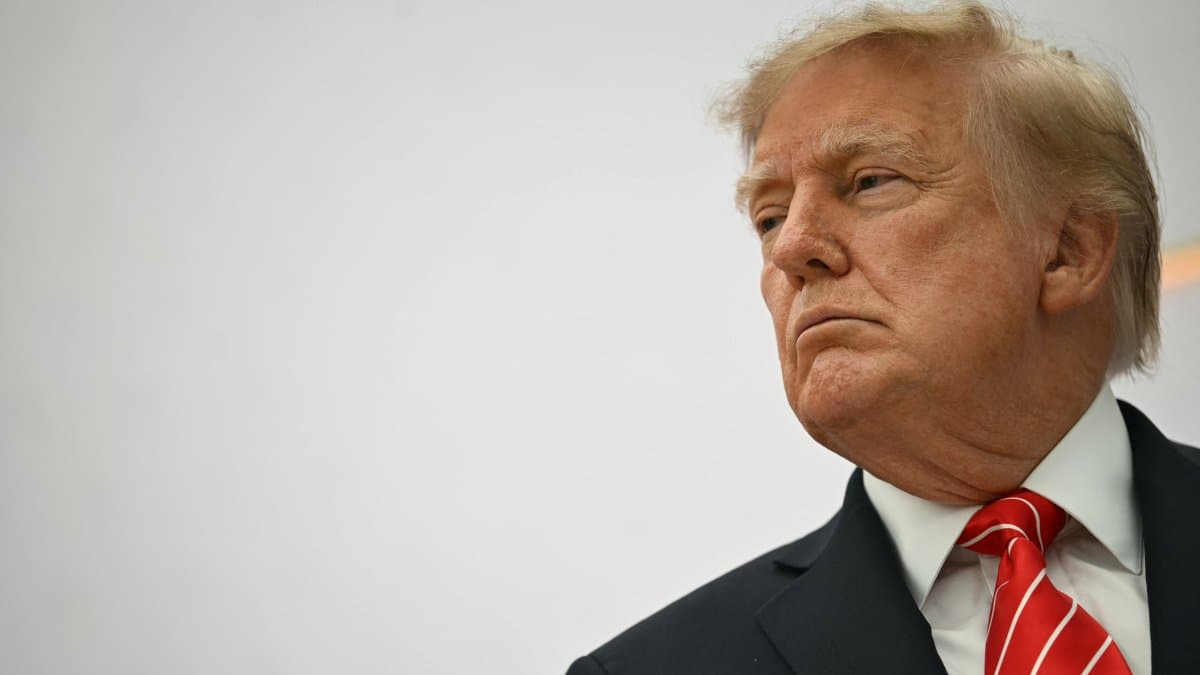
09:40 Am · Trump's demand for Chinese weapons
U.S. President Donald Trump said in an interview on Fox Business he asked China's leader Xi Jinping not to supply weapons to Iran, and that Xi replied saying he was not doing so.
"I had heard that China's giving weapons to, I mean -- you're seeing it all over the place -- to Iran," Trump said.
"And I wrote him a letter asking him not to do that, and he wrote me a letter saying that essentially he's not doing that."
Trump plans to visit China next month for a summit with Xi that pushed back from late March by Washington because of the war.
08:40 Am · Iran insists that it has the right to enrich uranium at a negotiable level
Iranian Foreign Ministry spokesman Esmail Baghaei reiterated Wednesday that no one can "snatch away" Iran's right to make peaceful use of nuclear energy but that the level of such enrichment is "negotiable."
08:00 am · Iran acknowledged that it maintains contacts with U.S. through Pakistan after failed negotiations
Iran acknowledged on Wednesday that it is maintaining contacts with the United States through Pakistan after the failure of negotiations held in Islamabad last weekend. These are surprising statements because, to date, Tehran had consistently denied every single time Trump claimed to be negotiating with the ayatollahs.
"Since Sunday, when the Iranian delegation returned to Tehran, several messages have been exchanged through Pakistan," said Iranian Foreign Ministry spokesman Esmail Baghaei.
"Today [Wednesday] we are very likely to meet with a Pakistani delegation as a continuation of the talks in Islamabad," he added at a weekly press conference.
07:41 am · Iran warns it will block Red Sea if U.S. naval blockade continues, says it is prelude to ceasefire violation
Iran threatened Wednesday to block the Red Sea, to which it has no territorial access, in case the U.S. blockade of its ports is maintained, considering the latter to be a ceasefire violation.
If the United States maintains its maritime blockade and "creates insecurity for Iran's commercial ships and oil tankers," that will mean "the prelude" to a violation of the ceasefire, in force since April 8, estimated Gen. Ali Abdollahi, head of the Iranian armed forces command.
"The powerful armed forces of the Islamic Republic will not allow any export or import in the Persian Gulf, the Sea of Oman or the Red Sea," he added, according to a statement broadcast on state television.
07:27 am · Senior UAE, Iran officials discuss de-escalation in rare call
Senior UAE and Iranian officials held a call to discuss de-escalation on Wednesday, UAE state media reported, the first high-level call since ties deteriorated over the U.S.-Iran war.
UAE Vice President and Deputy Premier Sheikh Mansour bin Zayed Al Nahyan "held a phone call with Mohammad Bagher Ghalibaf, Speaker of the Parliament of the Islamic Republic of Iran, during which they discussed regional developments and ways to de-escalate tensions in the region," according to a statement released by the WAM news agency.
Since the start of the Middle East war, the UAE has taken a hawkish tone towards Iran, recalling its ambassador and closing its embassy after Tehran began its campaign targeting the Emirates and other Gulf countries.
07:01 am · Israel military says it struck over 200 Hezbollah targets in 24 hours
The Israeli military said Wednesday it had struck more than 200 Hezbollah targets in southern Lebanon in the past 24 hours, even as Israel and Lebanon agreed to pursue direct negotiations.
"In the past 24 hours, the IDF struck over 200 Hezbollah terror infrastructure sites in southern Lebanon, including launchers and terrorists," the military said.
06:24 am · Hezbollah tries to derail Iran peace talks and truce by firing rockets at Israel; Israel responds with strikes and calls to evacuate southern Lebanon
The Israeli army carried out strikes south of Beirut in response to the launching of some 30 rockets by the pro-Iranian terrorist group Hezbollah at Israeli territory on Wednesday, a day after Lebanon and Israel launched peace negotiations in Washington. In addition, the IDF launched an evacuation call to citizens of southern Lebanon.
Hezbollah did not welcome this rapprochement in which both countries agreed to begin direct negotiations for a sustainable peace over time, according to the U.S. State Department.
06:00 am · Oil prices fall and stock markets rise
The stock markets rose and crude oil prices fell again on Wednesday after U.S. President Donald Trump said a second round of talks between Washington and Tehran could be held "in the next couple of days," which fanned hopes of reaching an agreement that would reopen the Strait of Hormuz.
At the close of Asian trading floors, the price of a barrel of West Texas Intermediate (WTI), the U.S. benchmark, was down 0.20% at 91.10 dollars. In contrast, the barrel of Brent North Sea crude, the international benchmark, was up 0.47%, at 93.23 dollars.
05:41 am. · Pakistani prime minister on tour to push for Iran-U.S. negotiations
Pakistani Prime Minister Muhammad Shehbaz Sharif, whose country is mediating between Iran and the United States to end the Middle East conflict, will embark on a four-day tour of Saudi Arabia, Qatar and Turkey, the foreign ministry said.
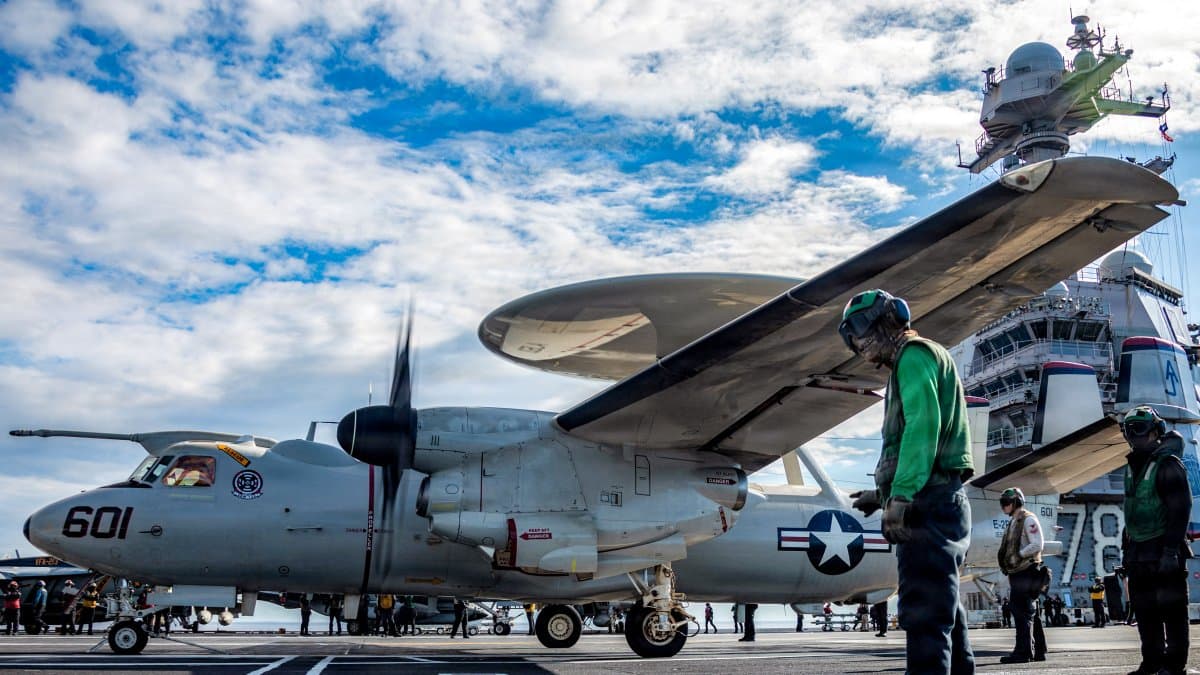
05:19 am · CENTCOM assures that Iranian maritime transit is completely halted
The Centcom, the U.S. military command for the Middle East, maintained Tuesday that no ships had crossed the Strait of Hormuz, key to the global transport of crude oil.
04:37 am · Russia offers to make up for China's energy shortfall due to war
Russian Foreign Minister Sergey Lavrov said his country can compensate for the energy deficit facing China because of difficulties generated by the war in the Middle East, Russian state media reported Wednesday.
"Russia can certainly make up for the shortfall in resources that has arisen" in China and "other countries interested in working with us," Lavrov told a news conference in Beijing, when asked about the Iranian blockade of the Strait of Hormuz.
04:16 am · Lebanon's ambassador to U.S. considers talks with Israel "constructive"
<span>Lebanon's ambassador to the United States, Nada Hamadeh Moawad, called for a ceasefire during "constructive" dialogue she held Tuesday with Israeli representatives in Washington, she said in a statement.</span>
03:56 Am · 238 Iranian sailors repatriated from Sri Lanka
Sri Lanka repatriated 238 Iranian sailors who were aboard a frigate that was attacked by a U.S. submarine and another Iranian Navy ship, the Defense Ministry announced.
According to the source, 32 rescued sailors aboard the IRIS Dena, attacked on March 4 off the coast of Sri Lanka, and 206 other sailors sailing on another vessel, left Sri Lanka on Tuesday.
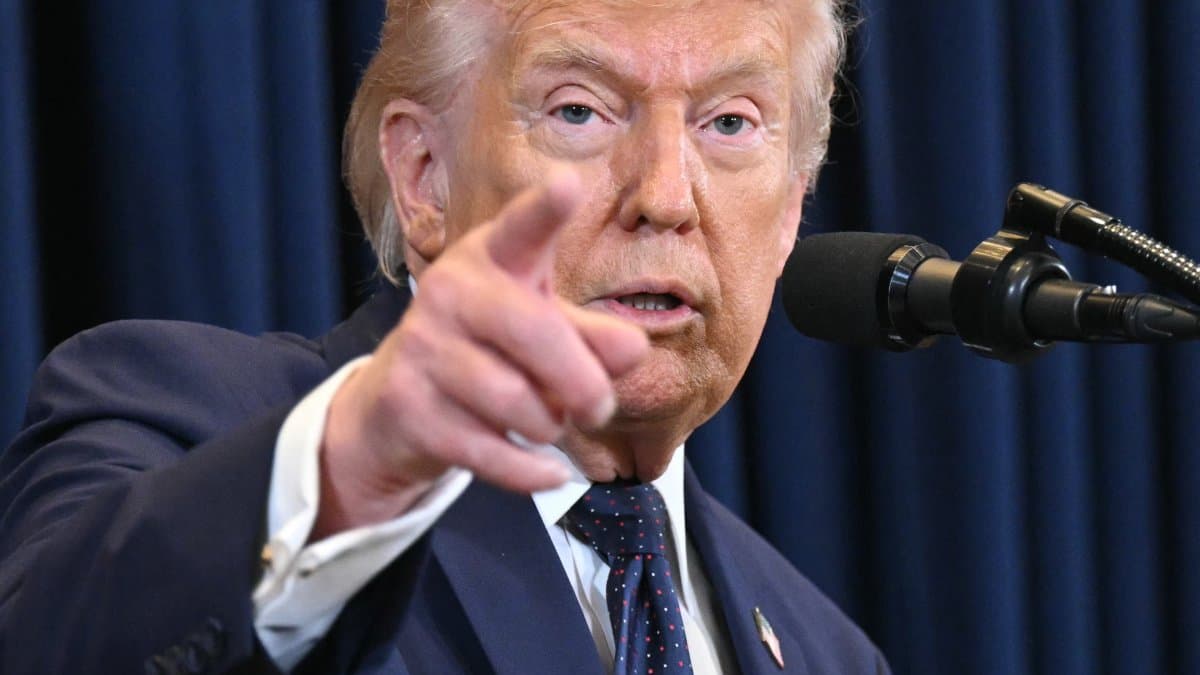
03:13 am · Trump: Middle East war is "very close to over"
02:42 am · U.S. sets naval blockade in motion
World
US enforces its naval blockade against Iran: Six ships turned away without a single shot fired
Emmanuel Alejandro Rondón
02:12 am · Highlights of the Middle East war so far, here
🛠 Do you think there is an error in this article?
Recommendations





LATEST