ANALYSIS
Péter Magyar: The former admirer and ally of Orbán who ended his government
Born to a family of jurists, Magyar grew up in a conservative and Catholic environment, and from a young age showed interest in politics. He had a poster in his room of Orbán, then a symbol of the fight against communism, whom he admired as a figure of democratic change against the previous regime.
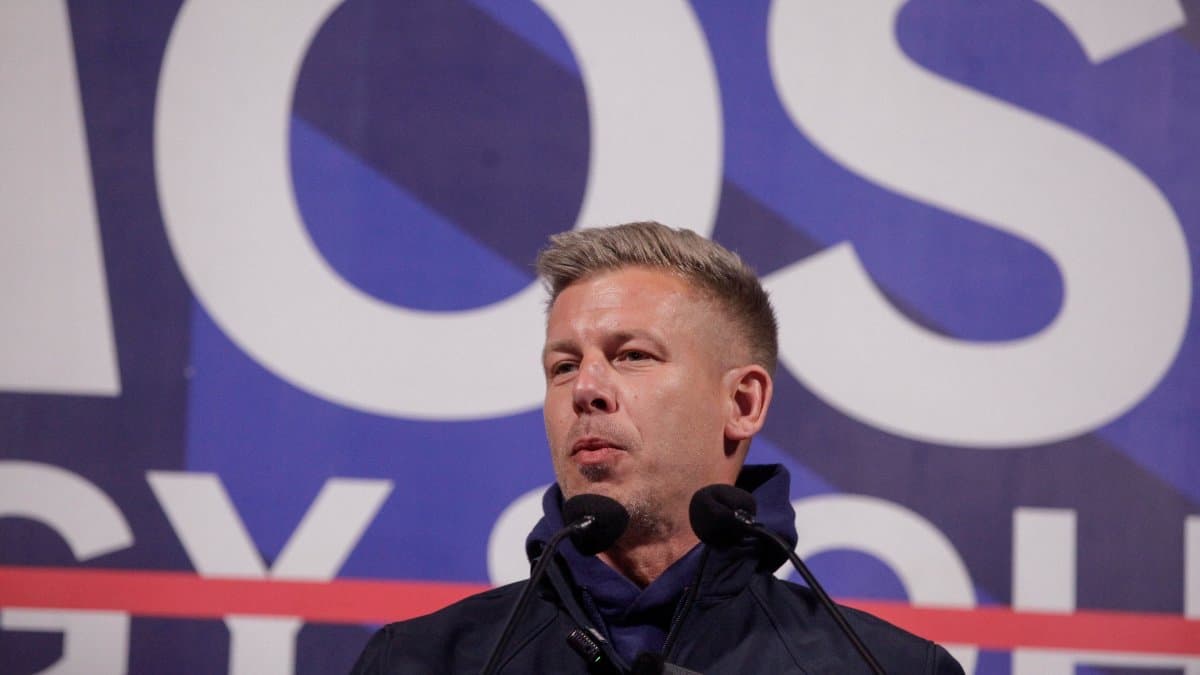

Péter Magyar, 45, is a Hungarian lawyer and politician who in Sunday's parliamentary elections won a historic victory at the head of the center-right Tisza party, ending 16 years of Viktor Orbán and his Fidesz party.
"It is an immense honour that you have empowered us to form a government with the most votes ever received, and to work for the next four years for a free, European, functioning, and humane Hungary," Magyar said on Facebook on Monday.
Born to a family of jurists, Magyar grew up in a conservative and Catholic environment, and from a young age showed interest in politics. He had a poster in his room of Orbán, then a symbol of the fight against communism. He admired the Fidesz leader because he saw him as a figure of democratic change in the face of the previous regime.
In the final years of communist Hungary and during the transition, Orbán was presented as a young leader who challenged Soviet influence and championed democracy and political freedoms, an image that connected with many young people's fascination with breaking with the old system.
Péter Magyar studied law and humanities at Péter Pázmány Catholic University. He graduated in 2004 and served briefly as a lawyer and trainee judge.
From cog in Orbán's system to expert in Hungary's power structure
Magyar's professional career developed within the institutional framework created by Fidesz after its return to power in 2010.
In 2002, as a student, he joined the party and in 2006 married Judit Varga, who would later become justice minister in the Orbán government. The couple had three children and divorced in 2023.

Magyar entered the Hungarian Ministry of Foreign Affairs and Trade in 2010 as a senior official responsible for European matters. One year later, he joined the Permanent Representation of Hungary to the European Union in Brussels, during Hungary’s Presidency of the EU. He lived in Brussels for several years, where he gained in-depth knowledge of EU politics and legislation. He returned to Budapest in 2018.
This trajectory gave him a close look at the workings of the National Cooperation System (NER) promoted by Orbán, which many analysts credit with returning Hungary to economic stability, control over its borders and a foreign policy centered on national sovereignty.
The unexpected leap that made him the new face of the Hungarian opposition
Péter Magyar burst into Hungarian national politics in February 2024 following the scandal unleashed by the presidential amnesty granted by Katalin Novák to a top official of a children's home who had covered up alleged child sexual abuse.
Pressure from citizens and the media resulted in the resignation of President Novák and former Justice Minister Judit Varga, Magyar's ex-wife, which led him to leave Fidesz, present himself as a dissident and launch his own anti-corruption campaign, catapulting him to the forefront of the political struggle against Orbán's government.
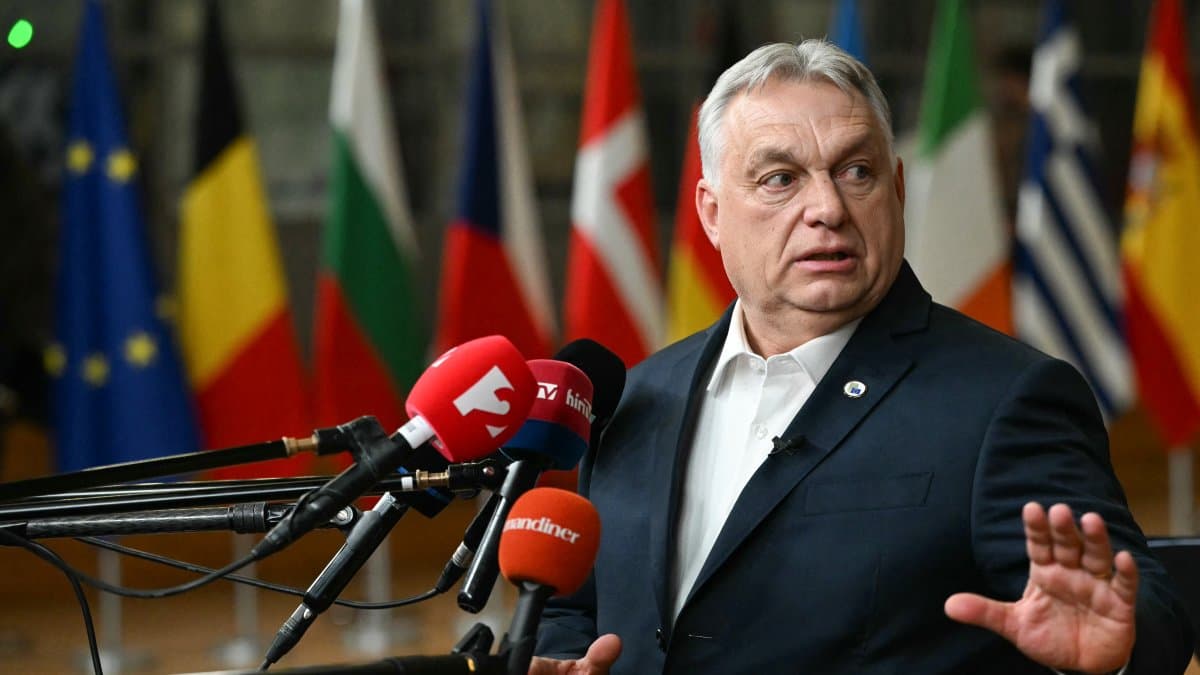
In an interview that went viral, Magyar publicly criticized what he described as problems of corruption and an excessive concentration of power in the government. "Is it possible, in a normal country, that a few families own half of the country? I don't think so," he posed during the discussion.
"We are slowly reaching a stage where I think that even though many things are going in the right direction in this country, even though I will never be on the other side, this is my family, this is my attachment and this is my upbringing, I have to say now that things cannot go on like this. If we don't want our children to grow up in a Hungary that runs like a family business, this is worth changing," he said.
Shortly thereafter, Magyar took control of the already existing Tisza party, reactivated it and turned it into his political platform. In the European elections of June 2024 he obtained a result that consolidated him as the main figure of the opposition. This party is conservative and focused on national interests, but it adopts a clearly pro-E.U. stance, in contrast to the Euroskepticism of Fidesz.
A dissident emerged from the system itself
From a point of view close to Orbán's legacy, Magyar's trajectory reflects both the opportunities offered by the current Hungarian system and the natural dynamics of democracy. He is a man trained and benefited by the country's institutions who has decided, for personal and political reasons, to question them from within.
His critics within Fidesz have pointed out that his turn was sudden and that, until 2023, he was part of the same system he now opposes. However, Magyar has managed to capitalize on the discontent of sectors that, despite recognizing Orbán's achievements in security, economy and defense of traditional family values, demand greater transparency and renewal.
A new generation takes power, without forgetting Orbán's impact
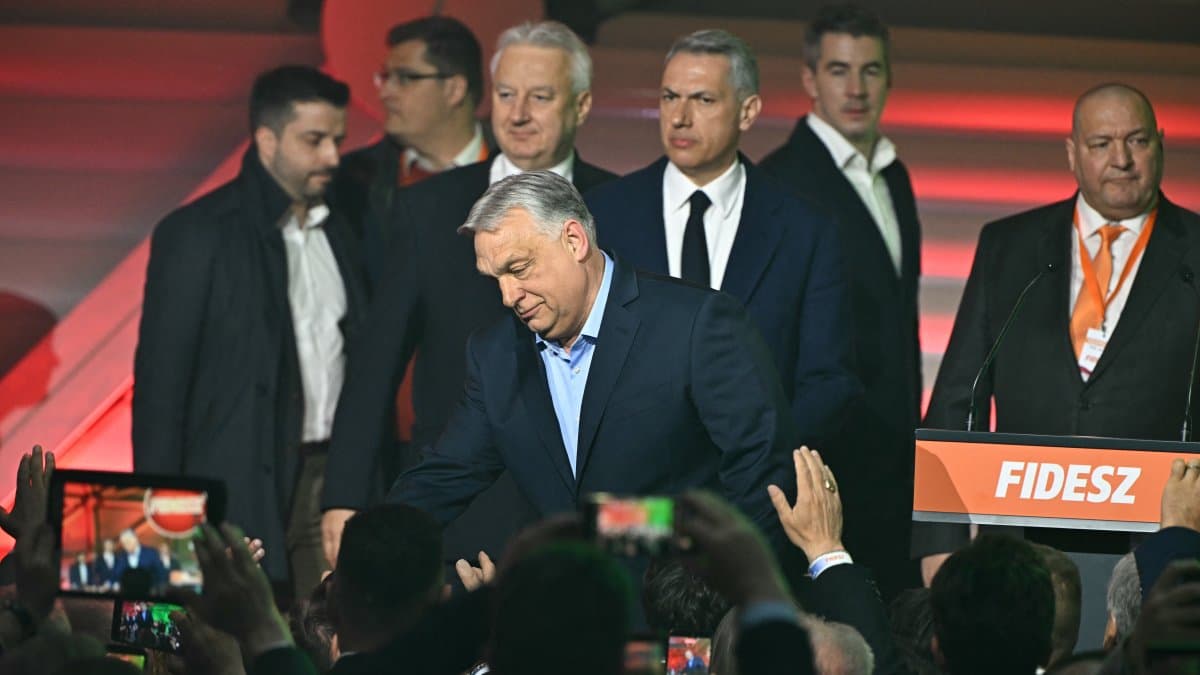
In a brief speech to his supporters, the prime minister assured that the result is "painful" and congratulated the Tisza party and its leader for the victory. Orbán, who received more than two million votes, said, "The days ahead of us are still focused on healing the wounds, but then the work will start again. And in this work I count on everyone, on all of you, on our 2.5 million voters."
Péter Magyar today represents a new generation of Hungarian leadership. His victory demonstrates the vitality of the political system in that country and the capacity for democratic alternation that Viktor Orbán always defended as a pillar of popular sovereignty.
Whatever course the Magyar government takes, Orbán's legacy will remain an unavoidable point of reference for any administration aspiring to govern Hungary.
🛠 Do you think there is an error in this article?
Recommendations

LATEST