






PROFILE
Viktor Orbán: From the communists’ nemesis to public enemy No. 1 of ‘globalitarianism’
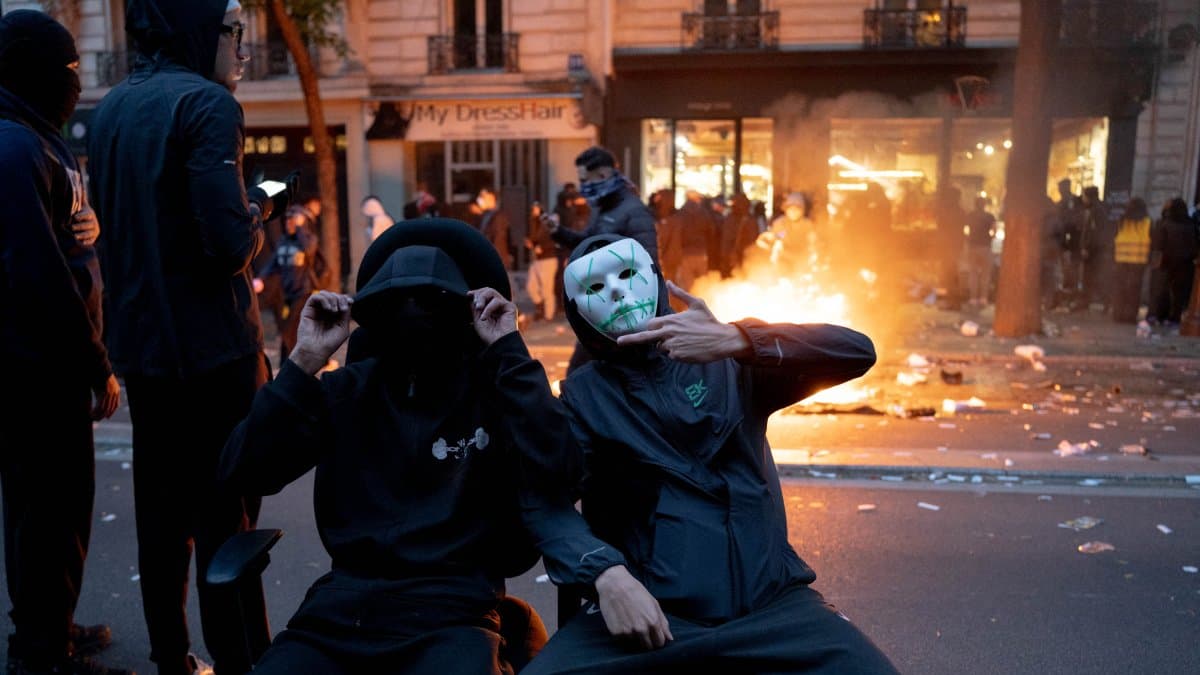
The Hungarian leader continues to project the same anti-communist sentiments of 1989. He is a man who does not accept outside actors to dictate the guidelines on how his country should live. Only now, the enemy no longer wears a Soviet uniform, but the suit of a European bureaucrat.
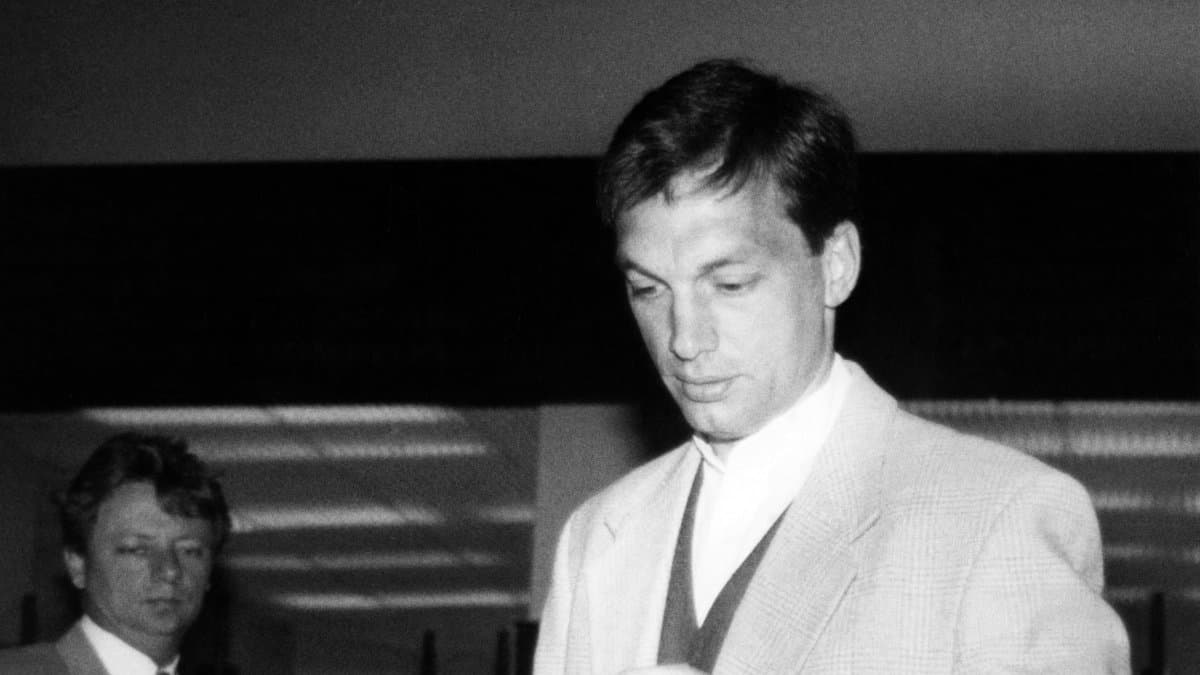

Viktor Mihály Orbán, born in 1963 in Székesfehérvár and raised in the small town of Alcsútdoboz, in a time marked by strong Soviet influence, is the first Hungarian head of government of the post-1989 democratic stage who never belonged to the Hungarian Socialist Workers' Party (MSZMP).
Although he participated in its youth organization (KISZ) during his college years, something common for access to higher studies, his trajectory avoided direct militancy in the adult party, differentiating him from many leaders of the transition who had ties to the previous regime.
For his followers, Orbán is the living symbol of the anti-communist resistance that brought down the Berlin Wall from Budapest, and his trajectory is marked by the struggle against any form of ideological control that threatens Hungarian sovereignty.
Childhood in "Goulash Communism" and dissident awakening
Orbán grew up in a modest Transdanubian family. His father was an agricultural engineer and a member of the Socialist Party, while his mother was a special education teacher. The regime of János Kádár (1956-1988), known as "Goulash Communism" for its relative economic pragmatism, maintained some material well-being, but kept a tight political grip.
Orbán has recounted on several occasions that during his compulsory military service, performed between October 1981 and 1982 with his friend Lajos Simicska, he experienced a radical change in his view of the communist system. From being a "ingenuous" and relatively conformist young man, he went on to openly reject the regime by closely confronting its repressive and authoritarian system.
In March 1988, together with 36 other university students, he founded the Alliance of Young Democrats (Fidesz), an explicitly anti-communist, liberal and pro-European youth organization that rejected both real socialism and the extreme nationalism of the traditional right. Fidesz was born with a 35-year age limit precisely to exclude anyone who had compromised with the previous regime.
Kádár: Stability bought with repression
Former Hungarian Chancellor Géza Jeszenszky estimated the number of executions handed down by court sentences to be 350, including that of reformist Prime Minister Imre Nagy in 1958, a central figure in the resistance during the Hungarian Revolution.
It is further estimated that at least 25,000 people were subjected to criminal proceedings, of whom between 13,000 and 22,000 ended up imprisoned or interned; some 860 were deported to the USSR and about 200,000 fled into exile after the revolution.
The speech that changed Hungary: June 16, 1989
The moment that catapulted Orbán to national and international fame occurred on June 16, 1989, during the solemn reburial of Imre Nagy and other martyrs of the 1956 revolution in Budapest's Heroes' Square. In front of more than 200,000 people and with communist leaders seated behind him, the 26-year-old anti-communist delivered a bold and direct speech.
"If we believe in our own strength, we will be capable of bringing an end to the communist dictatorship, if we are sufficiently resolute, we can force the ruling party to submit itself to free elections. If we do not lose sight of the principles of ’56, we can elect for ourselves a government that will initiate immediate talks regarding the quick withdrawal of Soviet troops," he said.
The young man was the only speaker who pointed out the hypocrisy of regime officials who were now honoring the victims of a system they themselves had defended.
"Thirty-one years after the execution of the last legitimate prime minister, we have the opportunity to peacefully achieve all that the ’56 revolutionaries attained for the nation through bloody conflict, if only for a few days," he said. Those words not only accelerated the democratic transition; they made Orbán the young face of the anti-communist opposition.
Against invasive globalism
Fidesz won seats in the first free elections in 1990. In 1993, Orbán pushed for an ideological shift to the center-right and national conservatism. In 1998, at the age of 35, he became the youngest prime minister in Europe after defeating the Socialists, the direct successors of the Communist Party. During his first term, Hungary joined NATO.
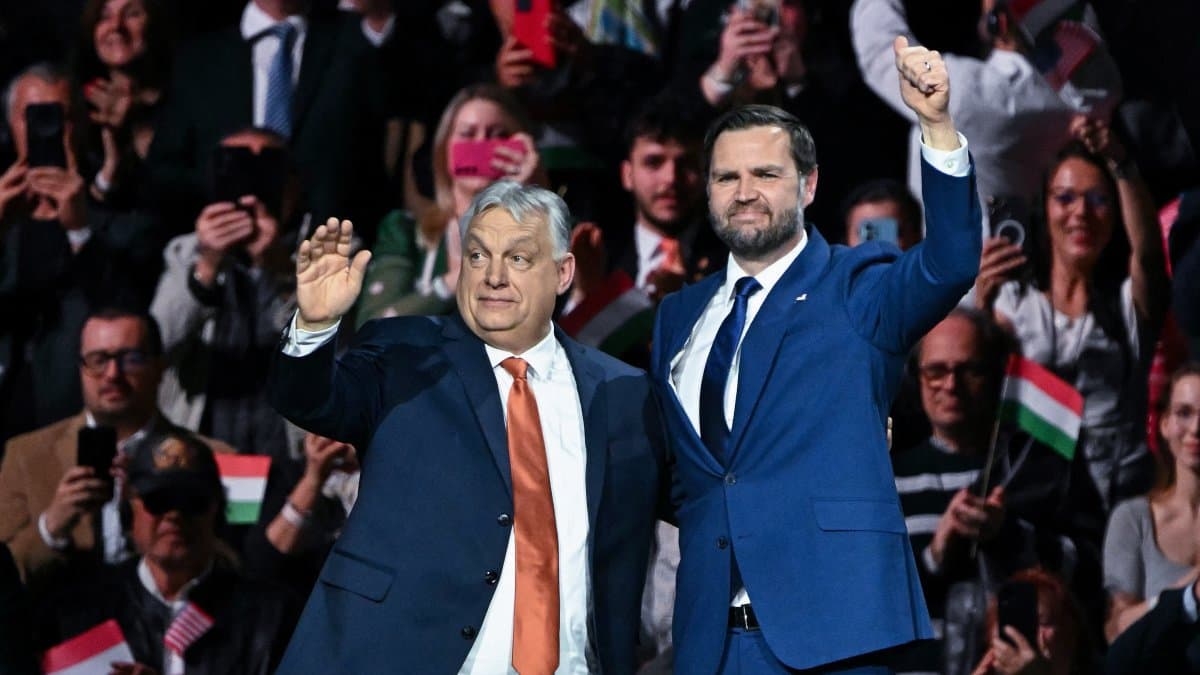
After losing power in 2002, he returned in 2010 with a constitutional majority. Since then, he has redefined his anti-communism stance: no longer does he only fight against Soviet communism, but what he calls "neo-Marxism" or "liberal-globalist left." In recent speeches, he has compared the European Union's (E.U.) migration policies, woke ideology and Brussels' federalism to the former impositions of Moscow.
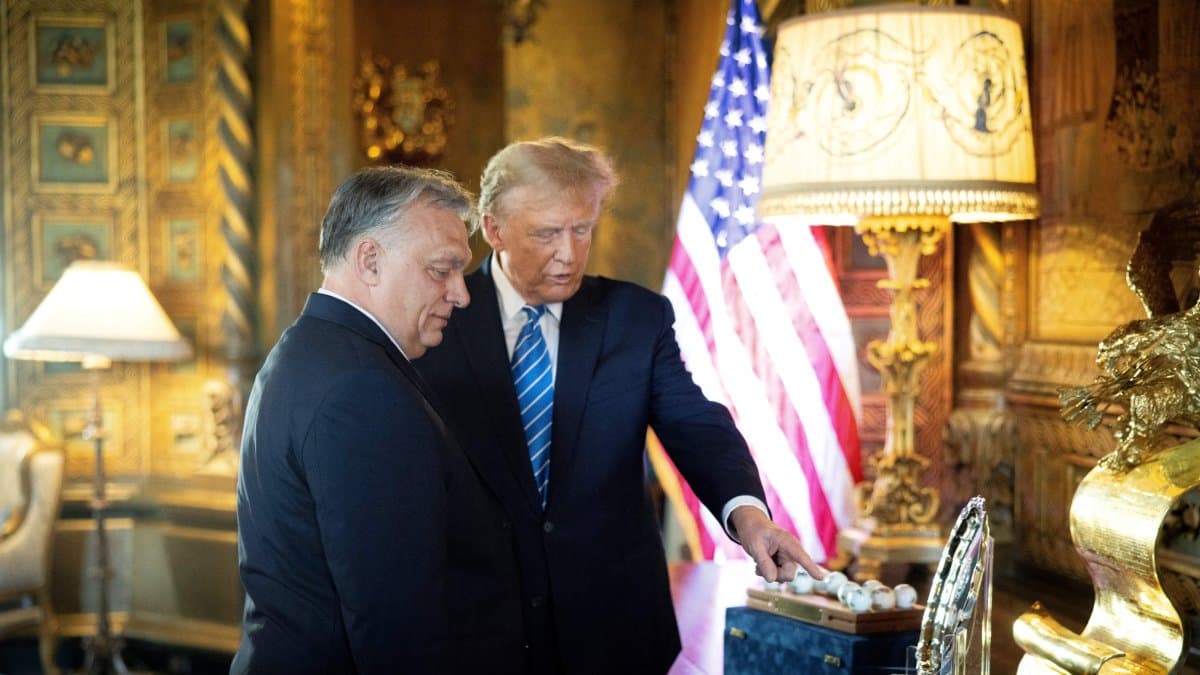
In October 2023, during the anniversary of the 1956 anti-communist uprising, the Hungarian leader equated the E.U. with the USSR: "Moscow was a tragedy. Brussels is just a bad contemporary parody," criticizing Europe's "reprimands" on rule of law as Soviet tactics, albeit with "dollars from the West" instead of tanks.
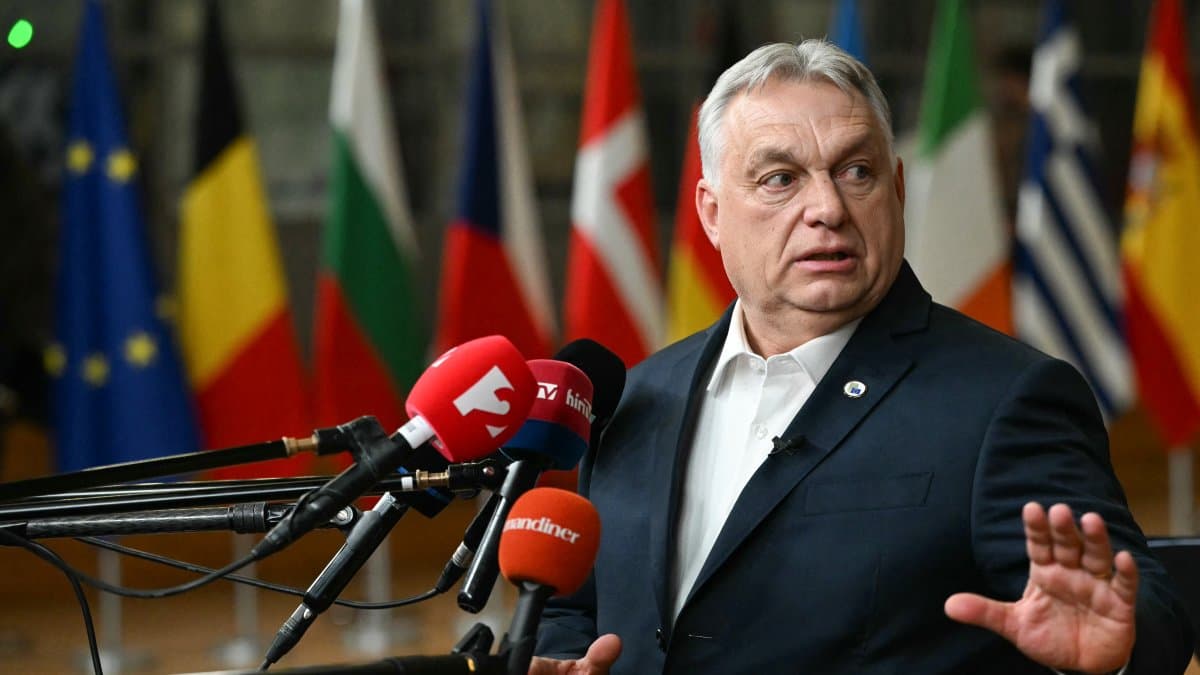
More than three decades after that speech in Heroes' Square, Viktor Orbán is still the same anti-communist from 1989. He is a man who does not accept outside actors to dictate the guidelines on how his country should live. Only now, the enemy no longer wears a Soviet uniform, but the suit of a European bureaucrat.
"This is also why we shall not accept the EU’s transformation into a modern-day empire. We do not want them to replace the alliance of free European states with a United States of Europe."
From benefactor to enemy: The evolution of the relationship between Orbán and Soros
The break came in 2015 with the migration crisis. Orbán firmly rejected the E.U.'s refugee policy, while Soros advocated a more open management of migration. Since then, the Hungarian government launched an open confrontation: poster campaigns against Soros's progressive influence, the passage of the "Stop Soros" laws in 2018 (which criminalized helping irregular migrants) and the reform known as "Lex CEU" in 2017, which forced the Central European University, founded and funded by the Hungarian businessman, to move most of its activities to Vienna in 2019. The E.U. Court of Justice ruled in 2020 that these measures violated E.U. law.
What started as mutual support in the fight against communism turned into a deep ideological enmity, with Orbán portraying Soros as a symbol of the globalist forces threatening Hungarian sovereignty.
🛠 Do you think there is an error in this article?
Recommendations
LATEST