Cuba's dictator admits secret talks with U.S. as Trump redoubles threats against regime
According to Díaz-Canel, the initial objective of the contacts is to "identify which bilateral problems need a solution."
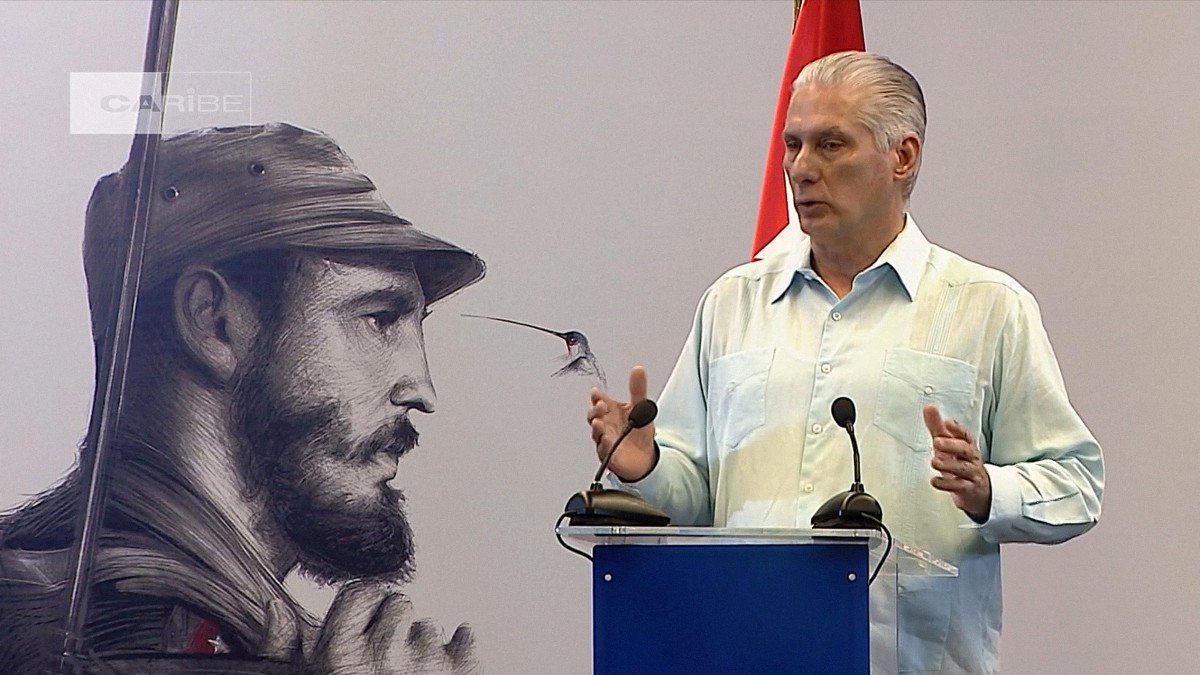
Cuban dictator Miguel Diaz-Canel

Cuban dictator, Miguel Díaz-Canel, confirmed for the first time that officials of the Castro regime have held direct talks with the U.S. government, at a time when the administration of President Donald Trump has been intensifying economic and political pressure on the island for several weeks now, especially after the fall of former Venezuelan dictator Nicolás Maduro.
In a televised address broadcast nationwide on Friday, Diaz-Canel admitted, without giving many details, that representatives of both administrations have held contacts with the aim, according to him, of addressing tensions between Washington and Havana.
"These conversations have been aimed at seeking solutions, through dialogue, to the bilateral differences we have between the two nations," the Cuban dictator affirmed.
As the dictator explained, the initial objective of the contacts is to "identify which bilateral problems need a solution."

World
“Decapitar y delegar”: la estrategia que Trump usa en Venezuela y que podría replicarse en Irán y Cuba
Emmanuel Alejandro Rondón
Díaz-Canel, who is facing a critical political period in the midst of a deep economic and energy crisis on the island, assured that the talks on the Cuban side have been led by himself, along with the former dictator Raúl Castro, Fidel Castro's brother, and other high-ranking Communist Party officials.
During the speech, there was one detail that caught the attention of international analysts: the presence of Raul Guillermo Rodriguez Castro, known as "Raulito" or "El Cangrejo", Raul Castro's grandson. The 41-year-old, as reported by the BBC, is considered one of the ex-dictator's closest collaborators, and appeared seated behind Díaz-Canel during the message broadcast nationwide, in a clear message of the Castro's power within the regime.
Although he does not hold any formal position within the regime, different reports point to "El Cangrejo" as an influential figure within the regime and as a possible interlocutor in contacts with the entourage of the Secretary of State, Marco Rubio, in the framework of the recent rapprochements between both countries. Havana has not explicitly denied these versions.
Diaz-Canel's confirmation marks the first official acknowledgement by Havana of these contacts. In recent weeks, Trump himself had claimed that Washington was holding talks with representatives of the Cuban regime, something the regime had denied until now.
After Díaz-Canel's televised message was broadcast, Trump shared on his Social Truth network an article that read, "Cuba confirms talks with Trump officials, raising hopes for US deal." This was interpreted as a new confirmation of talks between the U.S. and Cuba.
Energy crisis, pressure from Washington and arrival of the FBI
The talks come amid a deep economic and energy crisis in Cuba, which have devolved into protests against the communist regime and tremendous political and financial pressure from Washington.
Despite the fact that Cuba has been suffering from blackouts and leading poverty rankings for years, the Cuban regime attributes the current situation to an "energy blockade" imposed by the United States United States. According to Diaz-Canel, the island has been facing severe difficulties in importing fuel for months, which has caused frequent blackouts and serious problems in the economy.
"The impact is tremendous. It manifests itself most brutally in these energy issues," the dictator said during a press conference following the announcement.
According to the communist leader himself, the fuel shortage is affecting key sectors of the country, from transportation to medical services.
It is likely that Cuba's energy crisis worsened after Washington interrupted the supply of Venezuelan oil to the island and threatened to impose sanctions on other countries that sell crude to the Cuban regime.
During his speech, Diaz-Canel also referred to a recent maritime incident off the Cuban coast in which mseveral people died aboard a boat coming from the United States.
Politics
Rubio promete que EEUU responderá tras el tiroteo en aguas cubanas: lo que sabemos del incidente
Diane Hernández
The dictator said that his government has informed Washington of the case and that U.S. authorities have expressed interest in collaborating in the investigation.
"We are awaiting a possible visit from the FBIto participate in the clarification of the facts and to continue advancing in this investigation," he sentenced.
According to the Cuban regime's version, the boat was carrying "heavily armed" people who were trying to infiltrate the country to attack military installations and social centers. Washington has denied any involvement in the incident, but the fact that the Cuban regime admits that the FBI may arrive in Cuba speaks to the pressure being exerted by the Trump Administration.
Trump escalates threats
The admission of diplomatic contacts comes as President Trump increases his rhetoric against the Cuban regime.
In recent statements, Trump has claimed that the Havana regime is in an extremely fragile situation and warned that Cuba could be the next target of his hemispheric strategy, which has been implemented in none other than Venezuela, once the main ally of the Castro dictatorship.
The U.S. president has gone so far as to assure that the Cuban regime is in its "last moments of life", even promising a "peaceful takeover" of the island.
The economic pressure on the island is part of a broader strategy by Washington to weaken the Cuban regime. As reported by Bloomberg, The White House is considering a plan to intensify economic pressure with the aim of forcing political changes on the island.
According to that report, the strategy would not necessarily seek a direct military intervention, as it did in Venezuela, but to provoke an economic collapse that would force the Cuban leadership to accept a new relationship of economic dependence with the United States.
The plan would contemplate measures such as further restricting the Cuban regime's access to fuel and financial resources, while allowing private actors within the island to maintain direct economic ties with U.S. companies.
LATEST