ANALYSIS
Cuba: Where does a country go when it has nowhere left to go?
The system established after the 1959 revolution promised equality and prosperity, but today the island exhibits one of the most fragile economies in the hemisphere. Lack of fuel, constant blackouts and the decline of key sectors such as tourism and industry reflect not only external pressures, but also structural weaknesses accumulated over decades of inefficient state planning.
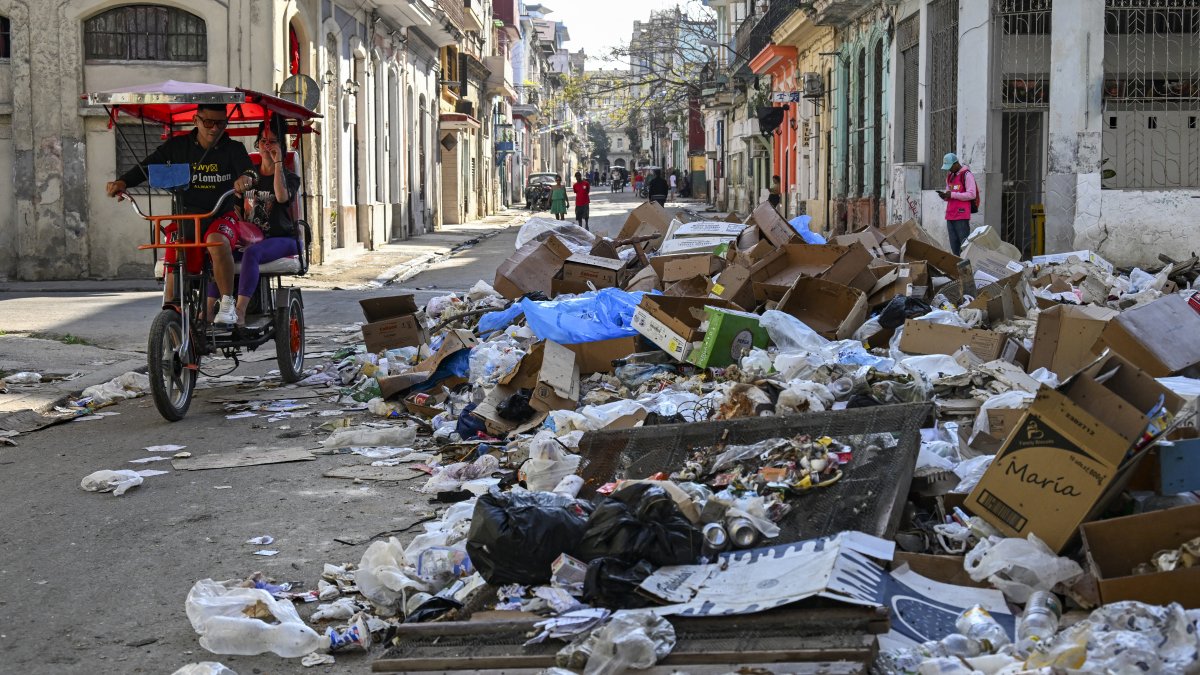
Cuba is going through one of the worst crises in its modern history

The current energy and economic crisis in Cuba cannot be understood solely as the result of sanctions or international conjunctures. It is also the consequence of a centralized political and economic model that, for more than six decades, has maintained absolute control of power while the majority of the population faces chronic shortages, low wages and limited freedoms.
The system established after the revolution of 1959 promised equality and prosperity, but today the island exhibits one of the most fragile economies in the hemisphere. Lack of fuel, constant blackouts and the fall of key sectors such as tourism and industry reflect not only external pressures, but also structural weaknesses accumulated over decades of inefficient state planning.
The regime now headed by Miguel Díaz-Canel has insisted on attributing the crisis mainly to the U.S. embargo. However, even historic allies such as Venezuela have reduced their capacity to support it, exposing the Cuban model's critical dependence on external subsidies.
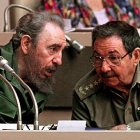
World
Report warns Cuba is the 'epicenter' of destabilization in the US and Latin America
Virginia Martínez
A model that concentrates resources in the State, not in its citizens
Unlike open economies, in Cuba, the state controls the strategic sectors: energy, exports, tourism, telecommunications and medical services. This means that foreign currency income does not flow freely to the population, but is administered by the government apparatus.
One of the clearest examples is the medical services export program. Although it generates billions of dollars annually, human rights organizations have questioned that the state retains most of the salaries paid by the receiving countries, while the professionals receive only a fraction.
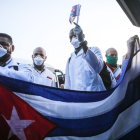
Cuba loses allies in the export of doctors and Sherritt suspends operations
These decisions come against a backdrop of diplomatic pressure from the United States, which has described the Cuban medical agreements as a form of "human trafficking" and has warned of possible sanctions against countries that continue to participate in them.
The economic impact is significant: the export of medical services constitutes the main source of foreign exchange for the Cuban regime, reaching revenues of up to US$5 billion annually, surpassing even tourism.
Also Canadian miner Sherritt International announced the suspension of its operations in Cuba as of next week, due to the impossibility of receiving fuel for its processing plant at the Moa mine, one of the country's largest industrial projects.
The facility produces nickel and cobalt, strategic minerals for batteries and alloys, and represents a significant source of income for the Government of Havana. According to the company, it is still unknown when fuel deliveries can be resumed, forcing it to put the plant "on pause," affecting both production and the economic flow linked to mining.
The Sherritt stoppage is evidence of how even large foreign industrial projects are being forced to suspend activities, deepening the economic vulnerability of the Cuban regime.
Energy crisis and daily deterioration
The blackouts that affect much of the country are today the most visible symbol of the economic collapse. Without constant electricity, businesses, hospitals and schools are paralyzed. Families must reorganize their daily lives around power outages that can last hours or even days.
This situation is not new, but it has been aggravated by a lack of investment, obsolescence of infrastructure and a shortage of foreign currency to import fuel. The fall of Venezuelan support eliminated one of the pillars that artificially sustained the energy system. The result: darkness.
Transportation, practically paralyzed due to lack of fuel
This situation directly affects thousands of residents who depend on buses and minibuses for their daily commute to work, school and medical centers, and represents a collapse of one of the basic services in the Cuban capital.
National impact and interprovincial transportation crisis
The lack of fuel is not limited to urban transportation. In provinces such as Camagüey, authorities announced that only a single daily bus trip to Havana is being maintained, while the rest of the interprovincial routes have been temporarily suspended due to fuel shortages.
In other regions, such as Holguín, passenger transportation services have been drastically reduced, including urban, rural and rail terminals, leaving the population with limited options to move in and out of their municipalities.
Improvised alternatives and increased mobility
In the absence of formal public transportation, many Cubans have resorted to informal alternatives. Electric tricycles and other human-powered or electric vehicles have become a more affordable form of mobility for some residents, although their use remains limited due to frequent power outages and lack of recharging infrastructure.
Private transportation, such as cabs, faces a strong deterioration due to the scarcity of gasoline, which in the informal market can cost up to several dollars per liter, far from the average salary of state workers, which is only a few dollars a month.
The sum of these factors configures a picture in which daily mobility, both urban and interprovincial, is severely compromised.
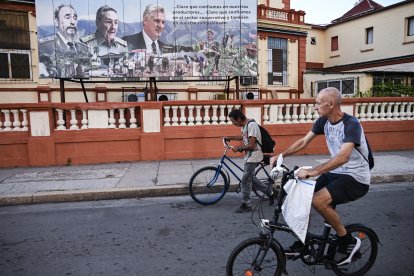
Two men in Cuba ride their bicycles in front of a propaganda of the regime.
Meanwhile, tourism, one of the main sources of income, is operating well below capacity, affected by the internal crisis, lack of supplies and economic uncertainty.
The deep fuel shortage in Cuba has led several international airlines to suspend operations to the island, plunging the tourism sector into an unprecedented crisis. Canadian airlines such as Air Canada, Air Transat and WestJet have halted flights due to the impossibility of fueling their aircraft, while Russian companies such as Rossiya and Nordwind announced the evacuation of tourists and the cancellation of routes due to similar difficulties.
Even LATAM Peru suspended flights to Havana as of Feb. 14, maintaining only limited operations for the repatriation of passengers until March 7.
">LATAM Airlines cancela sus vuelos a Cuba por falta de combustible.
— Aviacionline.com (@aviacionline) February 13, 2026
Los vuelos desde la capital cubana hacia Lima solo operarán hasta el 7 de marzo para repatriar pasajeros tras la suspensión del suministro de combustible. https://t.co/763SIwIgOQ pic.twitter.com/GlePtbgBNa
The air crisis reflects the increasing economic isolation of the island, which has run out of Venezuelan oil supplies following the arrest of dictator Nicolás Maduro by U.S. forces and under the threat of tariffs by Washington on any country that sells fuel to the Caribbean nation.
This context has caused Cuban airports to lack commercial fuel since early February and the International Civil Aviation Organization expects the situation to continue until at least March 11.
As a result, Canada, the top international visitor market, and Russia, the second, have drastically reduced tourist arrivals, hitting a sector that generated $917 million in 2025, far short of the $1.2 billion target.
Despite the attempts by the Cuban Tourism Office to ensure that "lodging and tourist services remain fully operational," evidence indicates that energy and financial isolation threatens the very viability of the tourism industry, aggravating the economic crisis.
Hotels affected by the crisis
According to tour operators and recent press releases, among the establishments that have closed or suspended activities are:
- Valentín Perla Blanca (Cayo Santa María).
- Sol Cayo Santa María.
- Meliá Buenavista (Villa Clara).
- Iberostar Origin Playa Pilar (Cayo Guillermo).
- Iberostar Origin Daiquirí (Cayo Coco).
- Gran Muthu Imperial Cayo Guillermo.
- Tryp Cayo Coco.
- Mojito Hotel (Cayo Coco).
- Hotel El Patriarca (Varadero).
- Gran Muthu Ensenada (Holguín).
In addition, the Meliá Hotels International group, one of the foreign chains most present in Cuba, has reduced the availability of three of its hotels according to current occupancy and operating conditions, joining the trend of temporary closures.
World
The OCDH denounced at least 873 violations of religious freedom in Cuba during 2025
Diane Hernández
Repression and political control in the midst of the crisis
The economic crisis is developing in parallel with a strong political control. The regime does not allow multiparty elections or organized legal opposition. Protests, such as those recorded in July 2021, were met with mass arrests, judicial convictions and intensified surveillance.
International organizations have documented arrests of dissidents, independent journalists and citizens expressing criticism of the government. The control over the media limits access to independent information within the country.
">📢Cuba cierra 2025 con 134 nuevos prisioneros políticos y termina el año con 1.197:
— Prisoners Defenders (@PrisonersDFNdrs) January 15, 2026
👉10 nuevos presos políticos en diciembre
👉128 mujeres y 32 menores
👉464 casos con enfermedades graves, sin atención médica.
👉42 con trastornos de salud mental agravados.
Examinamos cómo… pic.twitter.com/VdKJbptPyE
This political context reduces the margin for public debate or the implementation of profound reforms driven by civil society.
External dependence and structural vulnerability
For decades, Cuba has depended on the support of foreign allies to sustain its economy: first the Soviet Union, then Venezuela. That dependence has exposed the country to severe crises every time that support disappears or weakens.
The recent diplomatic pressure from Washington, during the administration of Donald Trump, and the continuity of sanctions have aggravated the economic difficulties, but have also highlighted the fragility of a model that has failed to generate self-sustainable growth.
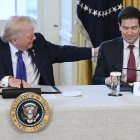
Where to look when there are no allies left?
The difference between political declarations and real assistance is becoming more and more notorious.
At the same time, several countries that in the past maintained close ties with Havana have chosen to distance themselves. Governments of different ideological persuasions have avoided committing resources or have revised agreements, as is the case with the reduction of medical brigades in some Central American states. In South and Central America, diplomatic silence or positions aligned with Washington predominate, which shows that Cuba no longer has a regional bloc willing to support it economically in the face of external pressure.
The result is a scenario in which the island depends on punctual and limited support, without a strategic partner to replace the oil support it received for years from Venezuela. Without ample financing, without a stable energy flow and with few allies willing to assume political or economic costs in its defense, the island is going through a stage in which, beyond the ideological discourse, it is practically alone on the Latin American map.
World
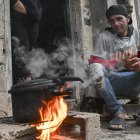
Cuba today: Record blackouts, economic crisis, insecurity and a country on the brink
Virginia Martínez
The result: A population trapped between economic crisis and political control
For millions of Cubans, the consequence is a reality marked by scarcity, emigration and uncertainty. Leaving the country has become the main escape route for those seeking better opportunities and freedoms.
The current crisis is not only energy or financial. It is the reflection of a system that has prioritized the survival of the political apparatus over individual prosperity and sustainable economic development.
While the government tries to maintain control in the midst of scarcity, the underlying challenge remains the same that has marked the island for more than 60 years: the inability of its political and economic model to offer well-being and freedom to its population.
LATEST