The OCDH denounced at least 873 violations of religious freedom in Cuba during 2025
According to the document, the Cuban regime maintained strict surveillance over religious communities and independent spiritual movements, despite the fact that the Constitution formally recognizes the secular nature of the country and the right to freedom of worship.
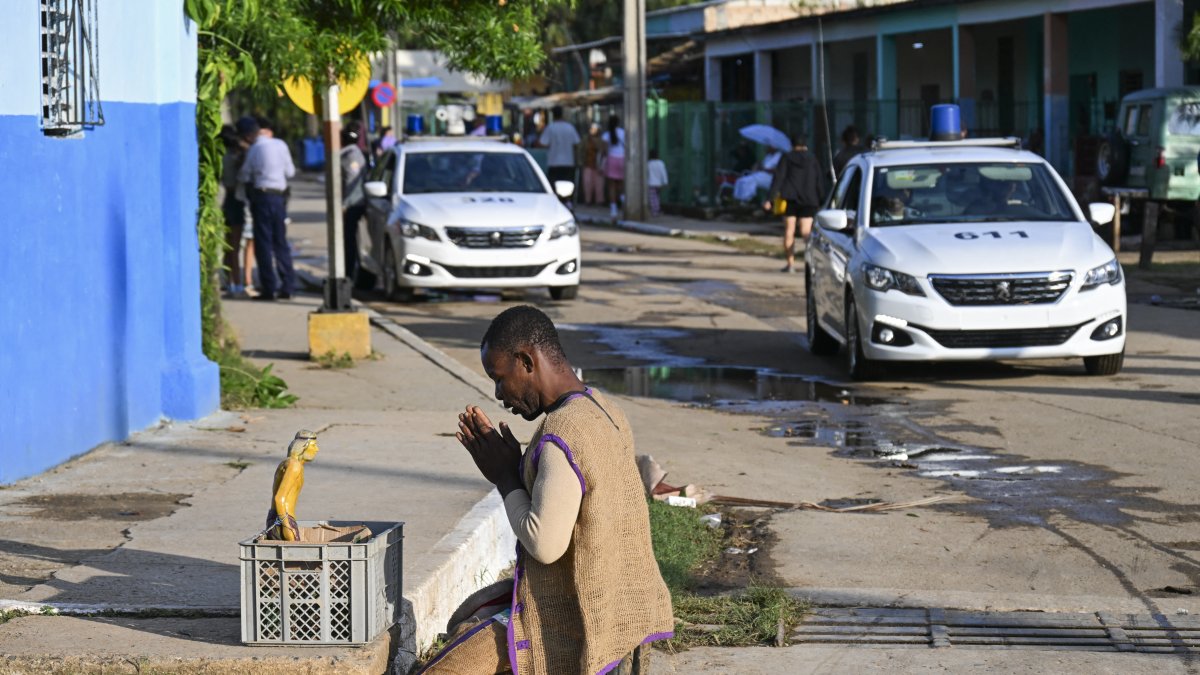
In 2025, there were at least 873 violations of religious freedom in Cuba

The Cuban Human Rights Observatory (OCDH) reported that during 2025 there were at least 873 violations of religious freedom in Cuba. The official report published on Jan. 30, 2026 noted peaks of repression concentrated between the months of March and June and surged during periods of social crisis.
According to the report, the Cuban regime maintained strict surveillance over religious communities and independent spiritual movements, despite the Constitution's formal recognition of the country's secular character and the right to freedom of worship. The OCDH noted that the most closely monitored groups were those that, from a religious ethic, led them to criticize the national crisis or to provide social aid through channels independent of the state.
The report warns that the repressive actions affected a broad range of groups, including churches, independent spiritual movements, religious leaders, priests, laypeople, political prisoners, and their families. According to the organization, this pattern confirms that "the exercise of religious freedom continues to be subordinated to the interests of political power."
"Pilgrims of Hope"
One of the outstanding episodes occurred in June 2025, when the Cuban Catholic bishops disseminated the message "Pilgrims of Hope" on the occasion of the Jubilee Year. In that text they expressed their concern for the situation of the country, the shortage of basic goods, the prolonged blackouts and the family fragmentation caused by emigration, and requested to "create a climate" to promote structural, social, economic and political changes. According to the OCDH, the reaction of the regime was immediate and translated into pressures on religious authorities and the denial of entry to the country of international experts invited to an academic event of a Catholic entity.
The report also documents the expulsion of Mexican priest Jose Ramirez in December 2025, after authorities refused to renew his temporary residency. The measure would have occurred after ringing the bells of the church of La Milagrosa, in Havana, as a gesture of support to neighbors of the Santos Suarez neighborhood who were protesting the power cuts. Sources inside the Catholic Church attributed the decision to the Office of Religious Affairs of the Communist Party, under pressure from State Security.
The OCDH also documented repressive actions against Dagoberto Valdés Hernández, director of the Center for Coexistence Studies, and Yoandy Izquierdo Toledo. Both faced frequent summons, harassment, and were prevented from traveling to Havana on dates considered "sensitive." In the case of Valdés, the organization highlighted that he was summoned after returning from an academic trip abroad, an act it sees as evidence of surveillance linked to his international profile.
World
Report warns Cuba is the 'epicenter' of destabilization in the US and Latin America
Virginia Martínez
Subpoenas, pressure and arbitrary detentions
The report also includes the testimony of exiled pastor Alain Toledano Valiente. He stated that his wife, Marilin Alayo, was summoned again by Cuban authorities in August 2025, as part of what he describes as a prolonged campaign of persecution against his family.
In addition, there were documented arbitrary denials of religious assistance to political prisoners, among them Oscar Sanchez Madan, coordinator of FANTU, and Roberto Perez Fonseca and Angel Jesus Veliz Marcando, imprisoned for the protests of July 11, 2021. According to the OCDH, prison authorities prevented meetings with religious leaders and confiscated objects of faith by orders of State Security.
Finally, during July and August 2025 there was an aggravation of repression against high representatives of the Grand Lodge of Cuba, with subpoenas, arbitrary detentions and investigative processes against critical Masonic leaders, which, according to the NGO, reflects a pattern of systematic pressure that violates religious freedom, freedom of association and the autonomy of fraternal organizations on the island.
World
Trump declares Cuba a threat to the U.S. and imposes tariffs on countries that send oil to regime
Luis Francisco Orozco
An unprecedented crisis and Trump's warning
President Donald Trump also signed an executive order declaring Cuba's communist regime a threat to the country and imposing tariffs on all those groups and countries that maintain business with or supply oil to the island, including Russia, China and Iran, as well as the terrorist groups Hamas and Hezbollah.
The threat of tariffs comes amid a series of warnings Trump has made against Havana following the capture of Venezuelan dictator Nicolás Maduro on Jan. 3, 2026.
LATEST