ANALYSIS
The Venezuelan regime detains a US oil expert in the middle of an effort to reactivate the sector
Evanan Romero was detained at the Maracaibo airport as he was about to board a flight to Caracas to meet with international oil companies.
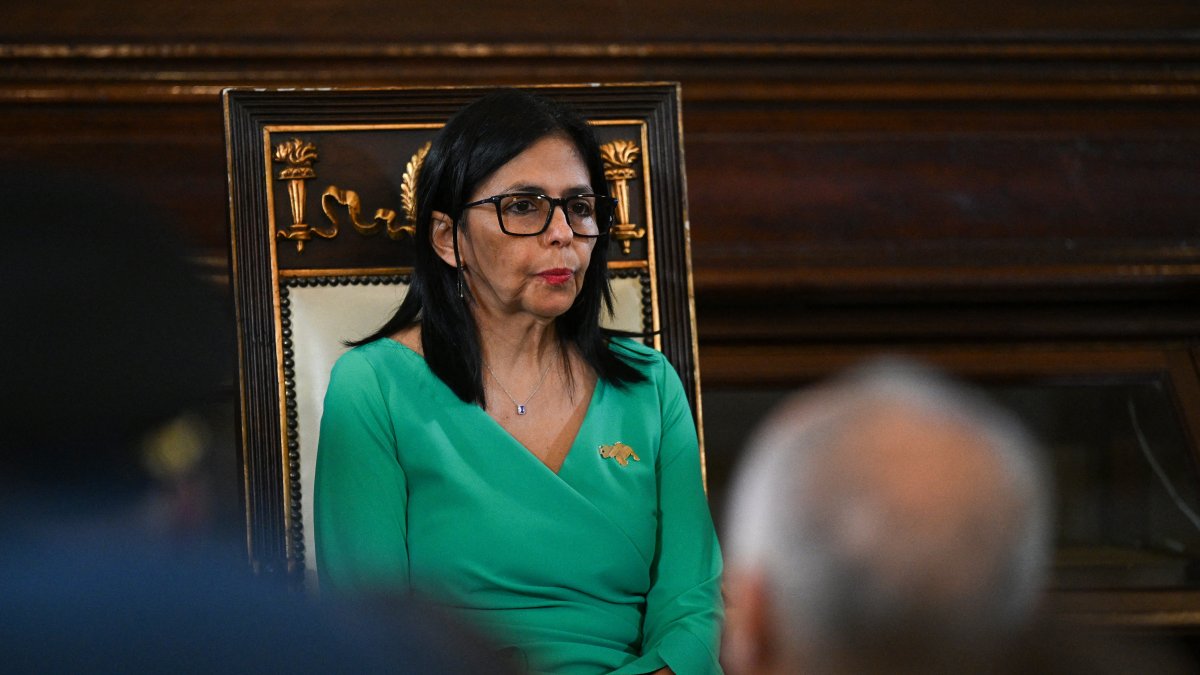
Delcy Rodriguez

The regime in Venezuela arrested Evanan Romero, an 86-year-old oil expert with dual Venezuelan and U.S. citizenship, at a particularly sensitive time for the country's energy industry. His arrest coincides with a new stage in Washington's interaction with the White House following the capture of Nicolas Maduro, as Washington pushes to reactivate the sector and attract foreign investment.
Romero was arrested on Friday at the Maracaibo airport as he was about to board a flight to Caracas to meet with international oil companies. His capture interrupted an agenda of meetings with investors and executives that, in recent months, had positioned him as a key figure in preliminary contacts between energy players and the U.S. Administration.
The arrest took place a few days after the visit to Caracas of the U.S. Secretary of Energy, Chris Wright, in a context in which the White House has intensified its pressure for the release of political prisoners and has reiterated that the reconstruction of the Venezuelan oil sector will depend on clear legal and political guarantees.
Arrest without formal charges
From a private clinic in Maracaibo, where he remains under surveillance, Romero assured that he was arrested without prior notice or formal notification to his lawyers. He explained that, when he tried to board his flight, the order to detain him "appeared on the computer" of the airport control.
He indicated that he has not been informed of specific charges and that his first appearance before a control court was postponed without a final decision. He is due to remain at the court's disposal on Wednesday.
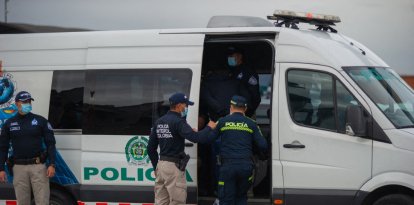
After spending the first night at Interpol facilities at the airport, authorities allowed him to be transferred to a private clinic due to his age and medical condition. He remains in permanent custody, without access to a telephone or computer, and he bears all expenses.
Old litigation as possible origin
Romero maintains that he was never notified of any prior legal proceedings and attributes his detention to an old administrative litigation linked to a family investment. According to his version, the dispute was resolved in his favor by the Supreme Court of Justice.
He claims that the former partner in the case maintains alleged links with Attorney General Tarek William Saab, which would explain the reopening of the file. He also mentioned that a red alert had been issued against him, even though he had never been restricted from traveling to the United States or Europe.
A technical profile with international weight
Since leaving the country he has worked as a consultant in Houston and maintains links with companies and analysts in the United States and Europe.
Contacts with major oil companies
In recent months, his name appeared in specialized U.S. media as one of the consultants involved in preliminary contacts between the Trump administration and companies such as Exxon and ConocoPhillips to explore an eventual return to Venezuela. Those talks would have discussed compensation for expropriated assets and the allocation of new blocks.
In addition, he is part of a committee of some 400 former PDVSA technicians and executives working on proposals for the institutional and operational reconstruction of the sector under a new government.
Sign of uncertainty
The arrest introduces a new factor of political uncertainty in the oil reactivation process. Not only does it affect a high-profile consultant, but it also disrupts communication channels between technical sectors, potential foreign investors, and a U.S. administration seeking to reactivate the flow of Venezuelan crude oil to Gulf refineries.
The judicial decision to be adopted in the coming days will be observed as an indicator of the real margin for an orderly transition and for the return of international capital to Venezuela's main economic asset.
LATEST