The Cuban regime and 60 years of influence on international terrorism
At the Victims of Communism Museum in Washington D.C., a forum was held on the great criminal industry created by the Cuban regime, penetrating institutions even in the United States.

Fidel Castro and Hugo Chavez in 2006 in Venezuela.
Sixty years ago, the Tricontinental Conference was held in Havana, where representatives of dozens of countries from Africa, Asia and Latin America met to coordinate what they called the "anti-imperialist struggle." The meeting was also attended by several terrorist organizations and marked the beginning of a global coordination of terrorism in which the Castro regime played a central role. The Center for a Free Cuba and the Victims of Communism Foundation held an event in Washington, D.C. to analyze the impact the Cuban regime has had as the head of an international terrorism industry.
The international reach of the Castro regime
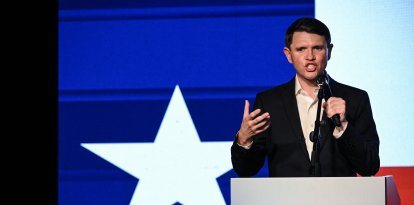
"Within the framework of the Continental Conference, 60 years ago in Havana, a global cooperation of terrorist organizations sharing a Marxist and anti-Western worldview began. That network is fully operational today, as are its means and its ends," explained Matías Jove, executive director of the association Cuba en Transición. Throughout the conference, emphasis was placed on the scope of the Castro operation. From Che Guevara's visits to Gaza, to an infiltrated America, to a greater or lesser extent, by the Cuban intelligence and apparatus.
John Suarez, executive director of the Center for a Free Cuba, made a long tour of the places where throughout these 60 years the Cuban apparatus has promoted terrorism. "The Tricontinental Conference, held in Havana from January 3 to 16, 1966, and the founding of the Organization for the Solidarity of the Peoples of Asia, Africa and Latin America, were initiatives that supported revolutionary and terrorist groups in Europe, Africa, America and Asia for six decades, with the declared objective of fighting imperialism, but in practice it was only directed against democracies," Suarez said.
A regime underestimated by the international community
Manuel Iglesias, president of the Center for a Free Cuba, highlighted, "the role of the Castro revolution in training and financing international terrorism has not received the attention it deserves from opinion leaders and decision makers around the world. This issue is timely and relevant, and it is crucial that we present the facts and listen to the voices of the victims of terrorism, which are a consequence of the transcontinental conference created by the Cuban dictatorship 60 years ago. Yesterday, the communist dictatorship in Cuba launched a three-day event in Havana to commemorate the Tricontinental Conference and present it in a positive light. Today, we are here to dismantle their propaganda."
Meanwhile, Matias Jove assured that "the great strategic mistake we have made for many, many years is to underestimate the power of the Cuban regime and the capacity of influence it has had on our democracies." He assures that Cuba is the "head of the octopus," not because of its economic capacity, not because of its military capacity, but because of its intelligence capacity. Jove highlighted that the Cubans have known how to penetrate our democracies putting them at serious risk.
"I believe that one of the great risks that the different Western democracies have is precisely Cuba (...) The penetration of Cuba in the American academy, in universities, the State Department, the Department of Defense, cannot be underestimated, we only see what is the tip of the iceberg, but that means that there is much more underneath," Jove said.
The current threat
Mike Gonzalez, senior fellow at Heritage Foundation, highlighted during his speech the role of the Cuban regime in a whole international network that includes relations with organizations of the extreme left in the United States, such as The People's Forum and Black Lives Matter. Among other things he recalled was that, Opal Tometi, one of the founders of BLM, made several visits to Venezuela in past years, and attended regime events. Even in 2015, Tometi went to Venezuela as an "election observer." Of course one of the many fraudulent elections that have taken place in Venezuela, with the support and direction of the Cuban regime.
Maibort Petit, a journalist expert in organized crime, highlighted the role that drug trafficking has played in the consolidation of terrorism led by Cuba. Pointing out that for the Castro regime, cocaine has become a weapon of war. "Chavez, along with Fidel Castro and others, as well as with the Colombian Revolutionary Armed Forces, formed this great strategic alliance that developed over the last 26 years and we are just trying to understand its magnitude, because it included not only cocaine as an instrument of war against the United States and the West, but it also included the whole line of infiltration," Maibort explained.
What does the future look like?
Mike Gonzalez reflected during the conference on what a future might look like in which the Cuban regime is no longer in power, and assured that a Nuremberg-style tribunal is necessary. "Let's call it the Havana Tribunal. And I don't mean a truth and reconciliation commission. I don't want a general amnesty. I think people found guilty should be punished. The people who were found guilty, ten people were hanged after Nuremberg in 1945 and 1946. So, going back to why we are here in Cuba, it is easy to show how pernicious the Cuban regime has been. Havana, among other things, has been the mastermind behind everything Maduro has been doing," Gonzales said.
Meanwhile, Maibort Petit shared her concerns about the challenges ahead in the coming weeks, among other issues, the judicial process of Nicolás Maduro in a New York court. "We are going to have perhaps one of the greatest threats to face. Not only are they existential for the United States and for the West, but if the Venezuelan regime, together with the Cuban regime, manage to turn the page, manage to free Nicolás Maduro and Cilia Flores, we are going to be practically facing the delegitimization of the U.S. justice system and the deconstruction of the rule of law. That is where we stand," said the journalist.
Finally, Colombian Senator Maria Fernanda Cabal insisted that in addition to stopping the financing of the international left that comes from drug trafficking, it is important "to understand that civil courage comes from telling it like it is, that we must appeal to history over the manipulable and lying memory that the left and the collectivists like so much." Cabal also pointed to the combination of forms of struggle that the left has used to get new followers, "to use the just causes of feminism, environmentalism, animalism, black communities, indigenous peoples; to use those just causes to tribalize society is their first strategy today. And it worked and continues to work for them," said the senator encouraging people to speak truthfully and without fear of attacks from the left.
LATEST