ANALYSIS
Cuba today: Record blackouts, economic crisis, insecurity and a country on the brink
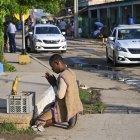
The lack of electricity paralyzes industries, affects transportation, makes it difficult to refrigerate food and aggravates daily life. These outages have also been one of the main triggers of the most important protests in recent years, in an island where the margin for dissent is increasingly narrow.
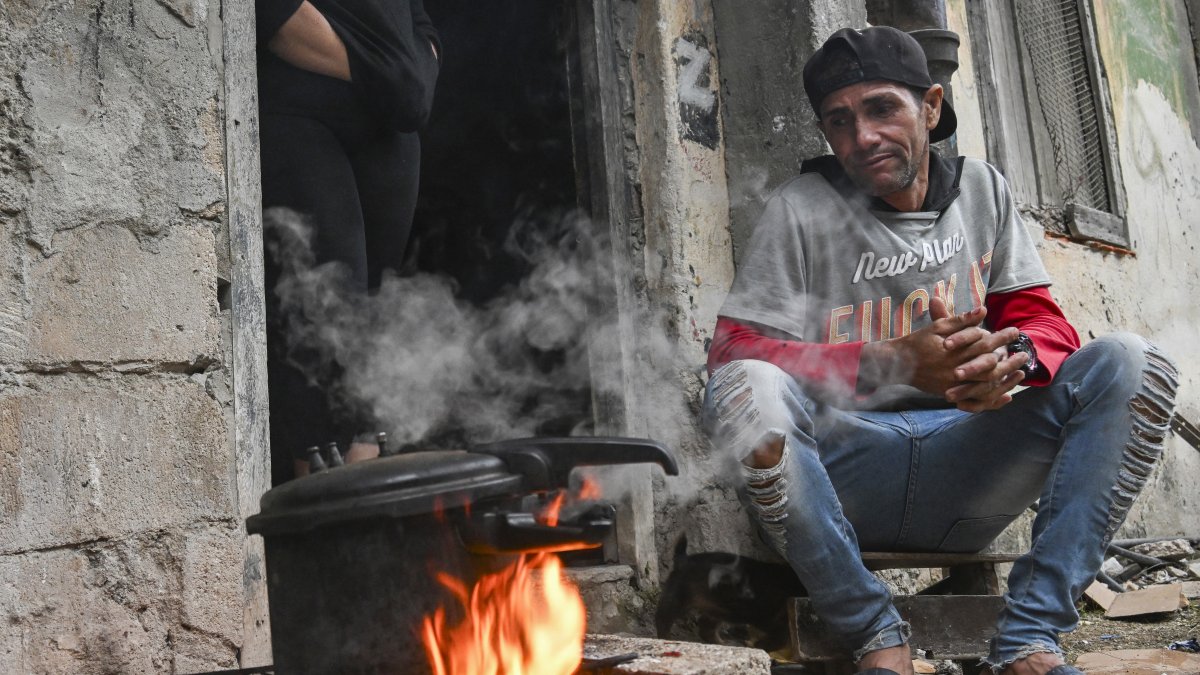
A man in front of a makeshift kitchen in the middle of a blackout in Cuba.

Cuba is going through one of the most complex moments in recent decades. In addition to an economic crisis that has been dragging on for years, there have been massive blackouts, the collapse of tourism, a sharp increase in insecurity and growing diplomatic tensions with the United States. The result is a country subjected to extreme pressure by the regime, with shrinking room for maneuver and a population hit by shortages and uncertainty.
An unprecedented energy crisis
This Tuesday, Cuba faces the biggest blackout recorded so far: up to 62% of the country will be simultaneously without electricity during peak demand hours, according to data from the state-run Unión Eléctrica (UNE) prepared by the agency Efe.
The report points out that the electricity supply on the island is plummeting due to technical failures and lack of fuel. More than half the nation is in total darkness.
Currently, nine of the 16 operating thermoelectric units are out of service, including two of the three largest in the country. Thermoelectric generation represents about 40% of Cuba's energy mix, which aggravates the impact of each failure.
On January 31, a historic record was reached: a blackout that knocked out power to 63% of the country simultaneously, the largest since Cuba began publishing regular energy statistics in 2022.
Fuel shortages and energy isolation
Since mid-January, the UNE stopped reporting how many distributed generation engines are out of service due to lack of diesel and fuel oil, a key data to measure the impact of the end of the Venezuelan supply. However, independent estimates indicate that more than 1,000 MW of capacity remains idle.
The situation worsened in 2026 with the interruption of oil shipments from Venezuela - historically the main supplier - and the suspension of deliveries from other countries. Mexico confirmed that it has stopped crude oil shipments, limiting itself for now to food aid, while Jamaica also stopped supplying fuel. According to experts, without new deliveries Cuba could run out of energy resources within a month or two.
The Cuban regime attributes the crisis to the tightening of U.S. sanctions and speaks of an "energy asphyxia," however, a recent report points out that the dictatorship resold much of the oil it received from Venezuela and other nations. Washington, for its part, has threatened to impose tariffs on countries supplying oil to the island, raising international pressure.
World
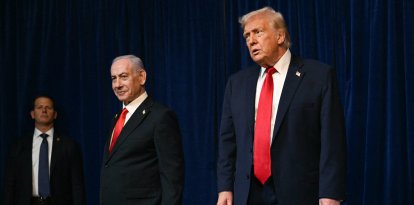
Trump declares Cuba a threat to the U.S. and imposes tariffs on countries that send oil to regime
Luis Francisco Orozco
Paralyzed economy and social unrest
The lack of electricity paralyzes industries, affects transportation, makes it difficult to refrigerate food and aggravates daily life. These outages have also been one of the main detonators of the most important protests in recent years, in a country where the margin for dissent is increasingly narrow.
The collapse of tourism, the main source of foreign currency
Adding to the energy crisis is the collapse of tourism, one of the pillars of the Cuban economy. In 2025, only 1.8 million tourists visited the island, 17.8% less than in 2024 and far below the official target of 2.6 million, according to the National Statistics and Information Office (ONEI).
The drop was widespread in the main outbound markets:
- Germany: -50.5 %
- Russia: -29 %
- Cubans residing abroad: -22.6 %
- Canada: -12.4 %
The combination of blackouts, deteriorating services, fuel shortages and travel warnings issued by several governments has eroded the destination's competitiveness. Analysts agree that Cuba's tourism model has failed to recover after the pandemic, aggravated by a highly centralized management largely controlled by the military apparatus.
Travel alert issued by the U.S.
"U.S. citizens in Cuba or planning to travel to Cuba are advised that there have been incidents of U.S. citizens being denied entry upon arrival as well as a spike in regime-sponsored protest activity directed at the United States, including anti-U.S. rhetoric," read the official note.
I also recommended travelers who insist on flying to Cuba to keep cell phones and portable batteries charged, have flashlights and spare batteries in an easily accessible location, and stock up on non-perishable food and water, among other things.
Insecurity on the rise: numbers doubling
As the economy sinks, insecurity soars. The Observatorio Cubano de Auditoría Ciudadana (OCAC) recorded 2,833 crimes in 2025, compared to 1,317 in 2024 and 649 in 2023, a year-on-year increase of 115%.
Robberies concentrated most of the cases, with 1,536 reports, a growth of 74.5 % over the previous year. A significant increase was also detected in drug-related crimes, with 437 incidents, a category that until now was diluted in general records.
Although homicides show a slight sustained drop since 2023, independent observatories warn that this does not translate into greater security, since violent assaults, larceny and the presence of firearms are on the rise.
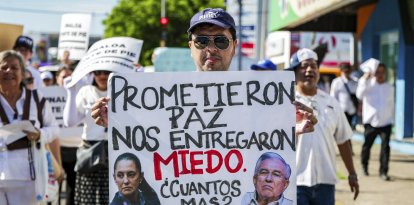
In January 2026, 87 protests linked exclusively to citizen insecurity and a total of 953 protests and complaints were recorded, including 395 actions categorized as direct challenges to the regime.
World
The OCDH denounced at least 873 violations of religious freedom in Cuba during 2025
Diane Hernández
The collapse of sugar, a symbol of productive decline
The lack of fuel, electricity and inputs has forced the authorities to resort to manual cane cutting, with incentives of up to 700 pesos per ton, which would allow for a monthly income equivalent to about $44 USD. Analysts point out that these measures are unlikely to reverse the collapse of a sector that for decades was the country's economic engine.
Political tensions and calls for dialogue
At the international level, the scenario is equally tense. U.S. president Donald Trump, assured that there are talks with the "highest instances" of Cuba, although Havana denies the existence of a formal dialogue, recognizing only limited contacts on issues such as migration and the fight against drug trafficking.
Mexico reiterated its willingness to mediate between the two countries, while Russia and China denounced the economic pressure on the island and expressed their political support. In parallel, Pope Leo XIV joined the Cuban bishops' call to promote a "sincere and effective dialogue" to avoid further suffering of the population.
World
Report warns Cuba is the 'epicenter' of destabilization in the US and Latin America
Virginia Martínez
A country on the brink
The picture that emerges is that of a country trapped in dissimilar simultaneous crises. Energy is scarce, the economy is contracting, tourism is not taking off, insecurity is growing and external tensions limit possible solutions.
Beyond the regime's worn-out political speeches and diplomatic disputes, the impact falls on the daily lives of millions of Cubans, who face blackouts of up to 42 hours, difficulties in accessing basic goods and an increasingly tense social climate.
Cuba is surviving today, but with a shrinking margin, in a scenario that many already describe as critical and unsustainable.
LATEST