State Department restricts visas for several Central American officials over 'exploitation' of Cuban doctors
The Cuban regime sells services to other countries through the so-called "internationalist missions" that include medical activities, which, according to analysts, represent the main source of foreign exchange for the island.

Cuban doctors

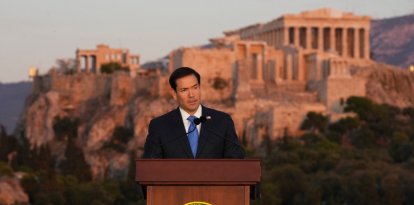
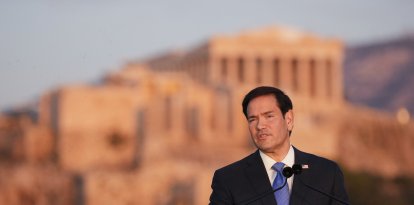
The United States has imposed visa restrictions on Cuban officials and officials from other countries over the “exploitation” of Cuban doctors through “forced labor,” U.S. Senator Marco Rubio announced on Tuesday.
The Cuban regime sells services to other nations through the so-called "internationalist missions" that include medical activities, which according to analysts, represent the main source of foreign currency inflow for the island.
The Donald Trump administration took steps "to impose visa restrictions on several Central American government officials and their family members for theirconnection to the Cuban regime's forced labor program," Secretary of State Rubio detailed in a statement without specifying which country or countries he is referring to.
"The officials are responsible for Cuban medical mission programs that include elements of forced labor and exploitation of Cuban workers," the Republican politician specifies. The labor export program "enriches the corrupt Cuban regime and deprives ordinary Cubans of the essential medical care they desperately need at home," he added.
">The U.S. is serious about its efforts to promote accountability for those linked to the forced labor and exploitation of Cuban medical workers. Visiting the U.S. with a visa is a privilege. @StateDept took steps to impose visa restrictions on Central American government officials… https://t.co/xcGaen20EO
— Secretary Marco Rubio (@SecRubio) June 3, 2025
According to Washington, the goal is to "support the Cuban people in their struggle for freedom" and "promote accountability for those who contribute to a system of forced labor."
Rubio has urged other countries to follow in his footsteps.
"Vulgar blackmail": says the regime
Washington includes Cuba on its human trafficking blacklist because every year the Castro government sends tens of thousands of workers, mostly medical personnel, but also teachers, artists, athletes, coaches, engineers, forestry technicians and almost 7,000 merchant seamen around the world, according to an annual report presented in July 2024.
Havana labels workers who leave the program without completing it as "deserters" and undesirables—preventing them from returning to Cuba for eight years—and considers those who do not return within 24 months to have "emigrated," thereby forfeiting their rights, Washington added in the report.
Millions for "exported" doctors and zero investment in health care on the island
Cuban medical missions, also known as medical brigades, have sent more than 605,000 health professionals to 165 countries, mainly in the Caribbean and Latin America, in more than 60 years, according to official data.
Cuba's National Statistics and Information Office (ONEI) reports that the country has received large revenues from the export of health and social care services since 2005. They amounted to $6.4 billion in 2018; $5.4 billion in 2019; $3.9 billion in 2020, $4.3 billion in 2021, $4.9 billion in 2022 and $4.4 billion in 2023, as last reported.
According to the same statistics, the regime's total investment in the same six years (2018 to 2023) was only $1.5 billion, in health and social care. That was only 0.8% of what it earned.
The Human Trafficking Report for 2024 submitted by the State Department also places Cuba at level 3 (the lowest), for not fully complying with the minimum standards for the elimination of trafficking.
World
Cuba accuses US Embassy of ‘forging diplomatic rupture’ between the two countries
Diane Hernández
Maximum pressure on the island
Since returning to the White House on January 20, President Trump placed Cuba back on the list of countries sponsoring terrorism and reinstated and swelled the list banning some transactions with Cuban companies.
For more than six decades, Washington has imposed a trade embargo on Cuba. The country is going through a serious crisis that pushed hundreds of thousands of people to emigrate to the United States in the last two years, both irregularly and legally, according to official data.
Data from the Bureau of Customs and Border Protection (CBP), refer that since 2022 the U.S. authorities intercepted almost 700,000 Cuban migrants trying to cross the border without a visa, to which should be added all those who tried to arrive by sea.
LATEST