Analysis
Iran launched military maneuvers in the Strait of Hormuz on the eve of negotiations with the US
The regime displays military muscle in a strategic route as Washington and Tehran sit down again to negotiate.
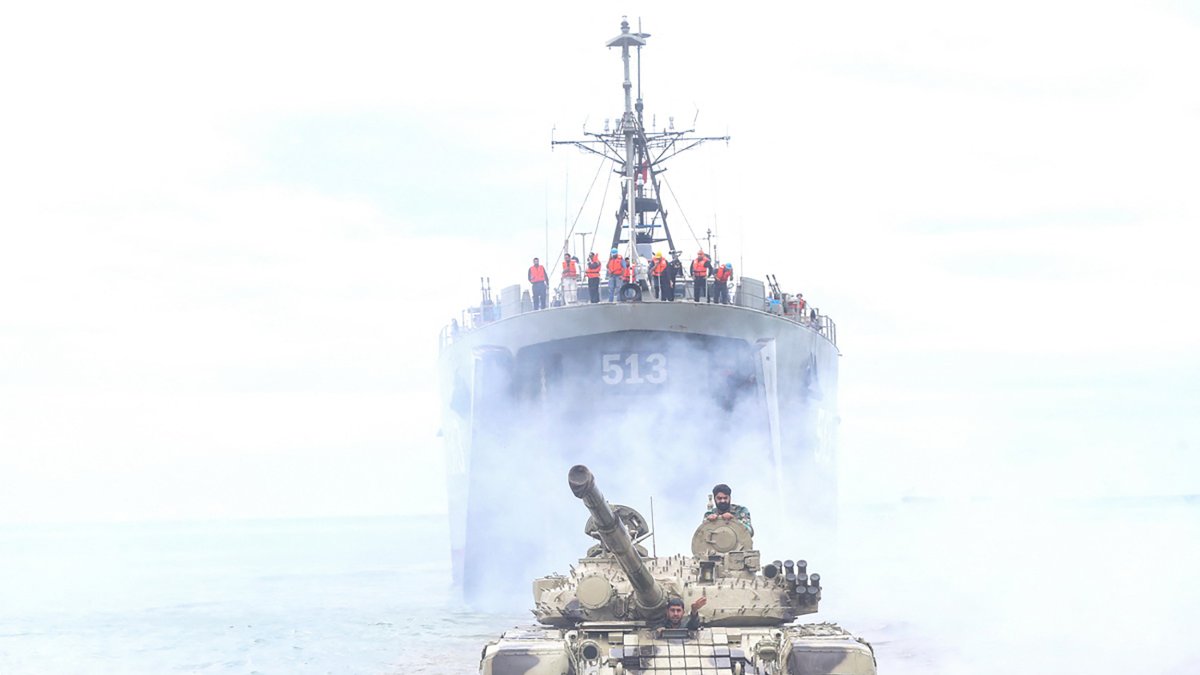
Iranian military exercise (archive).

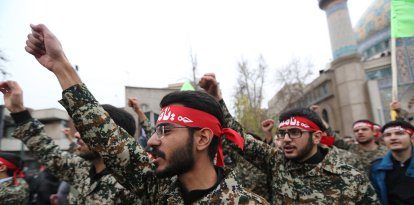
U.S. and Iranian delegations resumed negotiations Tuesday in Geneva, Switzerland. Shortly before they sat down at the table, the Iranian Army launched military maneuvers in the strategic Strait of Hormuz. Shortly afterwards, Ayatollah Ali Khamenei assured Donald Trump that he would not succeed in "destroying the Islamic republic."
Although Iranian military sources assured that it was simply an annual exercise, in the past the regime threatened several times to block the passage between the Gulf of Oman and the Persian Gulf, through which 20% of the world's oil production transits.
In statements to the official agency IRNA, the commander of the naval force of the Islamic Revolutionary Guard Corps, Alireza Tangsiri, assured that the Strait and the Persian Gulf were "invincible fortresses" and a "national honor" for Iran. He further stated that the mission of the corps is "aimed at ensuring secure passage for non-hostile countries." Iranian state television reported that parts of the strait would be closed for "security" reasons.
The U.S. aircraft carrier USS Abraham Lincoln has been deployed in the area since the beginning of the year. Alongside that one, there are at least 11 other American warships plying the Middle East. Last Friday, Donald Trump confirmed that it will be joined by the USS Gerald Ford, the world's most powerful aircraft carrier.
Trump also affirmed in recent hours that he will participate "indirectly" in the talks that began Tuesday. "They wanna make a deal, I don't think they want the consequences of not making a deal," he maintained when asked if he saw it possible for the Iranian regime to reach a pact. As a warning, the president recalled the bombing he ordered against Iranian nuclear facilities in June.
"In one of his recent speeches, the U.S. president said that for 47 years America has not succeeded in destroying the Islamic republic... I tell you: you will not succeed either," Khamenei said.
"We constantly hear that they (the United States) have sent a warship toward Iran," he also said of the aircraft carriers: "A warship is certainly a dangerous weapon, but even more dangerous is the weapon capable of sinking it."


What are Tehran and Washington seeking to negotiate?
At the center of the negotiations is Iran's nuclear program, although Washington also wants to put issues such as long-range missiles and Iranian funding for terrorist groups in the region on the table. Tehran is targeting sanctions on its ailing economy, which ignited the massive protests in recent months.
Attending on Trump's behalf were his son-in-law, Jared Kushner, and his special emissary Steve Witkoff. On the Iranian side was Abbas Araqchi, its top diplomat. "What is not on the table is submission in the face of threats," Araqchi maintained Monday after assuring that he had come "with real ideas to reach a fair and equitable agreement."
Oman continues to serve as mediator, as they did in the first round of negotiations launched on Feb. 6.
LATEST