'Forced labor': Secretary Marco Rubio sanctions Brazilian officials and former PAHO officials for being accomplices of the Cuban regime in the export and coercsion of doctors
In a post on his X account, Secretary Marco Rubio reinforced the position by calling Mais Médicos an “unconscionable diplomatic scam of foreign ‘medical missions’."

U.S. Embassy in Havana, Cuba (Archive)

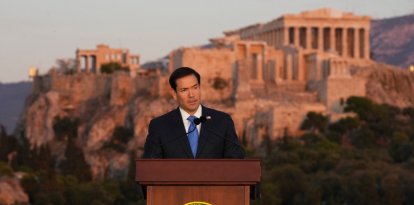
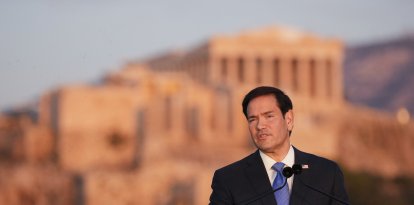
In a forceful move against the labor exploitation orchestrated by the Cuban regime, the U.S. Department of State, led by Secretary Marco Rubio, announced the revocation of visas and the imposition of travel restrictions on several officials of the Brazilian government, officials of the Pan American Health Organization (PAHO), and their families.
These measures, detailed in an official communiqué issued Wednesday, respond to the sanctioned individuals' involvement in Brazil's Mais Médicos program, a scheme that, according to Washington, served as a front for the export of forced labor from Cuba, enriching the Havana regime while depriving Cuban citizens of essential medical care.
The Mais Médicos program
According to the State Department, this program was used by Brazilian and PAHO officials as a mechanism to channel funds to the Cuban regime, circumventing both Brazilian constitutional requirements and international sanctions imposed by the United States against Cuba.
In addition, the Trump Administration notes that PAHO acted as an intermediary in this scheme, facilitating agreements that allowed the Cuban government to withhold most of the payments intended for Cuban doctors, who were subjected to coercive working conditions.
“These officials were responsible for or involved in abetting the Cuban regime’s coercive labor export scheme, which exploits Cuban medical workers through forced labor”, the State Department said in its statement.
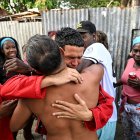
Along these lines, dozens of Cuban doctors who participated in Mais Médicos have publicly denounced having been victims of exploitation, including the confiscation of their passports, restrictions on their freedom of movement, and the withholding of up to 90% of their salaries by the Cuban regime.
Cuba rejects the U.S. decision
For its part, the Cuban regime, by the hand of the Chancellor of Cuba, Bruno Rodriguez, said through his X account that Cuba will continue with its policy and in this regard noted, "The Secretary of State US threatens with visa restrictions vs governments that have legitimate medical cooperation programs with Cuba. It shows imposition and aggression with force as a new foreign policy doctrine of that government. Cuba will continue to provide services."
Secretario Estado #EEUU amenaza con restricciones visas vs gobiernos que cuentan con programas legítimos de cooperación médica con #Cuba. Demuestra imposición y agresión con la fuerza como nueva doctrina de política exterior de ese gobierno.
— Bruno Rodríguez P (@BrunoRguezP) August 13, 2025
Cuba continuará prestando servicios. pic.twitter.com/OxyldLQsHm
Those sanctioned by the U.S.
Among those sanctioned are Mozart Julio Tabosa Sales, and Alberto Kleiman, both former officials of the Brazilian Ministry of Health during the period when Mais Médicos was active. According to the statement, these individuals played a key role in the planning and implementation of the program, facilitating collaboration with Cuba and PAHO.
In a post on his X account, Secretary Rubio reinforced this position, calling Mais Médicos an “unconscionable diplomatic scam of foreign ‘medical missions,’” disguised as an international medical mission.
.@StateDept is also taking steps to revoke visas and impose visa restrictions on several Brazilian government officials and former PAHO officials complicit in the Cuban regime’s forced labor export scheme. Mais Médicos was an unconscionable diplomatic scam of foreign ‘medical… https://t.co/O1AiY948MK
— Secretary Marco Rubio (@SecRubio) August 13, 2025
Mais Médicos
The sanctions announced by the State Department seek not only to punish those directly responsible but also to send a warning to other governments and organizations that might be considering collaborating with the Cuban regime on similar schemes. "Our action sends an unmistakable message that the United States promotes accountability for those who enable the Cuban regime," the official statement concludes.
LATEST