A classified Justice Department opinion authorizes lethal strikes against a large, secret list of cartels and drug traffickers
The document asserts that President Donald Trump may authorize lethal force against criminal groups while dispensing with due-process guarantees.

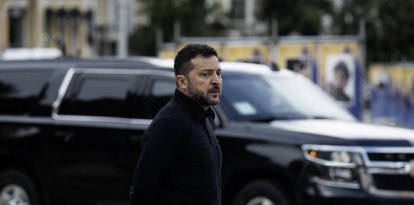
Dictator Nicolas Maduro during an appearance

As the war against narcoterrorism continues, the Trump Administration drafted a classified legal opinion authorizing the use of lethal force against a secret and extensive list of proven cartels and drug traffickers, under the argument that they pose an imminent threat to the national security of the United States.
The document, issued by the Department of Justice's Office of Legal Counsel (OLC), greatly expands the scope of action for the U.S. military and intelligence sector under the war on drug trafficking in the hemisphere.
According to an exclusive CNN report, the opinion holds that President Donald Trump may authorize lethal strikes against members of cartels and other criminal groups by treating them as “enemy combatants”—that is, neutralizing them without the legal due process that has historically applied in such cases. In practice, this would allow the US military to treat drug traffickers as legitimate military targets, even outside traditional war zones, such as the Caribbean Sea and identified drug trafficking routes.
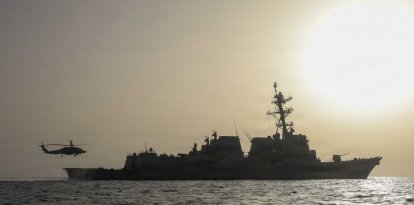
The document, justly, would have served as the legal basis for the recent US Navy and Army bombings against Venezuelan drug ships in the Caribbean, which have left at least 21 suspected cartel members dead. According to CNN, the attacks were executed with the backing of a Defense Department memo declaring an "armed conflict" between the United States and drug cartels. That memo, in large part, was based on the OLC legal opinion.
In recent weeks, the United States has sunk at least four drug-laden vessels in the Caribbean Sea, in operations that the White House links directly to criminal organizations linked to the regime of Nicolás Maduro. At least three of the destroyed narco-boats are said to be directly linked to the Cártel de los Soles and the Tren de Aragua, criminal structures that Washington considers part of Chavismo's narco-terrorist apparatus.
During a ceremony commemorating the 250th anniversary of the Navy, President Trump confirmed a new operation off the Venezuelan coast and warned that the United States is preparing to extend its actions against drug traffickers "on the ground."
"We hit another boat near Venezuela last night; we are so good at it," the president said. "They're not coming in by sea anymore, so now we'll have to start looking about the land because they'll be forced to go by land."

World
Trump announces that the war against narcoterrorism enters 'Phase II': US will start attacks 'by land'
Emmanuel Alejandro Rondón
Politics
ANALYSIS | Trump 'determines' that the US is in an 'armed conflict' with narco-terrorist cartels
Agustina Blanco
The president added that "the sea is empty" and that he is now evaluating "phase two" of his campaign against regional drug trafficking.
Maduro, accused of drug trafficking in the United States, faces a $50 million reward for his capture, while his second-in-command, Diosdado Cabello, has a $25 million reward. Washington alleges that both lead criminal networks that traffic drugs into the US. He is also considered an "illegitimate" leader by the White House after repeated electoral frauds in Venezuela, the most recent on July 28, 2024, and for the systematic violation of rights and freedoms in the South American country, which is going through an unprecedented political, social, and economic crisis after the arrival of dictator Maduro to power.
Possible attacks in Venezuela?
Parallel to this, the Trump Administration maintains indirect channels of communication with the Chavista regime, through mediators in the Middle East, to avoid a direct escalation while increasing military and diplomatic pressure on Caracas.
However, according to The New York Times, diplomatic efforts have failed, and Trump himself, frustrated that Maduro refuses to leave power and lies about his narco ties, has asked his special envoy, Ric Grenell, to cut off talks with the Chavista regime.
In this context, the Justice Department's classified opinion, together with the secret authorization granted to the CIA to carry out lethal operations in Latin America, marks a drastic change in Washington's strategy against drug trafficking, from judicial persecution to direct military confrontation, directly targeting the most dangerous cartels and drug traffickers in the region.
Editor’s note: This article was updated to replace the phrase “without prior judicial review” with “without legal due process” in order to more accurately reflect the scope of the referenced opinion.
LATEST