International coalition against drug trafficking grows: Dominican Republic joins four other countries that declare Cartel de los Soles a terrorist organization
The decree instructs the Ministry of Foreign Affairs to communicate the measure to international organizations and key strategic partners in order to coordinate sanctions and cooperation mechanisms.
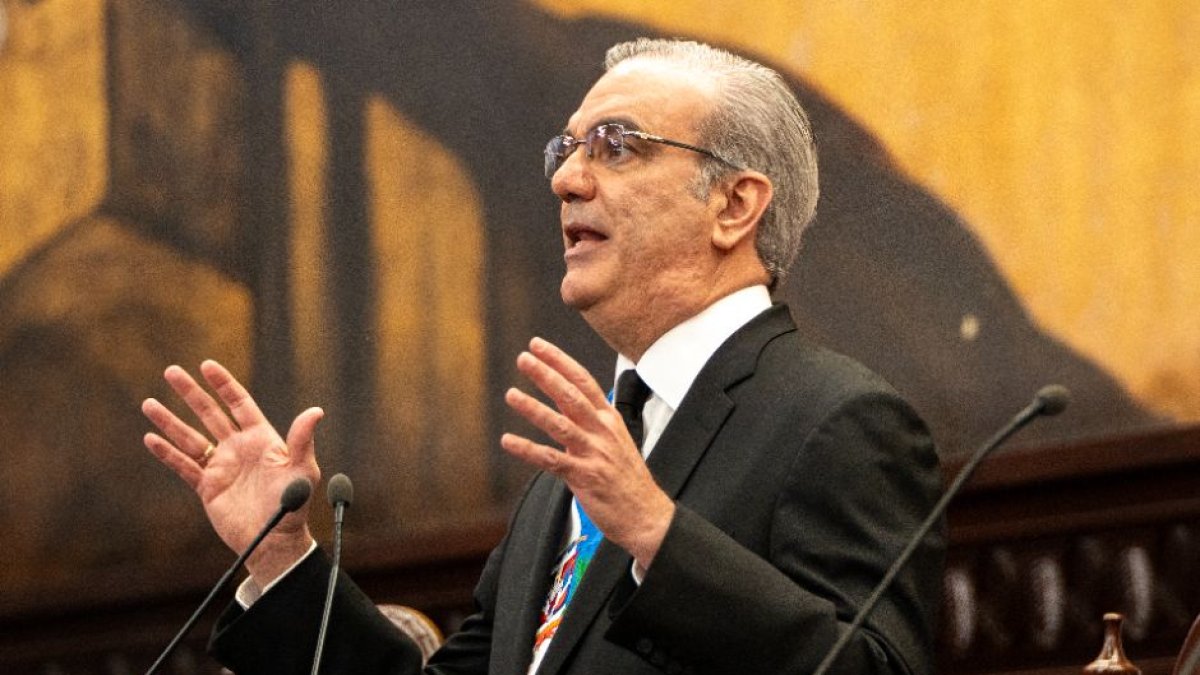
The president of the Dominican Republic, Luis Abinader.

The Dominican government declared the armed group known as Cartel de los Soles a terrorist organization by means of a decree signed on Tuesday. With this decision, the executive branch ordered the intelligence and security agencies to reinforce their operations to prevent any threat against the country or its interests abroad.
The decree also instructs the Ministry of Foreign Affairs to communicate the measure to international organizations and the main strategic partners of the Dominican Republic, in order to coordinate sanctions and cooperation mechanisms under the framework of international law.
The designation is in addition to actions taken by other countries that have identified Cartel de los Soles as a risk to regional security. The group, according to reports by the DEA and the U.S. Department of Justice, is linked to high-ranking military commanders loyal to Nicolás Maduro and has been identified as a central axis of Venezuelan drug trafficking.
International reactions
The Dominican Republic's statement is not an isolated event. The United States, Paraguay, Ecuador and Argentina have included Cartel de los Soles in their lists of international terrorist organizations. Guyana has joined this front, whose president, Mohamed Irfaan Ali, assured that he is willing to collaborate with Washington to "dismantle" the group.
Other countries have shown support for the regional offensive. France reinforced its operations in Guadeloupe with radars, drones and nautical brigades to contain drug trafficking networks. Trinidad and Tobago expressed its public support for the U.S. military deployment in waters near Venezuela.
The left in the region maintains divergent positions. Colombian President Gustavo Petro denies the existence of Cartel de los Soles and describes it as a "fictitious excuse of the extreme right." In Brazil, Luiz Inácio Lula da Silva has remained silent, although his advisor Celso Amorim expressed concern over what he described as risks of unilateral interventions.

A front of pressure against Maduro
LATEST