What happens now with the Lindsay Clancy case after the mistrial over the killing of her three children?
The burden of deciding the next steps falls on the experienced Timothy J. Cruz, who has served as Plymouth County District Attorney for nearly 25 years. He must decide whether to try Clancy again for first-degree murder, opt for lesser charges that would potentially allow for a trial without a jury or pursue another course of action.
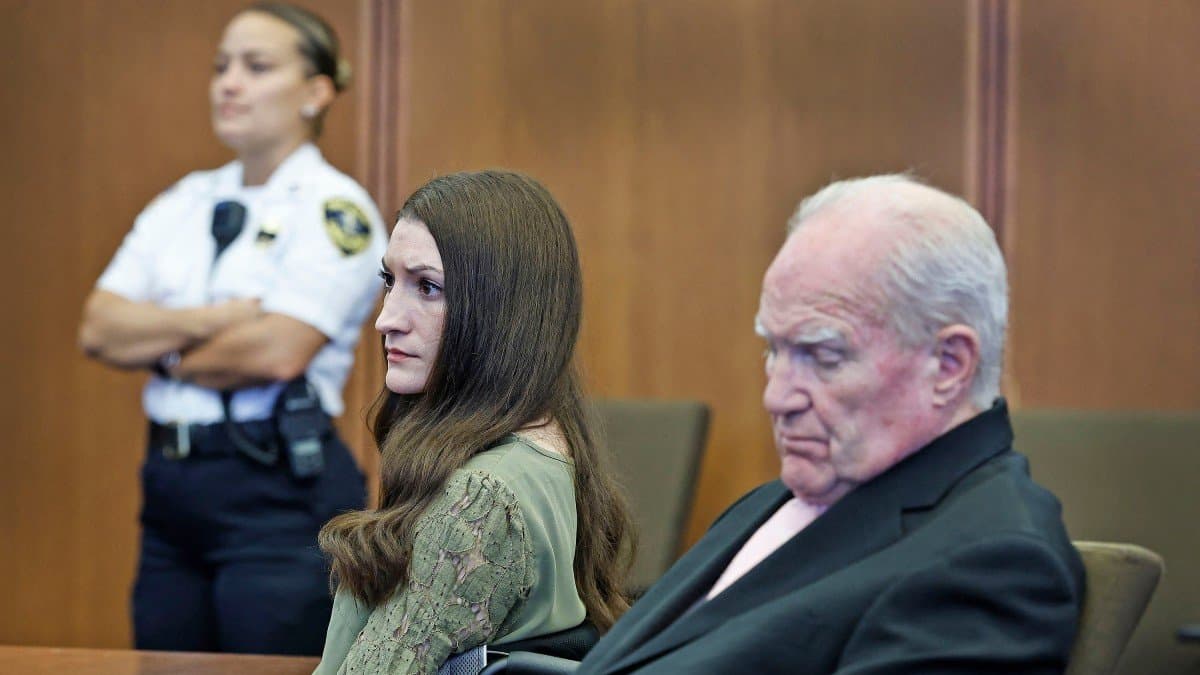

After weeks of powerful testimony, protests, and extensive media coverage, the trial against Lindsay Clancy ended on Friday without an official verdict, after the jury—with only one dissenting vote—failed to reach a consensus on whether she should be held criminally responsible for the murder of her three children. The declaration of a mistrial does not mean that Clancy has been acquitted or convicted. In fact, for the time being, the murder charges against her remain, and the decision on the next steps now rests with the prosecution.
The weight of that decision falls on the experienced Timothy J. Cruz, who has served as Plymouth County District Attorney for nearly 25 years and must decide whether to retry Clancy for first-degree murder, opt for lesser charges that would potentially allow for a trial without a jury, or seek another course of action. According to experts consulted by the New York Times, the decision could take a week or more, and will depend largely on what emerges or is rumored about the jury's deliberations. If the majority was leaning toward an acquittal, as many media outlets have reported, a new trial on the same charges becomes less likely. Kevin Reddington, Clancy's attorney, said he's confident Cruz will press ahead with the most serious charge, given his track record in the position.
While that issue is being resolved, Clancy will remain in custody. She is currently hospitalized at Tewksbury Hospital, a state psychiatric facility, and will most likely remain there or at a similar institution, even if prosecutors decide not to reopen the criminal case. In that scenario, according to experts, she will most likely face a civil commitment proceeding that would keep her deprived of her liberty indefinitely.
Clancy's defense argued that she was not criminally responsible for the acts, contending before the judge and jury that she was experiencing postpartum psychosis when she strangled her children with exercise bands. Some experts who testified during the trial also maintained that she suffers from bipolar disorder. In fact, her attorney acknowledged that he does not believe she is emotionally prepared to face a second trial, but clarified that he will continue to represent her regardless.

Politics
'It's a horrible tragedy': Trump breaks his silence following the Lindsay Clancy mistrial
Luis Francisco Orozco
The jury, composed of 12 regular members and 6 alternates, was dismissed after nearly 40 hours of deliberation. The names of all jury members will remain anonymous. None of them may be called to serve again should the trial be held again. During deliberations, the jury informed Judge William Sullivan twice that they could not reach a verdict, and only on the third occasion, on Friday, did he agree to declare a mistrial.
Should the case be reopened, a completely new jury panel will have to be selected, a task experts expect will be extremely complicated given the level of media exposure the case received, including protests outside the Plymouth courthouse.
Reddington estimates that, if there were to be a new trial, it could begin as early as six months to a year from now, time that the prosecution would use to adjust its strategy, incorporate additional evidence, and prepare new witnesses.
While hung juries are not all that common, there is a recent precedent in the state with the case of Karen Read, who was accused of killing her boyfriend, a Boston police officer, by running him over with her car in 2022. That trial also ended in a hung jury in 2024. Her second trial did not begin until nine months later, in April 2025, and ultimately ended with her acquittal.
In this case, Clancy does not deny killing her children—Cora, 5; Dawson, 3; and Callan, 8 months—at her home in Duxbury, a suburb of Boston, on January 24, 2023. The point of contention is her mental state and her actual responsibility at the time of the crime. Her husband, Patrick Clancy, testified at the trial that he found the children already injured in the basement after returning from running some errands. The prosecution, for its part, argued that Clancy had deliberately planned to take them out of the house that day. The case sparked widespread debate, and the mistrial prompted numerous statements, including comments from President Donald Trump and members of Congress.
🛠 Do you think there is an error in this article?
Recommendations







LATEST